Table of Contents
The Marbled Arrowhead: How to Grow and Care for Syngonium Albo
Welcome back to Plant It! If you’ve been scrolling through plant communities lately, you’ve undoubtedly stopped to stare at a striking, arrow-shaped plant with breathtaking splashes of pure white and deep green.
Meet the Syngonium Albo Variegata (often simply called the Syngonium Albo).
This rare beauty is a variegated cultivar of the classic Arrowhead Vine (Syngonium podophyllum), native to the tropical rainforests of Latin America. While it looks like a highly demanding, expensive collector’s plant, it is surprisingly one of the most forgiving and fastest-growing variegated aroids you can own. Whether you want a bushy tabletop plant or a massive climbing vine for your living room, the Albo delivers high drama with relatively low maintenance.
In this comprehensive, deep-dive guide, we are going to break down exactly how to care for your Syngonium Albo, how to multiply it, and—most importantly—how to manage that tricky white variegation so it doesn’t revert to a boring solid green!
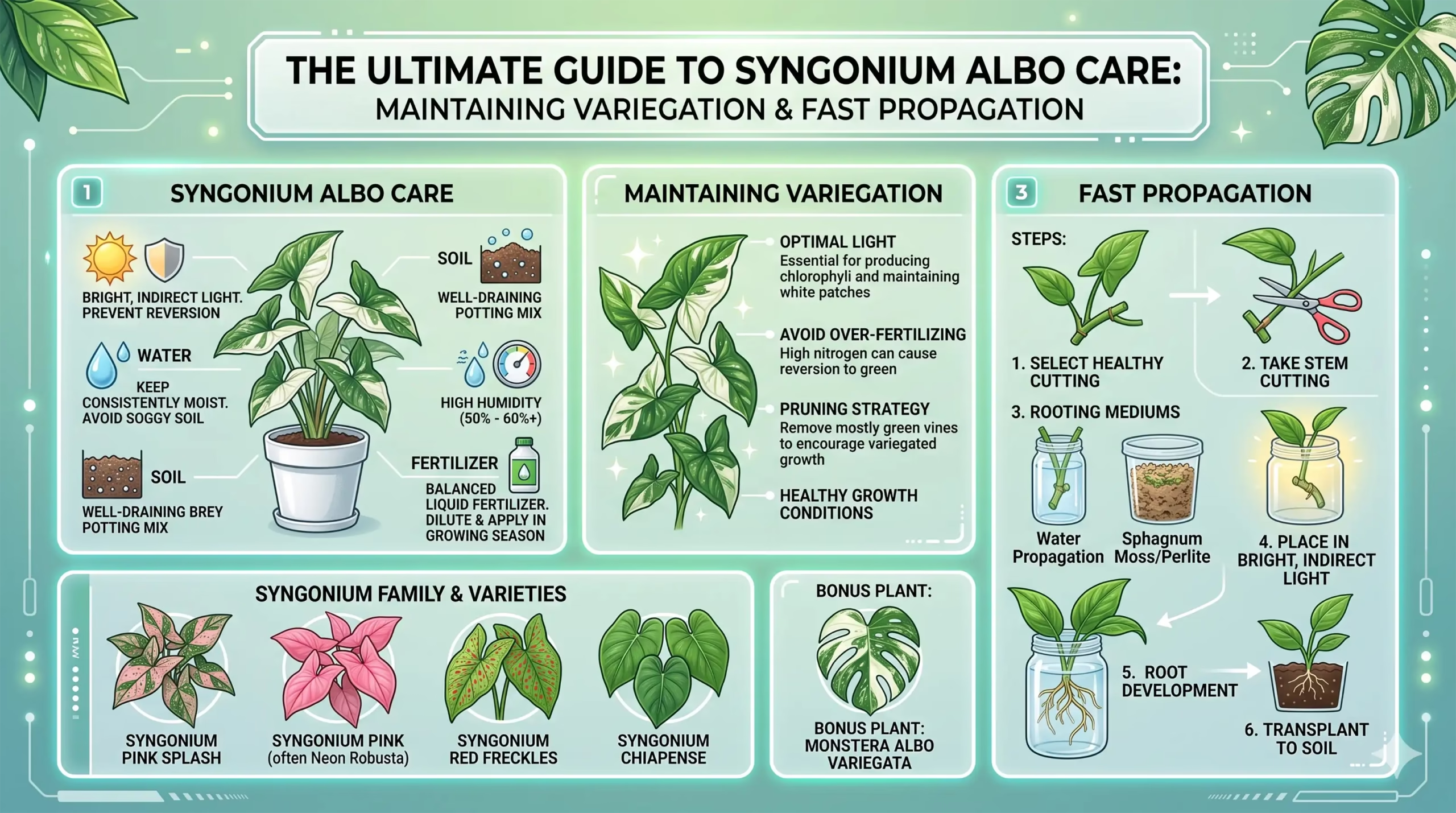
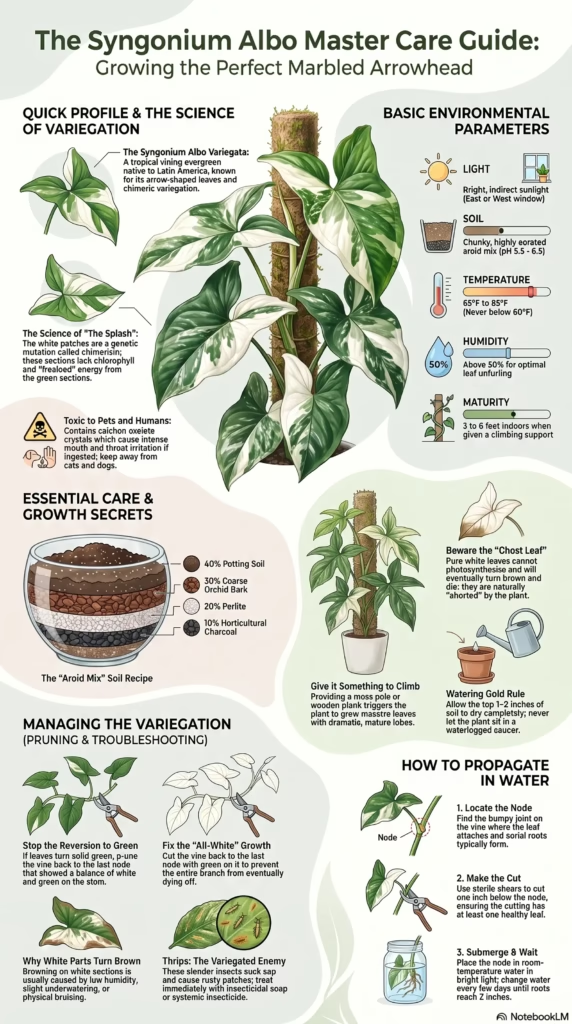
Syngonium Albo Profile Quick Look
| Feature | Details |
| Common Name | Arrowhead Vine, Variegated Arrowhead Plant |
| Botanical Name | Syngonium podophyllum ‘Albo Variegatum’ |
| Plant Type | Tropical vining evergreen |
| Mature Size | 3 to 6 feet indoors (climbing) |
| Sun Exposure | Bright, indirect sunlight |
| Soil Type | Chunky, highly aerated aroid mix |
| Soil pH | Slightly acidic (5.5 to 6.5) |
| Toxicity | Toxic to cats, dogs, and humans if ingested |
| Native Area | Mexico to South America |
Fun Fact: The Science of the Splash
The stunning white patches on a Syngonium Albo aren’t painted on—they are the result of a genetic mutation called chimerism. The plant literally contains two different sets of DNA growing side-by-side. The green parts contain chlorophyll (the stuff that absorbs light and feeds the plant), while the white parts lack chlorophyll entirely. This means the white sections are essentially “freeloading” off the energy produced by the green sections!
A Beginner’s Tips for Success
If this is your first variegated plant, keep these two golden rules in mind:
- Beware the “Ghost Leaf.” Because the white parts cannot photosynthesize, a leaf that emerges 100% pure white is beautiful, but doomed. It will eventually turn brown and die because it cannot feed itself.
- Give it something to climb. While it looks cute and bushy when young, the Syngonium is a natural viner. If you let it trail downward, the leaves will shrink. If you give it a moss pole to climb upward, the leaves will dramatically increase in size and mature into a stunning multi-lobed shape!
Essential Care Routine
To keep those contrasting colors bright and the stems pushing out new growth, you need to replicate the humid, dappled light of the jungle canopy.
Light Requirements
Lighting is the single most critical factor in learning how to keep syngonium albo white variegation stable.
- Because the plant has less chlorophyll than a solid green plant, it needs bright, indirect sunlight to survive. Place it a few feet back from a large east- or west-facing window.
- If the light is too low, the plant will “revert”—meaning it will push out solid green leaves in a desperate attempt to capture more light to survive.
- Warning: Never place it in harsh, direct midday sun. The delicate white sections of the leaves lack protective pigment and will severely scorch and burn in a matter of hours.
Soil Needs
Syngoniums have fine, delicate roots that rot quickly if left in heavy, soggy dirt. The best soil mix for syngonium albo is a chunky, porous “aroid mix” that allows water to run right through it.
Mix your own by blending:
- 40% high-quality peat or coco coir-based potting soil
- 30% coarse orchid bark
- 20% coarse perlite or pumice
- 10% horticultural charcoal
Water: Consistent but Not Swampy
These tropical vines like to be consistently lightly moist, but never waterlogged. Allow the top 1 to 2 inches of the soil to dry out completely before watering again. Stick your finger into the pot—if it feels damp, wait a few more days. When you do water, soak it thoroughly until water pours out the drainage holes, and immediately empty the saucer.
Temperature and Humidity
Keep your home comfortably warm, ideally between 65°F and 85°F. They despise cold drafts and will suffer if temperatures drop below 60°F.
While they can adapt to average household humidity, they truly thrive when humidity is above 50%. The higher the humidity, the easier it is for the plant to unfurl its new leaves without getting stuck or tearing.
Fertilizer
Feed your Albo with a balanced liquid houseplant fertilizer diluted to half-strength once a month during the active growing season (spring and summer). Stop fertilizing completely during the winter dormancy period.
Stunning Syngonium Relatives & Companions
While the Albo is breathtaking, the Syngonium family offers incredible diversity if you want to expand your collection.
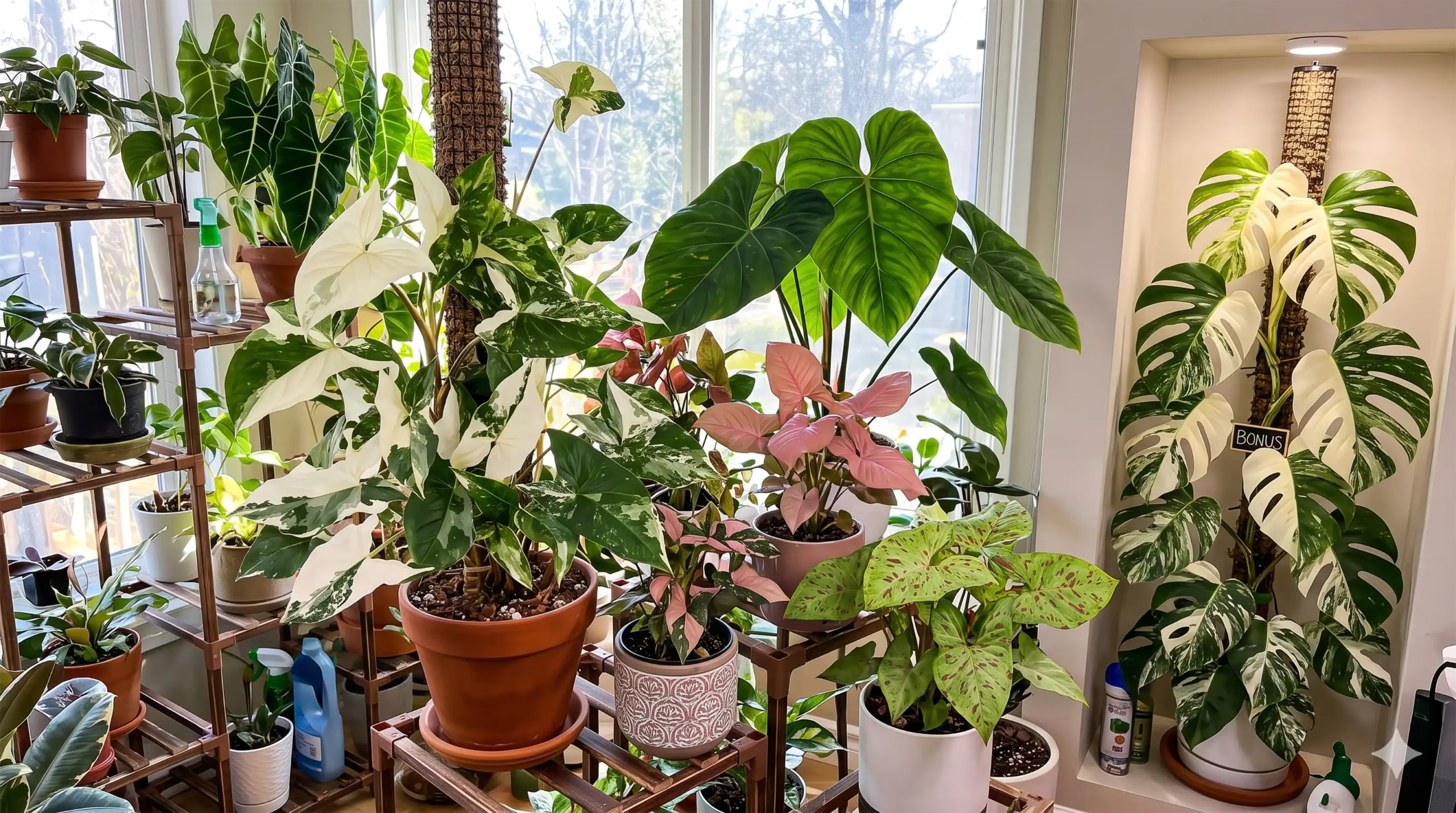
If you want to add some warmth to your indoor jungle, the syngonium pink splash offers incredible bubblegum-pink mottling, while the broader syngonium pink category (like the Neon Robusta) provides solid, dusty rose foliage. If you want something a bit moodier, look for the syngonium red freckles, which features striking, deep red speckles across its leaves.
Looking for a different texture entirely? The syngonium chiapense is a rare, non-variegated cousin that skips the arrowhead shape and instead grows massive, rubbery, matte-green leaves.
Finally, if you love the Albo’s stark white look but want something even more gigantic to pair it with, the highly coveted monstera albo variegata is the ultimate holy grail companion plant!
Pruning: Managing the Variegation
Pruning isn’t just about controlling the size of the plant; it is how you manage the color! Because the variegation is unstable, the plant can “revert” to solid green, or mutate to solid white.
- If it reverts to green: Use sterilized pruning shears to cut the vine back to the last node that had good, balanced variegation (a mix of green and white on the stem). The new growth that sprouts from that cut will usually carry the balanced variegation forward.
- If it goes solid white: Cut it back to the last node that had green on it, otherwise the all-white vine will eventually die off.
Propagating Your Syngonium Albo
Multiplying this plant is incredibly easy and highly rewarding. If you want to know how to propagate syngonium albo in water, just follow these steps:
- Find the Node: Locate a healthy vine. You must cut below a “node”—the small, bumpy joint where the leaf attaches to the stem and where tiny aerial roots usually form.
- Make the Cut: Using sterile shears, make a clean cut about an inch below the node. Ensure your cutting has at least one or two healthy leaves on top.
- Submerge: Place the cutting into a glass of room-temperature water. Submerge the node completely, but ensure the leaves remain dry.
- Wait for Roots: Place the glass in bright, indirect light and change the water every few days. You will see thick white roots sprout in 1 to 3 weeks!
- Pot It Up: Once the roots are 2 inches long, transfer the cutting into your chunky aroid soil mix.
Growing in Pots
- Drainage is Mandatory: Never plant a Syngonium directly into a decorative pot without drainage holes. If you have a beautiful pot without a hole, use it as a “cachepot” and keep the plant in a cheap plastic nursery pot inside it.
- Repotting: They are fast growers and will likely need to be repotted every year. You will know it is time when the roots heavily circle the bottom of the pot or the plant requires watering every two days. Only increase the pot size by 1 to 2 inches in diameter.
Common Pests and Diseases
- Thrips: The absolute worst enemy of variegated plants. These tiny, slender insects suck the sap from the leaves, causing dull, rusty, or silvery patches. Treat immediately with an insecticidal soap or a systemic insecticide.
- Spider Mites: Microscopic pests that leave fine, dusty webbing on the undersides of the leaves. Wipe the leaves down and treat with neem oil.
- Root Rot: Caused entirely by overwatering and dense soil. The plant will droop, the lower leaves will turn a mushy yellow, and the soil will smell swampy. Repot into fresh, dry soil immediately.
Common Issues (Troubleshooting)
Why Are My Syngonium Albo Leaves Turning Brown?
If you are asking this, you are likely looking at the white sections of the leaves. Browning on the white parts of the leaf is incredibly common. Because those sections have no chlorophyll, they are extremely delicate. They will quickly turn brown and crispy if:
- The air is too dry (low humidity).
- The plant was underwatered even slightly.
- The leaf was touched or bruised too often.
Fix: Keep the humidity high and watering consistent. You can trim the brown crispy edges off with sterile scissors to make it look better!
Leaves Getting Stuck Unfurling
If a new leaf is emerging but gets stuck, torn, or deformed before it opens completely, the ambient air is too dry. Run a humidifier nearby, but do not mist the new leaf directly with water, as this can cause it to rot inside the stem.