Welcome back to Plant it! If you are looking to bring a touch of resilient, architectural beauty into your home, you cannot go wrong with a cactus. With thousands of species thriving in the wild, the Cactaceae family offers an incredible variety of shapes, sizes, and textures. For indoor gardeners, these fascinating succulents generally fall into two distinct camps: desert cacti and forest cacti.
In This Article
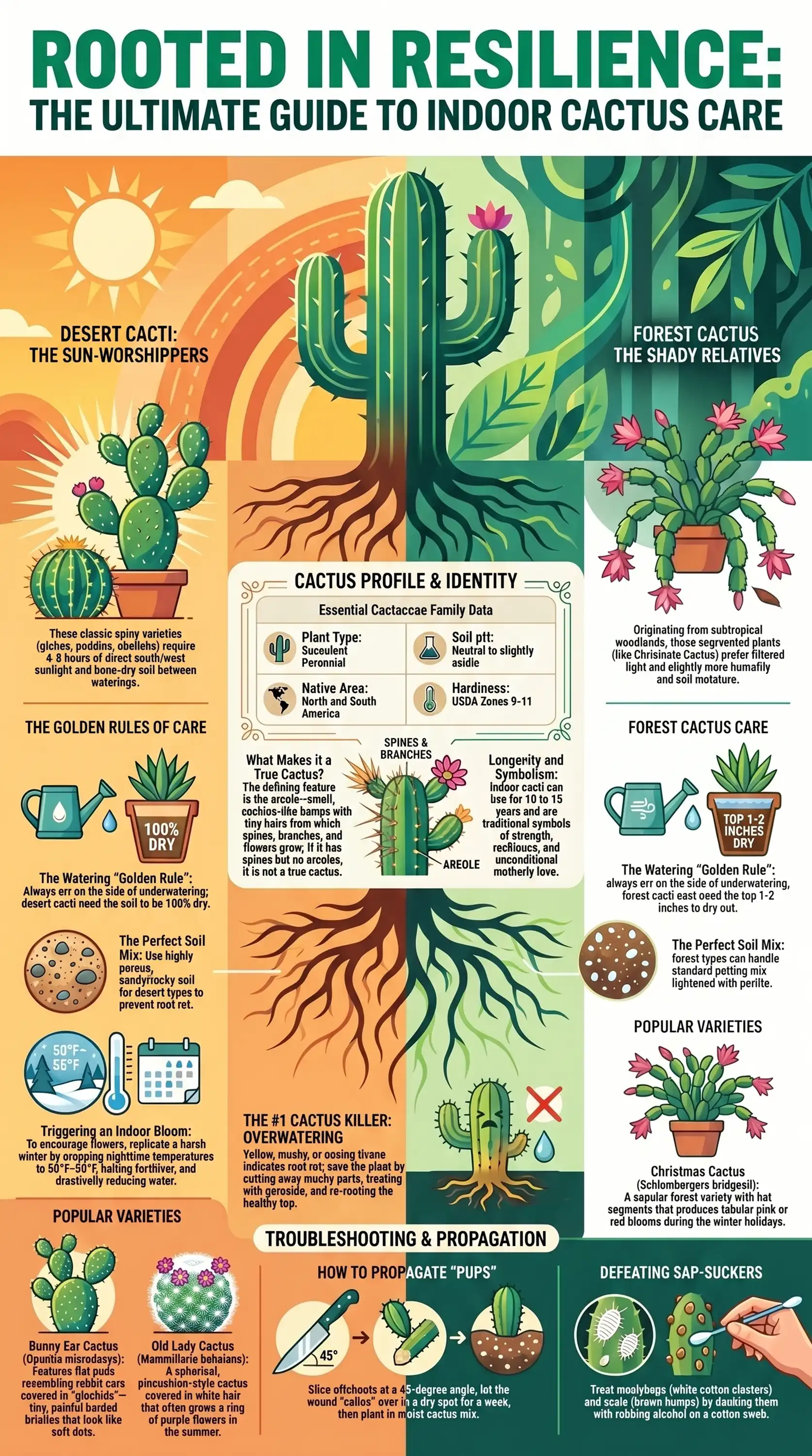
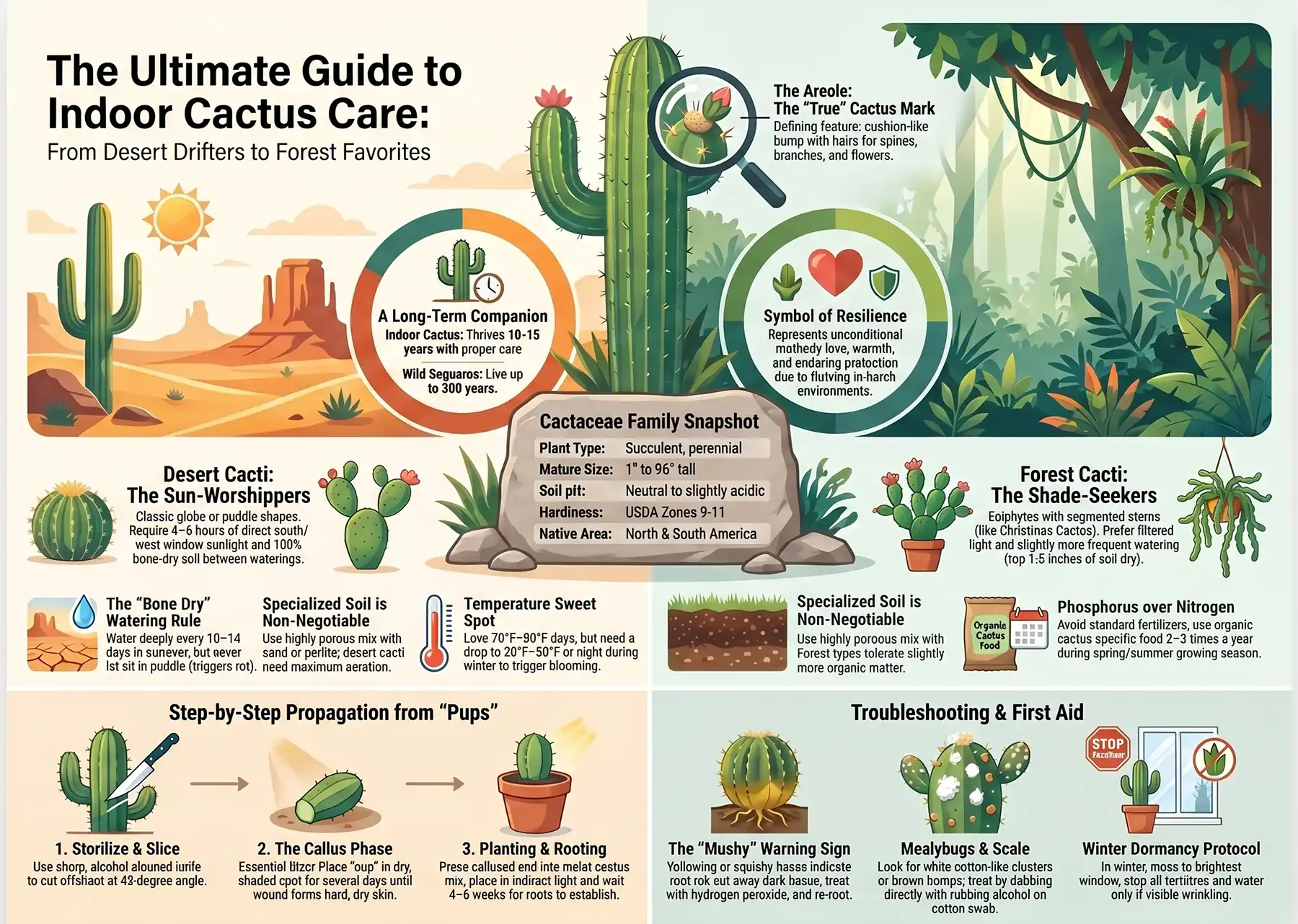
Both groups make spectacular houseplants that require surprisingly little maintenance once you understand their natural rhythms. Desert cacti are the classic, spine-covered beauties shaped like globes, paddles, or towering obelisks. Forest cacti, on the other hand, originate from the dappled shade of subtropical woodlands. They often grow as epiphytes (clinging to trees) and feature segmented, trailing stems that make them perfect for hanging baskets.
Whether you are nurturing a classic prickly pear or a vibrant Christmas cactus, this comprehensive guide covers everything you need to know to keep your spiky—and not-so-spiky—friends thriving.
Cactus Profile Quick Look
| Feature | Details |
| Common Name | Cactus |
| Family | Cactaceae |
| Plant Type | Succulent, perennial |
| Mature Size | 1 to 96 inches tall, 2 to 30 inches wide |
| Sun Exposure | Full sun to partial shade (depending on type) |
| Soil Type | Well-draining, sandy, rocky |
| Soil pH | Neutral to slightly acidic |
| Bloom Time | Summer (Desert), Winter (some Forest varieties) |
| Flower Color | Orange, pink, red, yellow, white, purple |
| Hardiness Zones | 9-11 (USDA) |
| Native Area | North America, South America |
Essential Indoor Cactus Care
Cacti are widely considered some of the toughest houseplants on the market. Their stark, sculptural beauty makes them fantastic statement pieces. However, the biggest misconception is that they thrive on absolute neglect. To get the best out of your plant—and perhaps even coax out a rare indoor bloom—you need to mimic its native environment.
Light Requirements
Light is the lifeblood of any cactus. Most desert varieties demand four to six hours of bright, direct sunlight every single day. A south-facing or west-facing window is usually the best real estate in your house for these sun-worshippers.
Forest cacti, accustomed to growing under the canopies of trees, prefer bright but filtered or indirect light. Direct, scorching summer sun can actually sunburn their delicate segments.
Pro Tip: You can move your indoor cacti outside to a patio or balcony during the summer to soak up extra rays. Just ensure the nighttime temperatures remain consistently above 50°F, and acclimate them slowly to prevent sunburn.
The Best Potting Soil Mix for Indoor Cactus
The fastest way to kill a cactus is by letting its roots sit in soggy, dense dirt. Desert cacti require a highly porous, fast-draining soil mix. You can purchase a specialized commercial cactus mix, or create your own by heavily amending standard potting soil with coarse sand, pumice, or perlite to maximize aeration and drainage.
Forest cacti also require excellent drainage but tolerate slightly richer, more organic soil compared to their desert cousins. A standard potting mix lightened with a few handfuls of perlite works wonders for them.
Watering: The Golden Rule
When it comes to watering, err on the side of underwatering. During their active growing season in the spring and summer, give your desert cactus a deep, hearty watering every ten to fourteen days. Allow the water to run entirely through the drainage holes, and then empty the saucer. Never let a cactus sit in a puddle.
Allow the soil to dry out completely—100% bone dry—before you even think about picking up the watering can again. Forest cacti prefer slightly more frequent watering, allowing only the top inch or two of soil to dry out between drinks.
Temperature and Humidity
Most cacti are heat lovers, thriving in daytime temperatures between 70°F and 80°F. However, in their natural desert habitats, they are accustomed to significant temperature drops at night. While they can tolerate cool indoor drafts, it is best to keep them away from blasting AC vents in the summer or freezing window panes in the dead of winter.
Humidity is generally a non-issue for desert species; the dry air of modern homes suits them perfectly. Forest cacti appreciate a slightly more humid environment. If your home is exceptionally dry, placing their pot on a pebble tray filled with water will provide localized humidity as the water evaporates.
Fertilizer
In the wild, cacti survive in incredibly nutrient-poor soils. While not strictly necessary, feeding your plant can encourage stronger growth and potential blooming. Avoid standard, nitrogen-heavy houseplant fertilizers, which can cause weak, leggy growth. Instead, opt for a specialized, organic cactus fertilizer richer in phosphorus. Feed your plant two to three times a year strictly during the active spring and summer growing season.
Popular Types of Indoor Cacti
Not all cacti are created equal. Here are a few standout varieties that adapt beautifully to indoor container living:
- Bunny Ear Cactus (Opuntia microdasys): Native to Northern Mexico, this architectural plant features flat, stem-like pads that perfectly resemble rabbit ears. Handle with extreme caution! Instead of long thorns, they possess “glochids”—tiny, barbed bristles that look like soft polka dots but will painfully embed themselves in your skin.
- Old Lady Cactus (Mammillaria hahniana): This charming, spherical cactus looks like a fuzzy pincushion. It is covered in white hair and sharp spines, often crowning itself with a ring of beautiful, vibrant purple flowers in the spring and summer.
- Star Cactus (Astrophytum asterias): Also known as the sand dollar or sea urchin cactus, this spineless, star-shaped dome is a minimalist’s dream. It stays small (only a few inches wide), making it a brilliant candidate for well-ventilated indoor terrariums.
- Christmas Cactus (Schlumbergera bridgesii): The quintessential forest cactus. Native to the coastal mountains of Brazil, it features flat, segmented stems and produces spectacular, tubular blooms in shades of pink, red, and white just in time for the winter holidays.
Maintenance and Propagation
Pruning
Generally, cacti do not require pruning unless you are trying to manage their size, remove dead tissue, or harvest offshoots for propagation. If you must prune, always use sterilized, razor-sharp garden shears to make clean cuts, and wear heavy-duty leather gloves.
How to Propagate Indoor Cactus from Pups
Many cacti naturally produce small offshoots, affectionately known as “pups,” around their base or along their stems. Removing these pups not only helps you multiply your plant collection but also directs the mother plant’s energy into new, vigorous growth.
- Prepare your tools: Gather thick gloves, a sharp knife, rubbing alcohol, cactus potting mix, and a small nursery pot.
- Sterilize: Wipe your knife blade with alcohol to prevent introducing bacteria to the plant.
- Cut the pup: Locate a healthy offshoot and slice it away from the mother plant at the base using a 45-degree angle. This slanted cut helps water run off the wound, preventing rot.
- Callus over: This is the most crucial step! Place the cut pup in a dry, shady spot for several days to a week until the cut end forms a hard, dry callus.
- Plant: Fill your new pot with slightly moistened cactus mix. Gently press the callused end of the pup into the soil.
- Wait and root: Place the pot in bright, indirect light. Resist the urge to water heavily; simply mist the top of the soil occasionally. Roots should establish in four to six weeks.
Growing From Seed
Growing cacti from seed is a rewarding but slow process. Because indoor plants rarely flower and produce seed pods, you will likely need to purchase seeds from a reputable nursery.
Many cactus seeds require “stratification”—a cold-treatment process that tricks the seed into thinking it has survived a winter, signaling that it is safe to sprout. Place your seeds in a baggie of slightly moistened peat moss and keep them in the refrigerator for four to six weeks. Once removed, sow them shallowly in cactus mix, cover the pot with clear plastic to retain humidity, and keep them in a warm, brightly lit spot. Germination can take up to a month, and it will be several months before they look like recognizable, miniature cacti.
Potting and Repotting
Because of their slow growth rate and shallow root systems, cacti rarely need repotting. In fact, many species actually prefer to be slightly root-bound to produce flowers. Plan to repot only every two to four years when the plant genuinely outgrows its container or if you suspect soil degradation or root rot. Always choose a pot (terra-cotta is ideal for breathability) only one to two inches wider than the current one.
Overwintering: The Dormancy Period
Winter care is all about stepping back. As daylight hours shorten, your cactus enters a natural dormancy period.
- Maximize Light: Move the plant to the absolute brightest, sunniest window available to compensate for the weaker winter sun.
- Halt Fertilizer: Stop feeding entirely until spring.
- Drastically Reduce Water: Only water when the plant shows signs of dehydration (slight wrinkling) or roughly once a month. Overwatering during dormancy is the number one killer of indoor cacti.
Pests, Diseases, and Common Issues
Why is My Indoor Cactus Turning Yellow and Mushy?
If your cactus is soft, squishy, yellowing, or oozing at the base, you are likely dealing with root rot or bacterial rot caused by overwatering. This is a severe issue. If the rot is isolated to the base, you may be able to save the plant by surgically cutting away all the mushy, dark tissue until only pristine, green flesh remains. Treat the cut with diluted hydrogen peroxide, let it callus for a week, and attempt to re-root the healthy top portion in fresh, dry soil.
Common Pests
Cacti can fall victim to sap-sucking insects:
- Mealybugs: Look like tiny clusters of white cotton tucked into the crevices and areoles of the plant.
- Scale Insects: Appear as hard, brown, dome-like bumps securely fastened to the stems.
- Spider Mites: Microscopic pests that leave fine, dusty webbing across the spines.
Treatment: Skip harsh chemical insecticides, as many indoor pests are resistant. Instead, dip a cotton swab in rubbing alcohol and dab it directly onto mealybugs and scale to dissolve their protective shells. For spider mites, a gentle shower under the sink hose (being careful not to flood the soil) usually washes them away.
How to Get an Indoor Cactus to Bloom
Seeing an indoor desert cactus bloom is a rare and thrilling event. To trigger flowering, you have to replicate the harsh conditions of their native environments.
The secret lies in the winter dormancy. To set buds, a cactus needs a distinct cool-down period. This means experiencing nighttime temperatures dropping to 50°F to 55°F during the winter months, coupled with a drastic reduction in water and an absolute halt on fertilizer. If you keep your house at a balmy 72°F all winter long, your plant will stay vegetative and green, but it likely will not flower. Come spring, resume normal watering and provide maximum sunlight to fuel the bloom cycle.