- The Ultimate Houseplant: How to Grow and Care for a Spider Plant
- Spider Plant Profile Quick Look
- The Incredible Benefits of Spider Plants
- Spider Plants and Air Purification
- Pet-Friendly (With a Twist)
- Essential Spider Plant Care
- Light Requirements
- Soil Needs
- Water: The Chemical Sensitivity
- Temperature and Humidity
- Fertilizer
- Popular Types of Spider Plants
- Pruning and Maintenance
- Propagating: How to Root Spiderettes
- Method 1: Water Propagation (The Fastest Way)
- Method 2: Soil Layering (The Natural Way)
- Growing From Seeds
- Growing in Pots
- Common Pests and Diseases
- Common Issues (Troubleshooting)
- Why Are the Tips of My Spider Plant Turning Brown?
- Why Isn't My Spider Plant Making Babies?
- Leaves Folding in Half
- FAQ
The Ultimate Houseplant: How to Grow and Care for a Spider Plant
Welcome back to Plant It! If you are searching for a houseplant that is practically foolproof, visually dynamic, and incredibly rewarding to grow, it is time to embrace the vintage charm of the Spider Plant (Chlorophytum comosum).
A staple of 1970s macramé hangers and modern minimalist apartments alike, the Spider Plant is famous for its arching, grass-like foliage and its delightful habit of shooting out long stems adorned with tiny, star-shaped flowers and miniature plantlets (affectionately called “spiderettes” or “babies”). Originating from the coastal areas of South Africa, these vigorous growers have adapted beautifully to indoor container living.
Beyond their retro aesthetic, Spider Plants are beloved for being one of the most adaptable, forgiving, and rapidly growing plants you can own. Whether you are a total beginner or a seasoned indoor jungle curator, this comprehensive, pillar-style guide will teach you everything you need to know about caring for, multiplying, and troubleshooting your Spider Plant.
Spider Plant Profile Quick Look
| Feature | Details |
| Common Name | Spider Plant, Ribbon Plant, Airplane Plant |
| Botanical Name | Chlorophytum comosum |
| Plant Type | Evergreen perennial |
| Mature Size | 1 to 2 feet tall, 2 to 3 feet wide |
| Sun Exposure | Bright, indirect light to partial shade |
| Soil Type | Well-draining, loamy potting mix |
| Soil pH | Neutral to slightly acidic (6.0 to 7.2) |
| Toxicity | 100% Non-toxic to cats, dogs, and humans |
| Native Area | Southern and Tropical Africa |
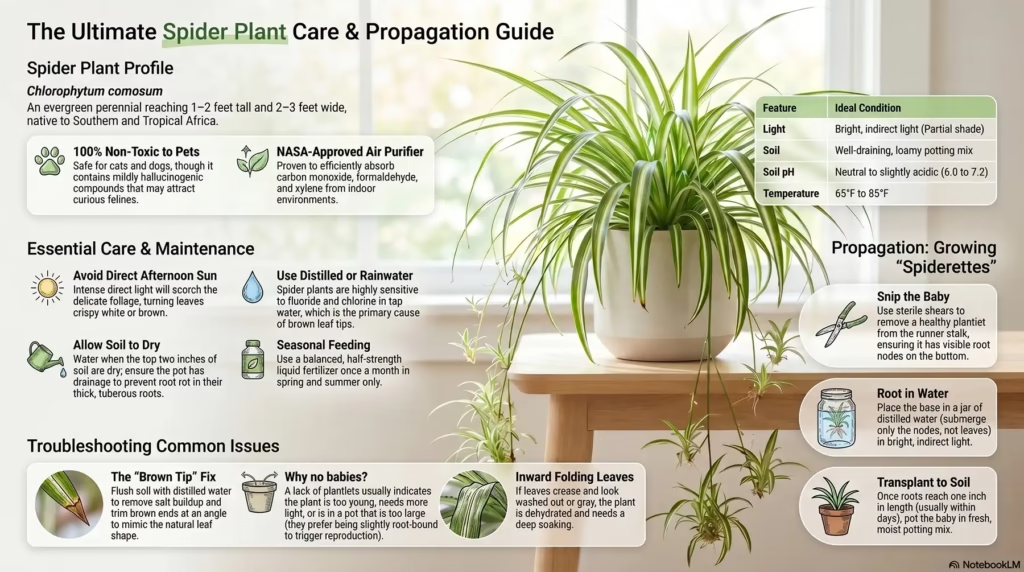
The Incredible Benefits of Spider Plants
Before we dive into the care routine, it is worth highlighting why this plant deserves a prime spot in your home.
Spider Plants and Air Purification
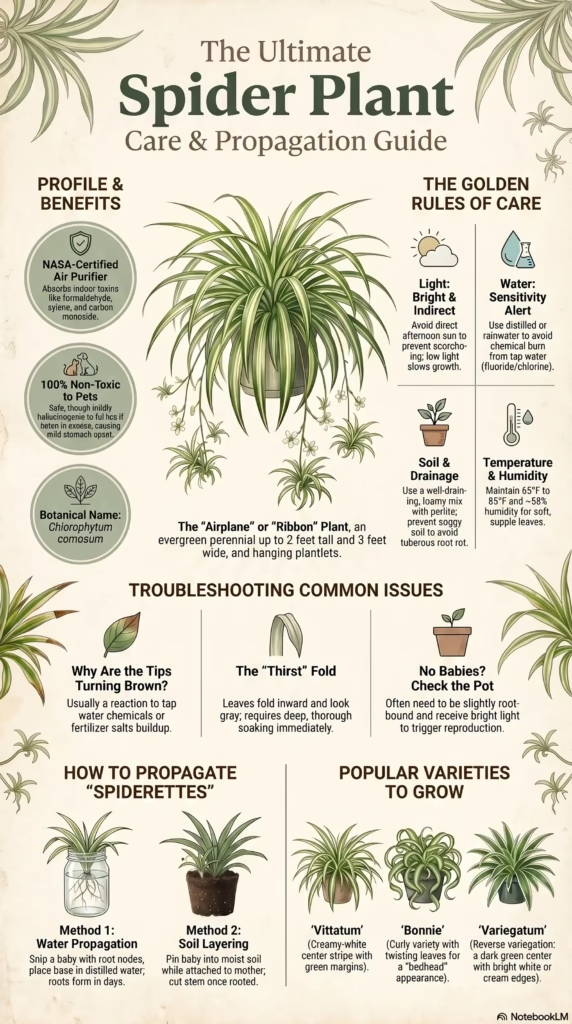
If you want to breathe easier, get a Spider Plant. In NASA’s famous 1989 Clean Air Study, the Spider Plant was highlighted as a powerhouse for indoor air purification. The study revealed that these plants are exceptionally efficient at absorbing carbon monoxide, formaldehyde, and xylene from the ambient air—toxins commonly off-gassed by synthetic carpets, furniture, and household cleaning products.
Pet-Friendly (With a Twist)
Spider Plants are entirely non-toxic to cats and dogs. However, you might notice your feline friends are obsessively drawn to chewing on the leaves. This is because Spider Plants possess chemical compounds that are mildly hallucinogenic to cats (similar to the effects of catnip). While it will not poison them, eating too much foliage can cause a mild upset stomach, so you may still want to keep the plant in a high hanging basket out of paws’ reach!
Essential Spider Plant Care
Spider Plants are incredibly resilient and have thick, tuberous, water-storing roots that allow them to bounce back from occasional neglect. However, to keep them vibrant and producing babies, you need to get the basics right.
Light Requirements
To maintain their bold variegation (the distinct white and green stripes), Spider Plants need bright, indirect sunlight. A spot a few feet away from an east-facing or west-facing window is absolutely perfect.
While they are highly adaptable and will easily survive in low-light environments (like a dim bedroom or office), their growth will slow down dramatically, the leaves may become entirely solid green, and they will likely refuse to produce flowers or babies. Never place them in direct, hot afternoon sun, as the delicate foliage will quickly scorch and turn a crispy white or brown.
Soil Needs
These plants are not particularly fussy about their soil, provided it drains well. The best potting soil mix for indoor spider plants is a standard, high-quality indoor potting mix heavily amended with perlite or pumice to ensure excellent aeration. If the soil is too dense and heavy, the thick tuberous roots will quickly rot.
Water: The Chemical Sensitivity
Watering is where most Spider Plant owners run into trouble. They like their soil to be evenly moist but never soggy. Let the top two inches of the soil dry out completely before watering again. During the winter, you can let the soil dry out even further.
Crucial Watering Tip: Spider Plants are incredibly sensitive to the fluoride, chlorine, and excess salts found in typical municipal tap water. Using tap water is the primary cause of the infamous “brown tips.” To keep your foliage pristine, water your plant strictly with distilled water, collected rainwater, or filtered water.
Temperature and Humidity
Keep your indoor environment comfortably between 65°F and 85°F. They are not frost-tolerant, so protect them from freezing window panes in the winter. They are perfectly happy with standard household humidity, though they will appreciate a slightly more humid environment (around 50%) to keep their leaf edges soft and supple.
Fertilizer
Spider Plants are moderate feeders. Apply a balanced, water-soluble liquid houseplant fertilizer diluted to half strength once a month during the spring and summer. Stop feeding entirely during the fall and winter. Be careful not to over-fertilize, as a buildup of fertilizer salts in the soil will immediately cause the tips of the leaves to burn and turn black.
Popular Types of Spider Plants
While the classic variegated version is the most common, there are a few striking cultivars to look out for:
- ‘Vittatum’: The classic variety. Features a broad, creamy-white stripe running straight down the center of the leaf, flanked by green margins.
- ‘Variegatum’: The reverse of the classic. It has a solid, dark green center with stark white or creamy margins along the edges.
- ‘Bonnie’ (Curly Spider Plant): A wildly popular, compact variety featuring leaves that curl, twist, and spiral back toward the pot, giving the plant a fun, eccentric, “bedhead” look.
- ‘Hawaiian’: A fascinating variety where the new leaves emerge with bright white variegation, but slowly fade to a lush, solid green as the plant matures.
Pruning and Maintenance
Maintenance is minimal but necessary for aesthetics. Over time, it is natural for the oldest, lowest leaves to yellow and dry up. Simply pull them gently from the base of the plant or snip them with sterile scissors.
If you do get brown tips (which happens to the best of us), you can use sharp, sterilized scissors to cut the brown tip off. Pro tip: Cut the tip at an angle to mimic the natural point of the leaf so the trim isn’t as obvious!
Propagating: How to Root Spiderettes
Spider Plants are arguably the easiest houseplant in the world to propagate. In the spring and summer, mature plants will send out long stalks (stolons) that bloom with tiny white flowers, followed by miniature spider babies.
Method 1: Water Propagation (The Fastest Way)
- Using sterile shears, snip a healthy baby off the main runner stalk. Ensure the baby has small, knobby root nodes on its bottom.
- Place the base of the baby into a small glass or jar filled with distilled water. Ensure only the bottom root nodes are submerged; if the leaves sit in the water, they will rot.
- Place the jar in bright, indirect light. You will see thick, white roots form in a matter of days!
- Once the roots are an inch long, pot the baby in fresh, moist soil.
Method 2: Soil Layering (The Natural Way)
This mimics how the plant spreads in the wild. Do not cut the baby off the mother plant. Instead, place a small pot of moist soil right next to the mother plant. Pin the baby down into the new pot of soil using a paperclip, ensuring it stays attached to the runner. In a few weeks, the baby will root itself into the new pot. Once it is firmly rooted, you can cut the umbilical cord stalk connecting it to the mother!
Growing From Seeds
While extremely rare indoors due to a lack of natural pollinators, if your Spider Plant flowers, you can gently rub the blooms with a small paintbrush to cross-pollinate them. If successful, small, green, three-sided seed pods will form. Once the pods dry and turn brown, crack them open to reveal flat, black seeds. Plant these seeds immediately in moist peat moss, cover them with a humidity dome, and keep them warm until they sprout.
Growing in Pots
- The Right Container: Because their thick, fleshy roots expand rapidly and hold immense amounts of water, a Spider Plant can actually crack thin plastic or delicate ceramic pots! A sturdy plastic nursery pot placed inside a heavy decorative cachepot, or a strong terra-cotta pot with drainage holes, is ideal.
- Repotting: Spider Plants grow incredibly fast and will likely need repotting every year or two. You will know it is time when the roots literally push the plant up and out of the pot, or when you have to water the plant every two days because the pot is entirely filled with roots.
Common Pests and Diseases
Spider Plants are generally robust, but stressed plants can succumb to common indoor invaders.
- Spider Mites: Microscopic pests that thrive in dry air. They leave fine, dusty webbing in the center of the plant and turn the leaves a mottled, pale yellow. Treat with neem oil and increase ambient humidity.
- Fungus Gnats: Tiny black flies that buzz around the soil, usually indicating that you are watering too frequently. Let the top layers of the soil dry out thoroughly.
- Root Rot: The absolute biggest killer of Spider Plants. If the plant is wilting, turning a mushy yellow at the base, and the soil smells foul, the roots are rotting from sitting in standing water. You must repot into dry soil immediately.
Common Issues (Troubleshooting)
Why Are the Tips of My Spider Plant Turning Brown?
This is the universal Spider Plant struggle. Brown tips are almost exclusively caused by chemical burn from tap water (fluoride and chlorine). It can also be caused by a heavy buildup of fertilizer salts in the soil. To fix this, flush the soil thoroughly with distilled water and strictly use filtered or collected rainwater moving forward.
Why Isn’t My Spider Plant Making Babies?
If you want to know how to get my spider plant to produce babies, you must understand its natural triggers.
- Age: Juvenile plants do not reproduce. The plant must be mature.
- Light: A Spider Plant kept in low light will never have the energy to push out runners. Move it to a much brighter spot.
- Root-Bound: Spider plants reproduce best when they are slightly stressed. If the pot is too large, the plant will focus all its energy on growing roots rather than making babies. They need to be comfortably snug in their pots to trigger reproduction.
Leaves Folding in Half
If the flat, wide leaves are suddenly folding inward, creasing down the center, and looking slightly gray or washed out, the plant is desperately thirsty. Give it a deep, thorough soaking!