Table of Contents
The “Pass-It-On” Houseplant: How to Care for a Chinese Money Plant
Welcome back to Plant It! If you’ve spent any time scrolling through interior design boards or plant-lover feeds recently, you’ve undoubtedly paused to admire a charming, quirky little plant with perfectly round, lily-pad-like leaves balancing on delicate stems.
Meet the Pilea peperomioides—affectionately known as the Chinese Money Plant, the UFO Plant, the Pancake Plant, and the Missionary Plant.
Unlike many trendy houseplants that are created in commercial greenhouses, the Pilea has an incredible backstory. In the 1940s, a Norwegian missionary named Agnar Espegren brought a small cutting from China back to Scandinavia. He shared cuttings with friends, who shared them with their friends, and the plant quietly spread across Europe for decades before botanists even officially classified it!
Today, it remains the ultimate “pass-it-on” plant. It is playful, modern, and surprisingly communicative once you learn its language. In this comprehensive guide, we are going to walk you through exactly how to keep your Chinese Money Plant thriving, how to harvest its babies, and how to decode what its leaves are trying to tell you.
A Beginner’s Guide to the Chinese Money Plant
Welcome to plant parenthood! Chinese Money Plants are adorable, fun to grow, and surprisingly easy to care for once you know what they like. If you are just bringing one home, here are a few simple tips to keep your new green friend happy and thriving:
Finding the Perfect Spot
These little guys love the light, but they can actually get sunburned if it’s too intense. You’ll want to place your plant near a bright window, but keep it out of harsh, direct sunbeams. An east- or west-facing window is usually the sweet spot!
The Watering Routine
When it’s time for a drink, go ahead and water your plant deeply so it gets a good soak. However, the golden rule here is to let the soil dry out completely before you water it again. They prefer their soil to be occasionally moist, but they definitely don’t like sitting in a soggy, soaked pot.
Picking the Right Soil
Nobody likes sitting in wet shoes, and your plant’s roots are no exception! They absolutely need well-draining soil so the water doesn’t pool at the bottom. If you aren’t sure what to buy at the store, picking up a bag of succulent or cactus potting mix is a fantastic, foolproof choice to give them the drainage they crave.
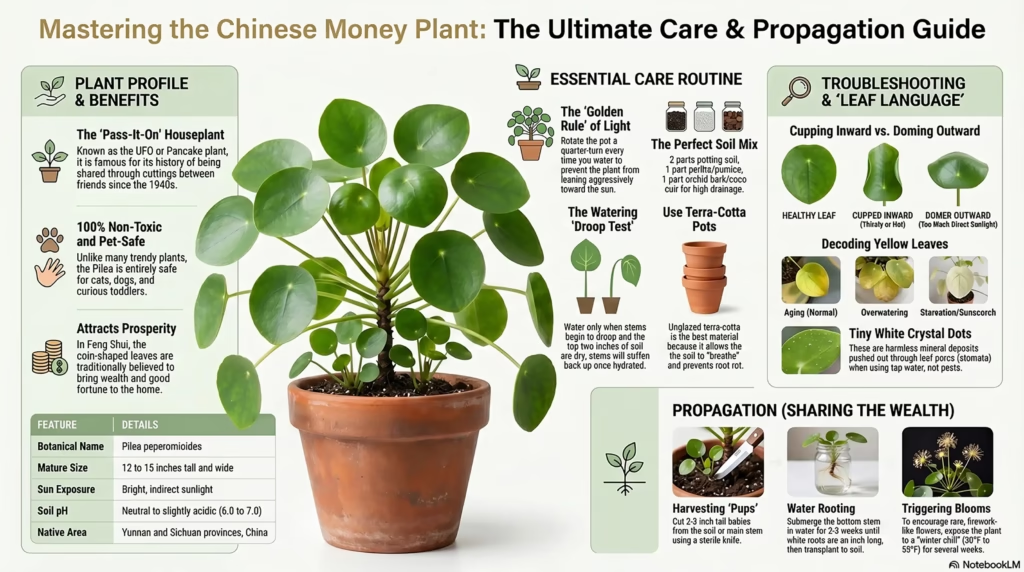
Pilea Peperomioides Profile Quick Look
| Feature | Details |
| Common Name | Chinese Money Plant, UFO Plant, Pancake Plant |
| Botanical Name | Pilea peperomioides |
| Plant Type | Evergreen perennial |
| Mature Size | 12 to 15 inches tall and wide |
| Sun Exposure | Bright, indirect sunlight |
| Soil Type | Rich, chunky, well-draining potting mix |
| Soil pH | Neutral to slightly acidic (6.0 to 7.0) |
| Toxicity | 100% Non-toxic and pet-safe! |
| Native Area | Yunnan and Sichuan provinces, Southern China |
The Benefits of Growing a Chinese Money Plant
Before we get our hands dirty with soil and watering schedules, let’s talk about why this plant deserves a spot on your windowsill.
- It’s entirely pet-safe: Unlike the Monstera or the Fiddle Leaf Fig, the Pilea is completely non-toxic to cats, dogs, and curious toddlers.
- Good Feng Shui: With its coin-shaped leaves, the Chinese Money Plant is traditionally believed to attract wealth, prosperity, and good fortune to the household.
- Endless Gifts: A happy Pilea is incredibly prolific. It constantly pushes out tiny baby plants (pups) from the soil, giving you an endless supply of free houseplants to gift to friends and family.
Essential Care Routine
The Pilea is generally easygoing, but it does have a dramatic streak if it doesn’t get the light and water balance just right. Here is how to keep it happy.
Light: Bright and Rotated
To keep those pancake leaves flat and the stems short and sturdy, your Pilea needs bright, indirect sunlight. A spot a few feet back from a large south-facing or west-facing window is ideal.
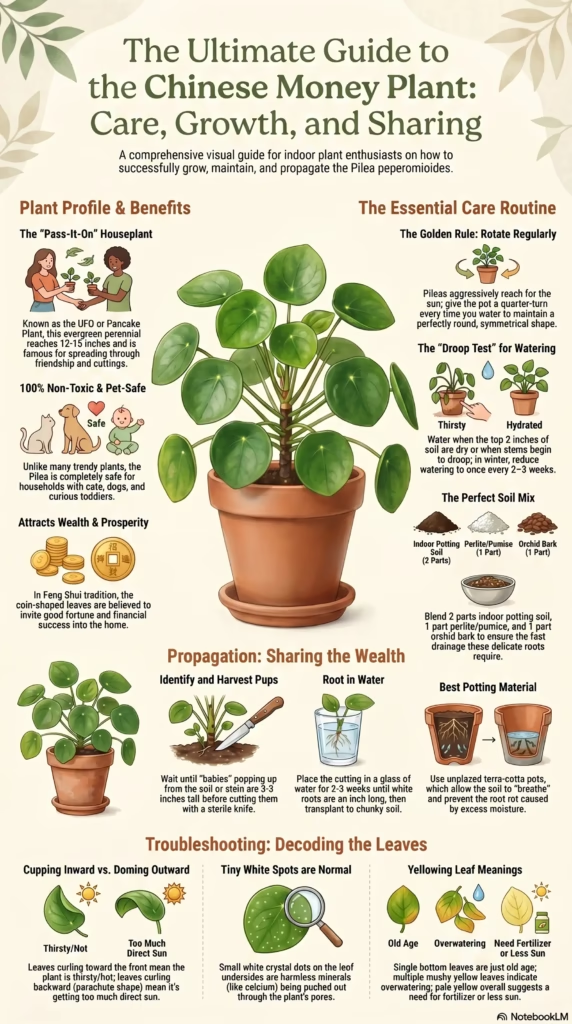
The Golden Rule of Pilea Light: They will aggressively reach for the sun. If you leave your plant sitting in the exact same position, it will quickly become lopsided and start leaning heavily toward the window. To keep its perfectly round, umbrella-like shape, give the pot a quarter-turn every single time you water it.
Note: Keep it out of direct, harsh afternoon sunlight, or the bright green leaves will scorch and turn a washed-out, sickly yellow.
Soil Needs
Because their delicate roots are highly susceptible to rot, standard, dense potting soil straight from the bag will hold too much moisture. The best potting soil mix for chinese money plant growth is light, airy, and drains quickly.
Create the perfect mix by blending:
- 2 parts high-quality indoor potting soil
- 1 part coarse perlite or pumice
- 1 part orchid bark or coco coir
Watering: The “Droop Test”
Your Pilea will literally tell you when it is thirsty. When the plant has plenty of water, its stems will stick straight out, holding the leaves high and stiff. As the soil dries, the stems will begin to gently droop downward, and the leaves will feel slightly soft instead of rigid.
When you see the droop and the top two inches of soil are bone dry, it’s time to water. Drench the pot thoroughly until water flows out of the drainage holes, and immediately empty the saucer.
Wondering how often to water chinese money plant in winter? When the days get shorter, the plant’s growth slows down significantly. You will likely only need to water it once every two to three weeks during the winter dormancy period.
Temperature and Humidity
Pileas prefer comfortable household temperatures between 65°F and 75°F. Keep them away from drafty winter windows, radiators, and blasting AC vents. While they appreciate a bit of ambient humidity, they adapt perfectly fine to standard, dry indoor air. You do not need to bother misting them!
Fertilizer
Feed your Chinese Money Plant with an all-purpose liquid houseplant fertilizer diluted to half strength once a month during the active growing season (spring and summer). Stop fertilizing completely in the fall and winter.
Pruning
Pileas don’t require pruning in the traditional sense to encourage bushy growth; instead, pruning is all about maintenance.
As the plant grows taller and produces a woody trunk, it is completely natural for the oldest, lowest leaves to turn yellow and fall off. This is just the plant shedding its old foliage to direct energy toward new top growth. When a bottom leaf turns fully yellow, simply pull it gently downward to snap it off the main stem.
If your Pilea becomes incredibly tall, leggy, and top-heavy over the years, you can literally chop the entire top half of the plant off with sterile shears, root the top half in water, and watch the remaining bottom stump sprout brand new leaves!
Propagating: How to Share the Wealth
Harvesting the babies (pups) is the most rewarding part of owning a Pilea. Pups will emerge in two ways: popping up directly from the dirt on an underground runner, or growing directly off the main woody stem of the mother plant.
Wait until the pup is about two to three inches tall and has its own distinct set of leaves before attempting to remove it.
How to Propagate Pilea Pups in Water:
- Take a sharp, sterilized knife and dig down slightly into the dirt to cut the pup’s stem where it connects to the mother plant.
- Place the baby in a small shot glass or propagation tube filled with room-temperature water. Ensure the bottom stem is submerged, but the leaves stay dry.
- Place it in a bright windowsill and change the water every few days.
- Within 2 to 3 weeks, you will see a robust system of white water roots form. Once the roots are an inch long, plant the pup in fresh, chunky soil!
(You can also skip the water and plant the freshly cut pup directly into moist soil, but the water method is much faster and more fun to watch!)
Growing in Pots
- The Best Pot Material: Terra-cotta is a Pilea’s best friend. Because they hate sitting in wet soil, the porous nature of unglazed terra-cotta clay allows the soil to “breathe” and dry out much faster than a plastic or ceramic pot.
- Repotting: Pileas like to be somewhat snug in their pots. Only repot when the roots are tightly circling the bottom or poking out of the drainage holes (usually every 2 years). Choose a pot that is only 1 to 2 inches wider than the current one to prevent excess soil from trapping moisture and causing root rot.
The Pilea Bloom
Yes, they actually flower! While it is somewhat rare to see indoors, if you want to know how to get chinese money plant to bloom indoors, the secret is a winter chill.
If your mature plant experiences a period of cooler temperatures (around 50°F to 55°F) for a few weeks during the winter, it will often trigger blooming in the spring. The flowers aren’t huge or showy; they look like tiny, delicate clusters of white or light pink fireworks shooting out on a branching stem.
Common Pests and Diseases
Pileas are robust, but they can occasionally attract standard houseplant pests.
- Fungus Gnats: Tiny black flies buzzing around the soil surface. They are a glaring warning sign that your soil is staying too wet. Let the top layers of dirt dry out thoroughly to kill the larvae.
- Spider Mites: Microscopic pests that leave fine, dusty webbing on the undersides of the leaves. Wipe the leaves down with a damp cloth and treat with neem oil.
- Root Rot: If your plant is wilting, the leaves are turning dark and mushy, and the soil smells foul, the roots are suffocating from overwatering. You must unpot it, cut away the black roots, and repot in dry soil immediately.
Common Issues (Troubleshooting)
Why Are My Pilea Peperomioides Leaves Curling?
This is the most common Pilea struggle! If your perfectly flat UFO leaves are suddenly doming or curling, look at the shape:
- Cupping Inward (Edges curling toward the front): The plant is desperately thirsty or experiencing heat stress. Give it a deep watering and move it away from any heat sources.
- Doming Outward (Edges curling backward, making the leaf look like a parachute): This is almost always caused by light stress. The plant is receiving too much intense, direct sunlight and is curling its leaves backward to reduce its surface area and protect itself. Move it back from the window.
Yellowing Leaves
If a single bottom leaf turns yellow, it’s just old age. If multiple lower leaves are turning a soft, mushy yellow, you are overwatering. If the entire plant is turning a pale, faded yellow/green, it is either starving for fertilizer or receiving too much harsh sunlight.
Drooping Stems
If the stems are hanging limply and the soil is bone dry, it just needs a drink. However, if the stems are drooping but the soil feels heavy and wet, the roots have begun to rot and can no longer pull water up into the stems.