In This Article
Bring the Tropics Home: How to Grow and Care for an Areca Palm
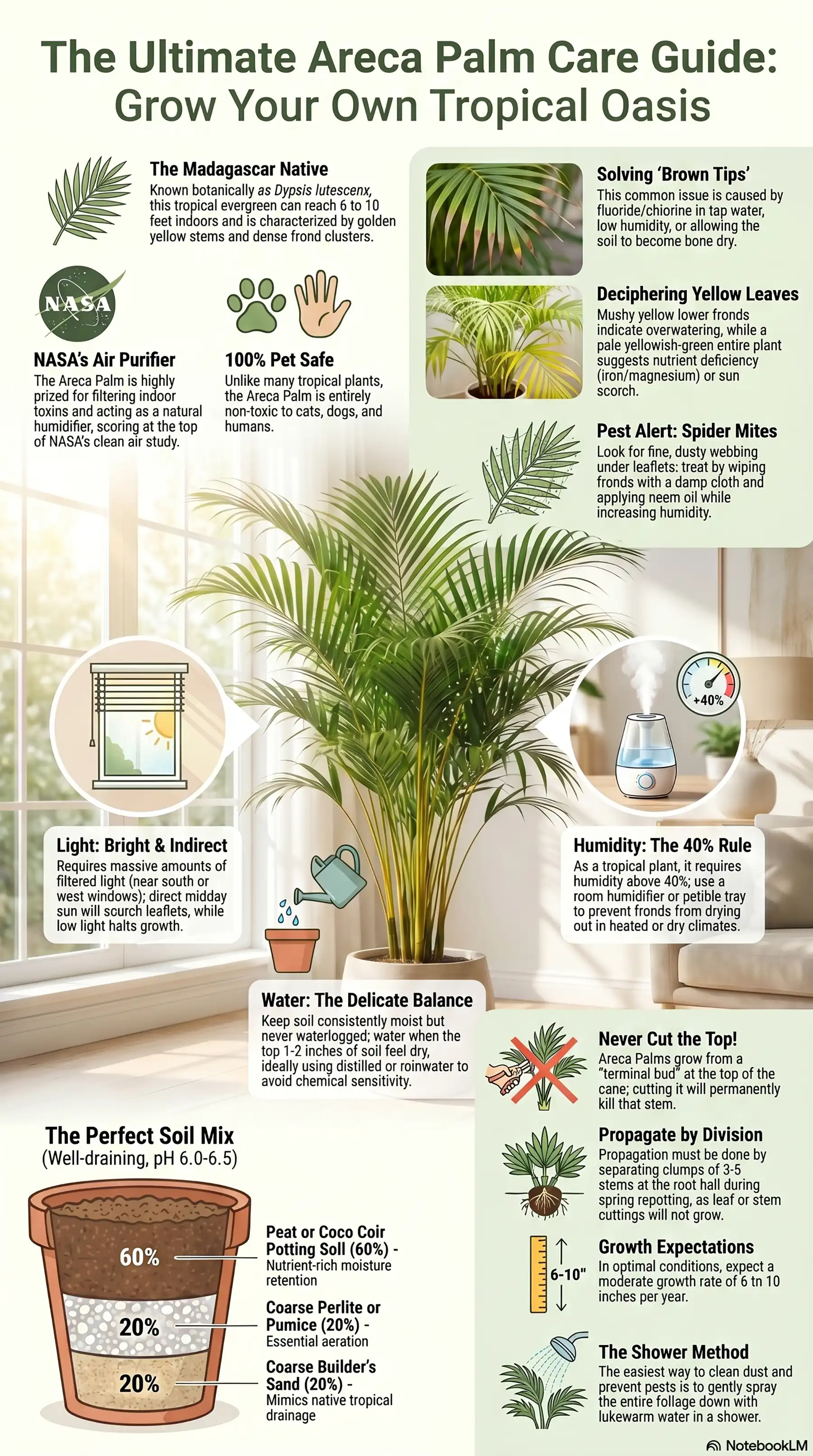
Welcome back to Plant It! If you are looking to add a massive splash of lush, feathery greenery to your home, few houseplants can compete with the majestic Areca Palm (Dypsis lutescens).
Also known as the Butterfly Palm or Golden Cane Palm (due to its vibrant, golden-yellow stems), this Madagascar native is a staple of interior design. It grows in beautiful, dense clusters of arching fronds that instantly transform any bright room into a tropical oasis.
Beyond its striking architectural presence, the Areca Palm is highly prized for its air-purifying qualities, famously scoring at the top of NASA’s clean air study for its ability to filter indoor toxins and act as a natural humidifier. However, it does have a reputation for being a bit temperamental regarding its water and humidity needs. In this comprehensive guide, we will break down exactly how to care for your Areca Palm, how to keep those fronds perfectly green, and how to troubleshoot the dreaded “brown tips.”
Areca Palm Profile Quick Look
| Feature | Details |
| Common Name | Areca Palm, Butterfly Palm, Golden Cane Palm |
| Botanical Name | Dypsis lutescens |
| Plant Type | Tropical evergreen palm |
| Mature Size | 6 to 10 feet tall indoors (up to 30 feet outdoors) |
| Sun Exposure | Bright, indirect sunlight |
| Soil Type | Rich, well-draining, peat-based mix |
| Soil pH | Slightly acidic (6.0 to 6.5) |
| Toxicity | Non-toxic to cats, dogs, and humans |
| Native Area | Madagascar |
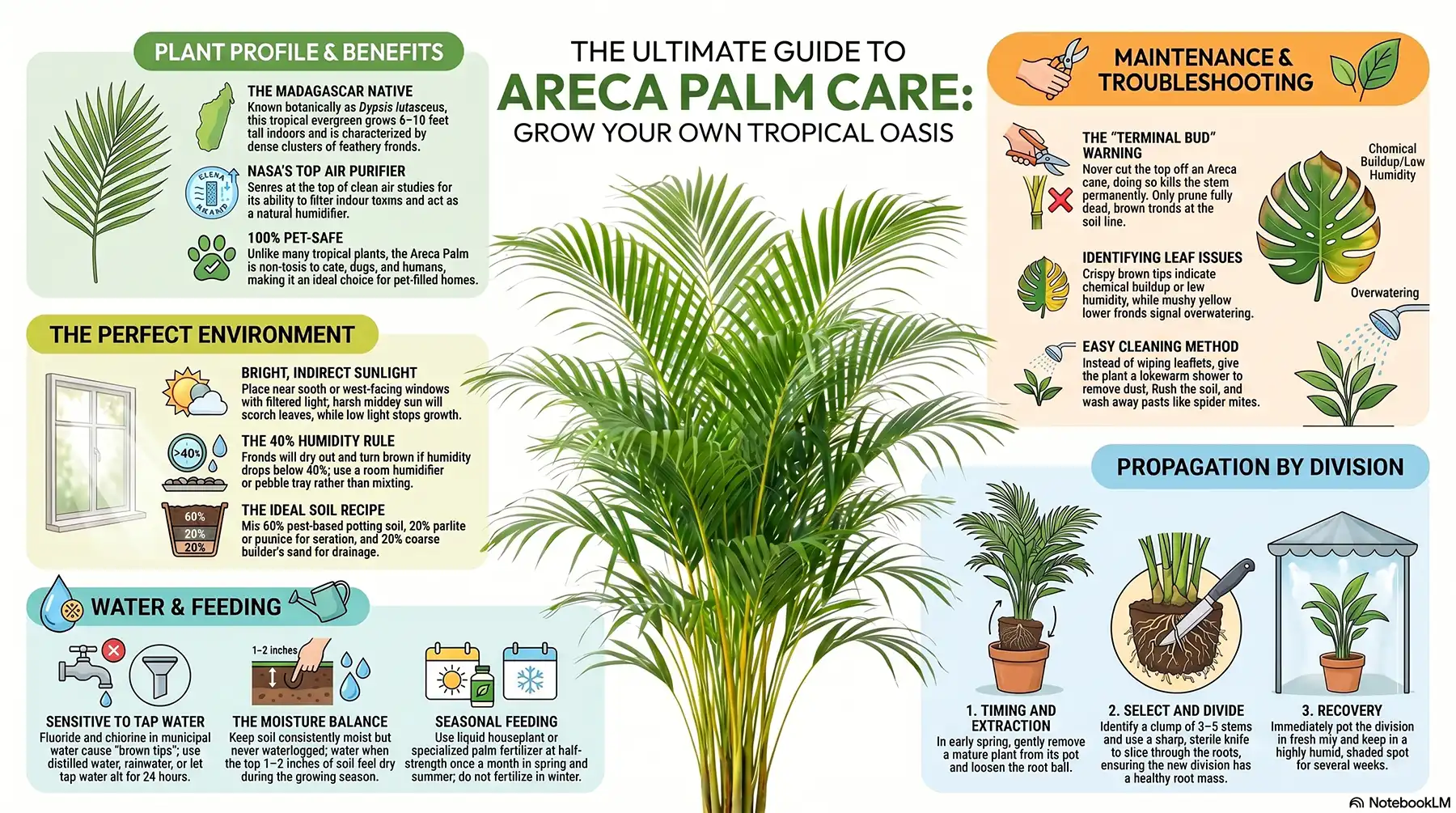
Essential Areca Palm Care
While they are not the hardest houseplant to keep alive, Areca Palms are incredibly communicative. If something in their environment is slightly off, they will immediately let you know through their foliage.
Light Requirements
To maintain its lush, bushy appearance, an Areca Palm needs massive amounts of bright, indirect sunlight. Place it near a south-facing or west-facing window, but ensure the light is filtered through a sheer curtain.
Warning: Never place an indoor Areca Palm in harsh, direct midday sun. The intense UV rays will rapidly scorch the delicate leaflets, turning them a bleached, sickly yellowish-white. Conversely, if placed in a dark, low-light corner, the plant will stop growing and slowly decline.
Soil Needs
Because this plant requires frequent watering but is highly susceptible to root rot, drainage is your top priority. The best potting soil for areca palm in containers is a loose, slightly acidic, peat-based mix.
You can create the perfect environment by blending:
- 60% high-quality indoor potting soil (peat or coco coir based)
- 20% coarse perlite or pumice for aeration
- 20% coarse builder’s sand to mimic its native tropical environment
Water: The Delicate Balance
Figuring out how often to water indoor areca palm plants is the biggest hurdle for new owners. They like their soil to be consistently lightly moist, but never waterlogged.
- During the growing season (spring and summer): Water as soon as the top one to two inches of soil feel dry to the touch.
- Water Quality Matters: Areca Palms are notoriously sensitive to the fluoride, chlorine, and heavy minerals found in standard municipal tap water. Using tap water is the leading cause of brown, crispy leaf tips. Whenever possible, use distilled water, collected rainwater, or tap water that has been left sitting in an open container for 24 hours to let the chlorine evaporate.
Temperature and Humidity
As a tropical native, the Areca Palm loves a warm, humid environment. Keep your home between 65°F and 85°F, and protect the plant from freezing drafts near doors or AC vents.
Humidity is crucial. If your home’s air drops below 40% humidity, the fronds will quickly dry out and turn brown. If you live in a dry climate or run your heater frequently in the winter, you must run a continuous room humidifier near this plant.
Fertilizer
Areca Palms are heavy feeders during their active growth phase. Feed them with a liquid houseplant fertilizer (or a specialized palm fertilizer containing micronutrients like iron and magnesium) diluted to half strength once a month from spring through late summer. Do not fertilize in the winter.
Pruning
Palms grow very differently than standard houseplants. An Areca Palm grows from a “terminal bud” at the very top of each cane. Never cut the top off an Areca Palm cane. If you cut the top off a stem, that stem will permanently die and never produce another frond.
You should only prune away fully dead, entirely brown, or severely damaged fronds. Using sterilized shears, cut the dead frond away completely at the base of the soil line. Do not remove fronds that are only slightly yellowing, as the plant is still drawing nutrients from them.
Propagating: How to Divide an Areca Palm
Unlike a pothos or philodendron, you cannot propagate an Areca Palm from a leaf or stem cutting. Growing them from seed takes years. If you want to multiply your plant, learning how to propagate areca palm by division is your only viable option.
- Timing: Wait until the early spring when you are already planning to repot a mature, densely clustered plant.
- Unpot and Inspect: Gently remove the plant from its container and massage the root ball to loosen the soil.
- Find a Clump: Look for a healthy cluster of 3 to 5 stems (canes) that naturally pull away from the main root mass.
- Divide: Using a sterilized, sharp knife, carefully slice downward through the root ball to separate the clump, ensuring the new division has plenty of healthy roots attached.
- Repot: Immediately plant the new division into a small pot with moist, fresh potting mix. Keep it in a highly humid, shaded spot for a few weeks while it recovers from the transplant shock.
Growing in Pots
- The Right Container: Areca Palms become incredibly top-heavy as they mature. Always choose a heavy, sturdy pot made of thick ceramic or terra-cotta to prevent the plant from tipping over. Massive drainage holes are strictly non-negotiable.
- Repotting: They actually prefer to be slightly root-bound and do not like their roots disturbed. You will only need to repot every two to three years. Only increase the pot size by 2 inches in diameter; a pot that is too large will hold excess water and drown the roots.
Pests and Diseases
The large, dense canopy of the Areca Palm offers plenty of hiding spots for common indoor pests.
- Spider Mites: The arch-enemy of the indoor palm. These microscopic arachnids thrive in dry indoor air and will spin fine, dusty webbing underneath the leaflets, sucking the sap and turning the leaves pale and mottled. Wipe the fronds down with a damp cloth and apply a neem oil spray. Increasing the ambient humidity is the best preventative measure.
- Mealybugs: Look for sticky, white cotton-like masses hiding where the fronds meet the stems. Treat by wiping them away with a cotton swab dipped in rubbing alcohol.
- Pink Rot: A fungal disease that attacks the stems, causing them to turn a sickly pinkish-brown and turn mushy. This is almost exclusively caused by dense, waterlogged soil and poor airflow. Treat by fixing the drainage and applying a copper fungicide.
Common Issues
Why Do My Areca Palm Leaves Have Brown Tips?
This is the single most common issue palm owners face. Brown, crispy tips are caused by one of three things:
- Chemicals in the water: Fluoride and chlorine buildup in the soil burns the tips of the leaves. Switch to distilled or rainwater.
- Lack of Humidity: The air in your home is too dry, sucking the moisture directly out of the delicate leaflets.
- Underwatering: If the soil is allowed to dry out completely and turn bone dry, the tips of the leaves will crisp up rapidly.
Note: You can use sterilized scissors to snip the brown tips off to make the plant look better, just be careful not to cut into the healthy green tissue!
Yellowing Leaves
If the older, lower fronds are turning a soft, mushy yellow, you are overwatering and suffocating the roots. If the entire plant is turning a pale, sickly yellowish-green, it is either receiving too much harsh, direct sunlight or it is severely lacking in nutrients (specifically iron or magnesium).