Table of Contents
Let’s talk about the great gardening lie we’ve all been sold.
You know the one. It’s the promise of the “zero-maintenance garden.” Magazine covers show a gorgeous, sprawling landscape and tell you to “just sit back and let nature do the work.”
Then you try it. Three months later, your yard is a tangled knot of weeds, the deer ate your favorite shrubs, and you’re spending your entire weekend pulling invasive vines in the humid heat.
Here is the truth in 2026: There is no such thing as a zero-maintenance landscape. But there is such a thing as a low-maintenance garden design—if you shift your strategy.
The secret isn’t doing less work. The secret is purpose-driven gardening. It means every single plant in your yard must earn its rent. It either feeds you, supports wildlife, blocks an ugly view, or stops erosion. If it’s just sitting there looking pretty but requiring constant fussing, it gets the boot.
When you combine clear purposes with regional intelligence, you get an easy care landscaping setup that actually works. Let’s build yours.
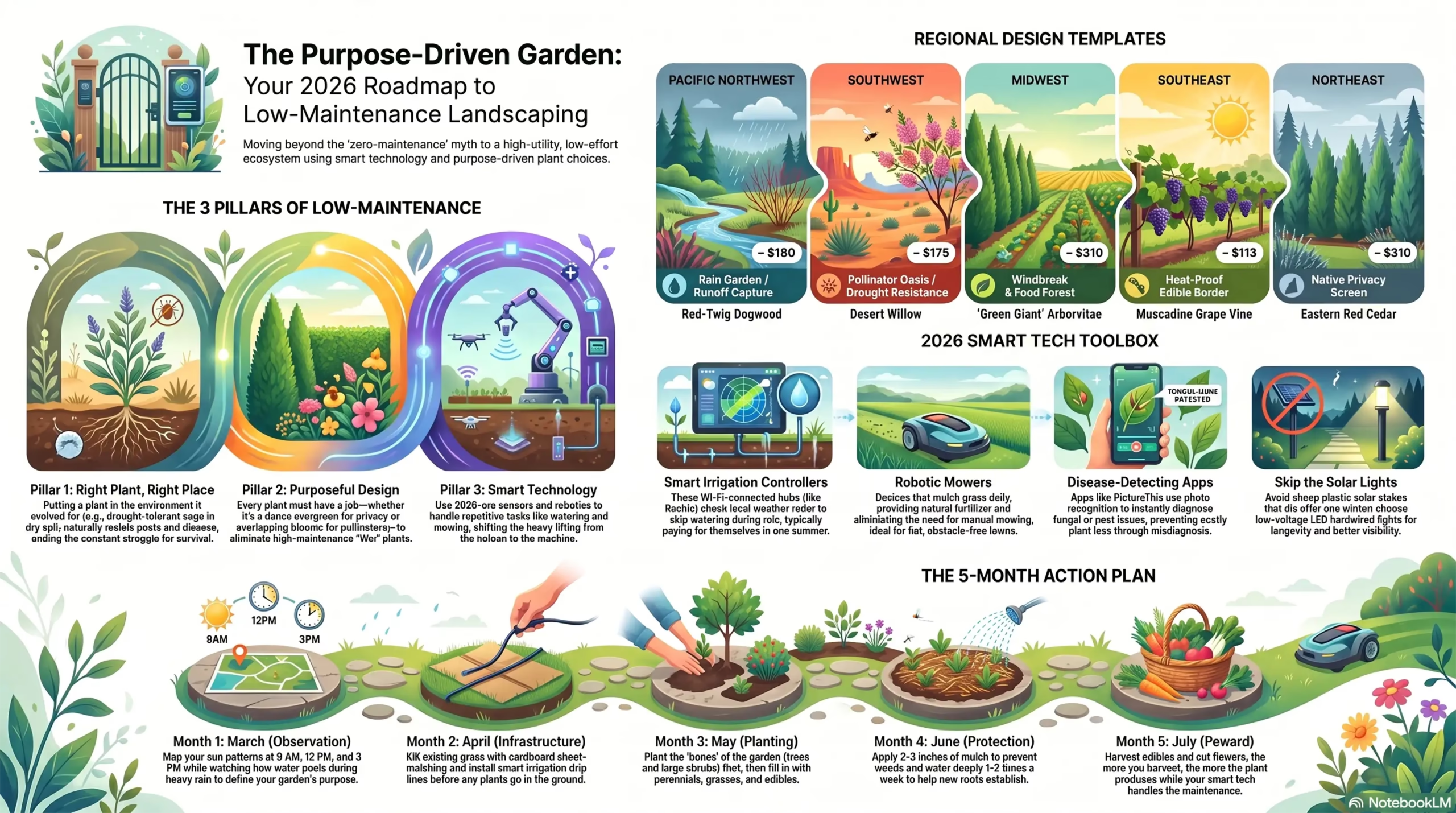
The 3 Pillars of Low-Maintenance
Before you buy a single plant, you need to understand the architecture of a lazy gardener’s yard. It all comes down to three pillars.
Pillar 1: Right Plant, Right Place
This is the golden rule. A shade-loving Japanese Maple planted in the baking afternoon sun will constantly struggle, demanding water and pest control. A drought-tolerant sage planted in a swampy yard will rot and die.
When you put a plant in the exact environment it evolved for, it naturally resists pests and diseases. It grows at the right pace. You stop fighting the plant and start partnering with it.
Pillar 2: Purposeful Design
Stop planting random things because they caught your eye at the nursery. Your yard is a system.
- Need privacy? Plant a dense evergreen screen.
- Want to support bees? Plant overlapping blooms from spring to fall.
- Want food? Build dedicated, raised edible beds.
When every plant has a job, you eliminate the “filler” plants that usually end up being high-maintenance nuisances.
Pillar 3: Smart Technology
We live in the future. A climate-smart garden uses 2026 technology to handle the boring, repetitive tasks so you don’t have to. We’ll get into the exact tools later, but letting robots and sensors do the heavy lifting is the ultimate low-maintenance hack.
Interactive Garden Design Selector
Not everyone lives in the same climate. A garden in Arizona looks completely different from a garden in Maine.
Take this quick mental quiz to find your regional garden plans, then scroll to your customized template.
What is your biggest climate challenge?
- A: Heavy, seasonal rain and poor drainage. (Go to the Pacific Northwest Template)
- B: Extreme heat, intense sun, and strict water restrictions. (Go to the Southwest Template)
- C: Freezing winters, strong winds, and heavy clay soil. (Go to the Midwest Template)
- D: Stifling humidity, heavy downpours, and long, hot summers. (Go to the Southeast Template)
- E: Short growing seasons, freezing winds, and rocky soil. (Go to the Northeast Template)
Template 1: The Pacific Northwest Rain Garden
Purpose: To capture runoff from your roof, prevent flooding, and create a lush wildlife oasis without needing to water.
- The Plant List:
- Red-Twig Dogwood (Cornus sericea): Bright red winter stems, loves wet feet.
- Swamp Milkweed (Asclepias incarnata): Monarch fuel, thrives in soggy spots.
- Douglas Aster (Symphyotrichum subspicatum): Late-fall nectar for sleepy bees.
- Shopping List & Cost: 3 Dogwoods ($60), 10 Milkweed plugs ($40), 20 Aster plugs ($50). Total: ~$150 (Plus a few bags of gravel for the overflow area: $30).
- Year 1 Maintenance Calendar:
- Spring: Water deeply during the first dry spell to help roots establish.
- Summer: Weekly weeding. (Once established in year 2, the native plants will shade out weeds).
- Fall: Do not cut anything down. Leave the seed heads for winter birds.
Template 2: The Southwest Pollinator Oasis
Purpose: To create a vibrant, buzzing habitat that survives entirely on rainfall once established, respecting strict drought laws.
- The Plant List:
- Desert Willow (Chilopsis linearis): A small, drought-tolerant tree with pink trumpet flowers.
- Penstemon (Parry’s): Bright red tubular flowers that hummingbirds obsess over.
- Desert Marigold (Baileya multiradiata): Silvery foliage, relentless yellow blooms, zero water needed.
- Shopping List & Cost: 1 Desert Willow tree ($45), 10 Penstemon ($50), 15 Desert Marigold ($30). Total: ~$125 (Plus 1 cubic yard of decomposed granite: $50).
- Year 1 Maintenance Calendar:
- Spring: Set up a temporary drip irrigation line. Water deeply once a week.
- Summer: Pull any stray weed seedlings before they set root.
- Fall: Disconnect the drip line. Your plants are on their own now!
Template 3: The Midwest Windbreak & Food Forest
Purpose: To block harsh northern winds, reduce heating bills, and provide a steady supply of berries and nuts.
- The Plant List:
- Arborvitae ‘Green Giant’ (Thuja plicata): Fast-growing, dense evergreen wind block.
- Elderberry (Sambucus canadensis): Native shrub that produces massive yields of immune-boosting berries.
- Switchgrass (Panicum virgatum): Deep-rooted native grass that stops soil erosion.
- Shopping List & Cost: 5 Arborvitae ($150), 3 Elderberries ($60), 20 Switchgrass plugs ($60). Total: ~$270 (Plus wood mulch: $40).
- Year 1 Maintenance Calendar:
- Spring: Protect young tree trunks from rabbits with plastic tree guards.
- Summer: Water the Arborvitae deeply during week-long dry spells.
- Fall: Harvest elderberries. Leave the switchgrass standing for winter interest.
Template 4: The Southeast Heat-Proof Edible Border
Purpose: To grow food and flowers that don’t melt in the Southern humidity, while repelling mosquitoes naturally.
- The Plant List:
- Muscadine Grape Vine: A native, disease-resistant grape that laughs at Southern humidity.
- American Beautyberry (Callicarpa americana): Stunning purple fall berries; folk remedy says crushed leaves repel mosquitoes.
- Hot Peppers (Capsicum annuum): Thrive in the heat, produce abundantly.
- Shopping List & Cost: 2 Grape vines ($30), 3 Beautyberry bushes ($45), 6 Pepper plants ($18). Total: ~$93 (Plus pine straw mulch: $20).
- Year 1 Maintenance Calendar:
- Spring: Lay down thick pine straw mulch (3 inches) to keep the soil cool and retain moisture.
- Summer: Pick peppers daily to keep the plants producing. Watch for fungal spots on leaves and remove them immediately.
- Fall: Prune the grape vines back hard to train them onto your fence.
Template 5: The Northeast Native Privacy Screen
Purpose: To create a dense, year-round visual barrier that survives freezing temperatures and heavy snow loads, without the formal look of a fence.
- The Plant List:
- Eastern Red Cedar (Juniperus virginiana): Native evergreen that provides thick privacy and winter bird shelter.
- Winterberry Holly (Ilex verticillata): Deciduous holly that drops its leaves but holds bright red berries all winter.
- Northern Bayberry (Myrica pensylvanica): Salt-tolerant, fragrant foliage, silvery berries.
- Shopping List & Cost: 5 Eastern Red Cedars ($125), 3 Winterberries ($75), 4 Bayberries ($80). Total: ~$280 (Plus compost for soil amendment: $30).
- Year 1 Maintenance Calendar:
- Spring: Water deeply once a week if it doesn’t rain.
- Summer: Keep the area around the base of the cedars clear of tall grass to prevent rodent damage in winter.
- Late Fall: Water heavily right before the ground freezes. This prevents winter burn on the evergreens.
Purpose-Plant Profiles
No matter where you live, you probably have one of three main goals for your yard. Here is how to achieve them with minimal fuss.
The Privacy Screen
You want to block the neighbors, but you don’t want to wait 20 years.
- The Strategy: Don’t plant a single row of the same tree. If a disease hits, they all die. Plant a layered mix of evergreens and tall deciduous shrubs.
- Regional Swaps:
- West Coast: Italian Cypress or Leyland Cypress (fast, but keep them away from the house).
- East Coast/Midwest: ‘Green Giant’ Arborvitae or Eastern White Pine.
- Deep South: ‘Savannah’ Holly or Wax Myrtle.
- Low-Maintenance Tip: Space them slightly closer than the tag recommends (e.g., 5 feet apart instead of 6). They will grow together faster, and you won’t have to weed the gap!
The Cut Flower Garden
You want fresh bouquets on your kitchen table, but you don’t want it to look like an messy farm row.
- The Strategy: Focus on “cut-and-come-again” flowers. These are plants that produce more flowers the more you cut them. Intermingle them with ornamental grasses so the bed looks like a designed perennial border, not a crop field.
- The Best Plants: Zinnias, Cosmos, Snapdragons, and Yarrow.
- Low-Maintenance Tip: Plant them in a grid pattern (like a botanical bento—see our other guides!). When one section stops blooming, you can easily pull it and sow a new crop without disturbing the rest of the garden.
The Edible Border
You want to grow food, but you hate the look of traditional, bare-dirt vegetable gardens with ugly wire cages.
- The Strategy: “Foodscaping.” Mix edible plants right into your standard landscaping.
- The Best Plants: Use Swiss Chard (looks like a fluorescent ornamental foliage plant), Blueberries (beautiful spring flowers, great fall color), and Peppers (architectural shape and bright fruit).
- Low-Maintenance Tip: Keep your food plants in dedicated “zones” within the flower bed so you know exactly where to apply organic fertilizer, and where not to apply it to your flowers.
Smart Tech for Less Work
If you want a truly climate-smart garden in 2026, you need to let technology do the heavy lifting. Here is what is actually worth your money, and what is just a gimmick.
1. Smart Irrigation Controllers (Highly Recommended)
- What it is: A smart hub (like Rachio or Orbit B-hyve) that replaces your dumb, timer-based sprinkler controller. It connects to your Wi-Fi and checks the local weather radar.
- Why it saves work: If it rained on Tuesday, it skips your Wednesday watering. If it’s going to be 95 degrees, it waters deeper.
- Cost-Benefit: ~$150 upfront. It usually pays for itself in water bill savings in one summer, and saves you from dragging hoses around.
2. Robotic Mowers (Worth it for the right yard)
- What it is: Think Roomba for your grass (brands like Husqvarna or EcoFlow). You set a boundary wire, and it mulches your grass daily.
- Why it saves work: You literally never mow again. Because it cuts every day, the clippings are microscopic and fertilize the lawn naturally.
- Cost-Benefit: $600 – $1,500 upfront. Steep, but if you currently pay a lawn service $40/week, it pays for itself in under a year. Note: Best for flat, relatively obstacle-free lawns.
3. Disease-Detecting Apps (Free/Low Cost)
- What it is: Apps like PictureThis or Plantix. You snap a photo of a sick leaf.
- Why it saves work: It instantly tells you if the problem is fungal, bacterial, or a pest, and tells you exactly what organic spray to use. No more guessing and wasting money on the wrong chemical.
- Cost-Benefit: Free to $30/year. Saves you from killing entire plants through misdiagnosis.
4. Solar-Powered Garden Lights (Skip It)
- What it is: Cheap plastic stake lights from the big box store.
- Why it fails: They usually die after one winter, the batteries degrade fast, and they don’t provide enough light to actually see anything.
- The Alternative: Spend a bit more on low-voltage LED hardwired lights, or just embrace the dark and let the moonlight do the work.
The 5-Month Action Plan
Ready to build your purpose-driven yard? Here is your exact roadmap from a blank slate to a living landscape.
Month 1: March (The Observation Phase)
- Watch the water: Go outside during a heavy rain. Where does the water pool? Where does it run off fast? This dictates your drainage.
- Map the sun: Take photos of your yard at 9 AM, 12 PM, and 3 PM. Mark the full-sun spots and the shade pockets.
- Define your purpose: Write down your top three goals (e.g., “Block the street noise,” “Grow tomatoes,” “Help the bees”).
Month 2: April (The Infrastructure Phase)
- Kill the grass: Use the cardboard sheet-mulching method to smother the areas you want to replace.
- Install tech: Put in your smart irrigation controller and drip lines before you plant.
- Build hardscape: Lay down your gravel paths, build your raised beds, or install your edging.
Month 3: May (The Planting Phase)
- Amend the soil: Mix compost into your planting holes, but don’t overdo it.
- Plant the structure: Put in your trees and large shrubs first. These form the “bones” of your low-maintenance garden design.
- Plant the fillers: Add your perennials, grasses, and edibles around the base of the shrubs.
Month 4: June (The Protection Phase)
- Mulch heavily: Apply 2 to 3 inches of hardwood mulch or pine straw over every exposed inch of soil. This is your #1 weed prevention tool.
- Establish watering: For the first month, water your new plants deeply 1-2 times a week. Do not rely on rain.
- Weed aggressively: Pull any weeds that pop up before they go to seed. A 10-minute walk-through with a hoe once a week is all it takes.
Month 5: July (The Reward Phase)
- Harvest: Start picking your edibles and cutting your flowers. The more you take, the more the plant produces.
- Observe: Sit on your patio with a glass of iced tea. Watch the bees visit your purposeful plants. Notice how the smart irrigation kicked on while you were sleeping.
- Breathe: You did it. You built a yard that works for you, not the other way around.
Final Thoughts
Gardening shouldn’t feel like a second job.
When you strip away the lawns that don’t belong in your climate, stop planting flowers that don’t feed anything, and let a little bit of smart tech handle the watering, everything changes.
You aren’t being lazy by wanting a low-maintenance garden design. You are being incredibly intentional.
By choosing purpose-driven gardening, you are creating a space that serves you, serves the local ecosystem, and looks incredible doing it. Pick your regional template, grab your shovel, and start building a yard that actually makes sense.