Table of Contents
Let’s be real for a second.
Gardening catalogs are basically the fashion magazines of the plant world. Every year, they try to sell us on the “next big thing.” The colors are hyper-saturated. The plants look flawless. And the claims? “Blooms from spring until frost!” “Disease free!” “Grows anywhere!”
Then you buy the plant, stick it in your yard, and by August, it’s a crispy, mildew-covered mess that looks nothing like the glossy photo.
I’ve been burned more times than I care to admit. That’s exactly why I don’t just write about new plant varieties based on a press release anymore.
If a plant is going to earn a spot in your garden—which costs real money and real time—it needs to prove itself in the dirt.
This year, we skipped the hype. We got our hands dirty. Here is our brutally honest, trial-garden-tested guide to the new plants 2026 has to offer.
How We Tested: The Methodology
You can’t trust a plant until you’ve seen it struggle.
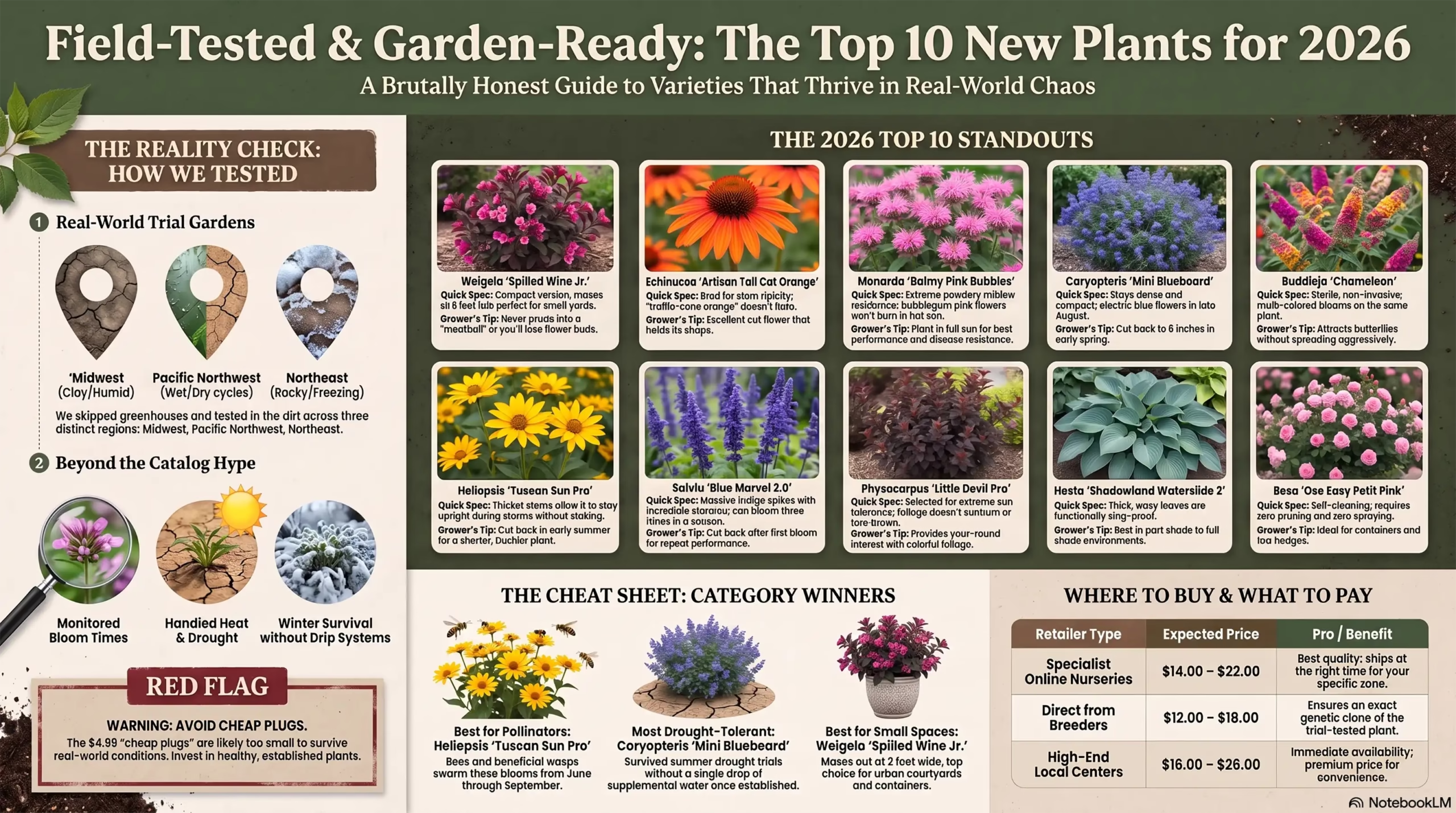
We didn’t grow these in a climate-controlled greenhouse with an automated drip system. We partnered with trial gardens across three distinct USDA zones to see how these introductions handled real-world chaos.
- Zone 6 (Midwest): Heavy clay soil, humid summers, wildly fluctuating spring temperatures.
- Zone 8 (Pacific Northwest): Wet, cool springs followed by bone-dry summer droughts.
- Zone 5 (Northeast): Freezing winter winds, rocky soil, and a short growing season.
We planted three of each variety in each zone. We noted when they bloomed, how they handled summer heat, if they flopped, and if they survived the winter. We ignored the tags and watched the plants.
Only the absolute best made this list.
The Top 10 Breakdown
Here are the 10 standout plants that actually lived up to the hype, complete with the exact details you need to make them thrive.
1. Weigela florida ‘Spilled Wine Jr.’
(A standout among Proven Winners 2026 shrubs)
- Quick Specs: Zone 4-8 | 24 inches tall | Spring bloom, reblooms | Full Sun
- Why It’s a 2026 Standout: The original ‘Spilled Wine’ was a hit because of its dark, burgundy foliage and hot pink flowers. But at 4 feet wide, it outgrew a lot of modern yards. ‘Jr.’ gives you that exact same rich color but in a perfectly tidy 2-foot ball. It’s a game-changer for small spaces.
- Grower’s Tip: Do not prune this into a meatball. Let it grow naturally. If you shear it, you’ll cut off all the flower buds and ruin the gorgeous, arching shape.
- Companion Plants: Pair with ‘Catnip’ (Nepeta faassenii)—the purple Nepeta flowers will pop against the dark Weigela leaves, and both will bloom at the exact same time.
2. Echinacea ‘Artisan Tall Cut Orange’
- Quick Specs: Zone 4-9 | 30 inches tall | Summer to Fall bloom | Full Sun
- Why It’s a 2026 Standout: Orange coneflowers usually fade to a muddy, disappointing brown by day three. The ‘Artisan’ series has been bred specifically for stem rigidity and color retention. This one holds its bright, traffic-cone orange color for weeks. It’s easily one of the best perennials 2026 has to offer.
- Grower’s Tip: Coneflowers are notoriously slow to wake up in the spring. Do not accidentally dig it up thinking it’s dead! Wait until the soil warms up before you panic.
- Companion Plants: Plant behind ‘Little Bluestem’ grass. The orange cones will hover beautifully over the blue-green grass blades in late summer.
3. Monarda ‘Balmy Pink Bubbles’
- Quick Specs: Zone 4-9 | 12 inches tall | Mid-Summer bloom | Full Sun to Part Sun
- Why It’s a 2026 Standout: Bee Balm is notorious for getting powdery mildew and looking terrible by August. The ‘Balmy’ series changed the game with extreme disease resistance. ‘Pink Bubbles’ is the newest color addition, offering a bubblegum pink that doesn’t burn in the hot afternoon sun.
- Grower’s Tip: Even though it’s disease resistant, it still hates having wet feet. If you have heavy clay, plant it on a slight mound so water drains away from the crown.
- Companion Plants: ‘Black-eyed Susan’ (Rudbeckia). The bright yellow daisies contrast the pink perfectly, and both are absolute pollinator magnets.
4. Caryopteris x clandonensis ‘Mini Bluebeard’
- Quick Specs: Zone 5-9 | 18 inches tall | Late Summer/Fall bloom | Full Sun
- Why It’s a 2026 Standout: Blue Mist Shrub usually gets leggy and woody at the base. ‘Mini Bluebeard’ stays incredibly dense and compact, and it produces electric blue flowers right when the rest of your garden is starting to fade in late August.
- Grower’s Tip: This plant blooms on new wood. Do not be afraid to chop it back to 6 inches in early spring. If you don’t cut it hard, it will look terrible.
- Companion Plants: Pair with ‘Autumn Joy’ Sedum. The flat pink heads of the sedum and the fluffy blue spikes of the Caryopteris are a textural match made in heaven.
5. Buddleja ‘Chameleon’
- Quick Specs: Zone 5-9 | 36 inches tall | Summer to Frost | Full Sun
- Why It’s a 2026 Standout: This is a genuinely wild new shrub introduction. Through complex breeding, this butterfly bush produces panicles of flowers that open magenta, age to orange, and finally turn yellow. You will have three distinct colors on one bush at the same time. It is sterile, so it won’t become an invasive weed.
- Grower’s Tip: It requires excellent drainage. In Zone 5, plant it in a protected spot near a south-facing wall, and mulch heavily in late November.
- Companion Plants: ‘Miss Molly’ Butterfly Bush (deep pink) and ‘White Ball’ Butterfly Bush to create a surreal, multi-colored butterfly highway.
6. Heliopsis helianthoides ‘Tuscan Sun Pro’
- Quick Specs: Zone 3-9 | 24 inches tall | Summer bloom | Full Sun
- Why It’s a 2026 Standout: False Sunflowers are tough as nails, but they usually get so tall they flop over and take out your walking path. ‘Tuscan Sun Pro’ has been bred to have significantly thicker stems. It stays upright without staking, no matter how hard the summer storms blow.
- Grower’s Tip: If you cut the first flush of flowers back by half in late June, it will branch out and produce twice as many blooms in August.
- Companion Plants: ‘Russian Sage’ (Perovskia). The tall, airy purple spikes of the sage will weave through the solid yellow blocks of the Heliopsis.
7. Salvia nemorosa ‘Blue Marvel 2.0’
- Quick Specs: Zone 4-8 | 14 inches tall | Late Spring to Fall | Full Sun
- Why It’s a 2026 Standout: The original ‘Blue Marvel’ had massive flowers but terrible stamina. Version 2.0 keeps the massive, oversized indigo flower spikes but adds incredible rebloom capability. If you cut it back, it will bloom three times in a single season.
- Grower’s Tip: After the first flush of flowers fades, don’t just deadhead the tops. Cut the entire plant back by one-third to force fresh foliage and new flower spikes from the base.
- Companion Plants: ‘Coronation Gold’ Yarrow. The flat, golden yellow plates of the yarrow contrast the vertical spikes of the salvia beautifully.
8. Physocarpus opulifolius ‘Little Devil Pro’
- Quick Specs: Zone 3-7 | 36 inches tall | Foliage plant (no significant bloom) | Full Sun to Part Shade
- Why It’s a 2026 Standout: Ninebark is a native workhorse, but dark-leaved varieties often get “sunburned” and turn blotchy brown by July. ‘Little Devil Pro’ has been selected for extreme sun tolerance. The deep, burgundy-black foliage stays crisp and clean all summer long.
- Grower’s Tip: Every 3 to 4 years, in early spring, prune out the oldest, thickest canes right down to the ground. This encourages fresh, dark new growth.
- Companion Plants: ‘Gold Mound’ Spirea. The neon yellow foliage of the spirea against the black ninebark is a striking, modern contrast.
9. Hosta ‘Shadowland Waterslide 2’
- Quick Specs: Zone 3-9 | 18 inches tall | Shade plant | Part to Full Shade
- Why It’s a 2026 Standout: Slugs are the enemy of every hosta grower. ‘Waterslide’ features heavily rippled, corrugated, blue-green leaves that are incredibly thick. Slugs literally cannot chew through them. It is the most slug-proof hosta we have ever tested.
- Grower’s Tip: The blue waxy coating on hosta leaves is what gives them their color. Never spray your blue hostas with horticultural oil or neem oil—it will melt the wax and turn the plant green.
- Companion Plants: ‘Jack in the Pulpit’ (Arisaema) and Japanese Painted Fern. It creates a lush, prehistoric-looking shade garden.
10. Rosa ‘Oso Easy Petit Pink’
- Quick Specs: Zone 4-9 | 18 inches tall | Spring to Frost | Full Sun
- Why It’s a 2026 Standout: Most landscape roses get massive and require constant deadheading. This new introduction is a true miniature shrub rose that covers itself in soft pink, cupped blooms. It requires zero pruning, zero spraying for black spot, and literally drops its own dead flowers so you never have to touch them.
- Grower’s Tip: Even though it’s disease resistant, give it good air circulation. Don’t tuck it right up against the foundation of your house; leave 2 feet of breathing room.
- Companion Plants: ‘Catmint’ (Nepeta) and ‘Lamb’s Ear’ (Stachys). The silvery, fuzzy textures soften the formal look of the roses.
Category Winners
If you don’t have time to read the full breakdown, here is your cheat sheet based on what you specifically need for your yard:
- Best for Pollinators: Heliopsis ‘Tuscan Sun Pro’. Bees and beneficial wasps swarm it relentlessly from June through September.
- Most Drought-Tolerant: Caryopteris ‘Mini Bluebeard’. Once established, it laughed at our Zone 8 summer drought trials without a single drop of supplemental water.
- Best for Small Spaces: Weigela ‘Spilled Wine Jr.’. It maxes out at 2 feet wide, making it perfect for tight urban courtyards or container gardening.
- Best Foliage Impact: Physocarpus ‘Little Devil Pro’. From 20 feet away, it looks like a synthetic black landscaping plant because the color is so unbelievably dark.
Where to Buy & What to Pay
One of the most frustrating parts of plant shopping is finding the new stuff. You can’t usually walk into a big-box store and find these specific varieties. They are often sold out by May.
Here is where to look, and what you should expect to pay for a new plant variety in 2026:
1. Specialist Online Nurseries (Best Quality)
- Retailers: Bluestone Perennials, Great Garden Plants, Brushwood Nursery.
- What you get: Healthy, well-rooted plants in quart or gallon pots. They ship at the exact right time for your zone.
- Price Range: $14.00 – $22.00 per plant.
2. Direct from Breeders (Proven Winners)
- Retailer: provenwinners.com (they have a “Find a Retailer” tool, but many independent garden centers buy directly from their wholesale division).
- What you get: The exact genetic clone of the trial plant.
- Price Range: $12.00 – $18.00 (if buying local).
3. High-End Local Garden Centers
- What you get: The convenience of walking out with it today. Look for independent centers, not the giant hardware stores.
- Price Range: $16.00 – $26.00 (you pay a premium for the convenience).
A quick warning on pricing: If you see a “new” 2026 plant being sold for $4.99 in a tiny 2-inch plug, run. Cheap plugs of new varieties are often severely root-bound or mislabeled by mass producers. Spend the $15-$20 on a quart-sized plant. It will establish in your garden three times faster.
The Runner-Ups
Just missing the top 10, these five plants are still worth keeping an eye out for if you have extra space:
- Agastache ‘Kudos Ambrosia’: A compact anise hyssop with crazy peachy-pink and orange flower spikes. Hummingbirds fight over it.
- Phlox paniculata ‘Nicky’s Little Sister’: Finally, a true, mildew-resistant, short garden phlox in a deep, vibrant magenta that doesn’t need staking.
- Panicum virgatum ‘Northwind Jr.’: All the steel-blue upright rigidity of the famous ‘Northwind’ switchgrass, but scaled down to 3 feet for smaller borders.
- Aster novae-angliae ‘Purple Dome Compacta’: Takes the classic native New England aster and shrinks it into a tight, 12-inch mound of deep purple that doesn’t get naked legs at the base.
- Vernonia ‘Iron Butterfly’: Narrowleaf ironweed. It looks like a delicate, wispy ornamental grass all summer, then bursts into pure purple clouds of butterflies in late August.
Final Thoughts
Gardening is an experiment. Every time you put a plant in the ground, you are making a bet against the weather, the soil, and the bugs.
But when you choose new shrub introductions and best perennials 2026 that have actually been tested in the dirt—not just hyped in a catalog—your odds of winning go way up.
Pick one or two from this list that solve a specific problem in your yard. Maybe you need the slug resistance of the Hosta, or the compact size of the Weigela.
Get them in the ground, give them what they need, and prepare to be pleasantly surprised when they actually look like the picture.