Table of Contents
The Tropical Showstopper: How to Grow and Care for Croton Plants
Welcome back to Plant It! If your indoor jungle is starting to look like a sea of endless green and you are desperate for a massive, fiery pop of color, it is time to meet the spectacular Croton (Codiaeum variegatum).
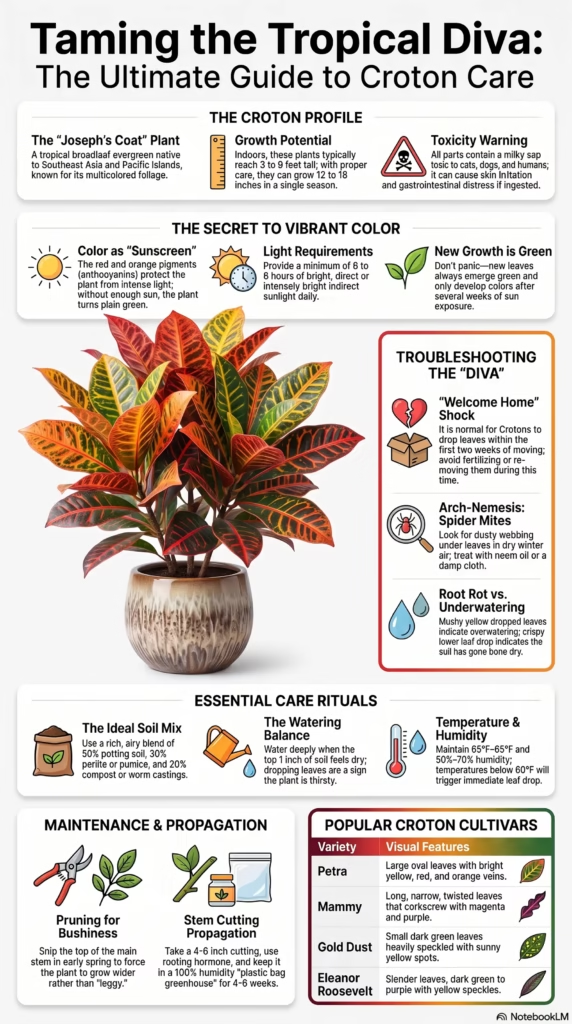
With thick, leathery leaves splashed in brilliant shades of scarlet, gold, neon orange, and deep magenta, the Croton is the undisputed king of colorful houseplants. Native to the tropical forests of Southeast Asia and the Pacific Islands, these bold evergreens thrive in warm, balmy environments.
However, Crotons have earned a notorious reputation as “divas.” If you look at them the wrong way, they are known to dramatically drop half their leaves in protest! But don’t let that scare you. Their temper tantrums are entirely predictable once you understand what triggers them. In this comprehensive, deep-dive guide, we will decode the Croton’s dramatic behavior, teach you how to keep those vibrant colors blazing, and show you exactly how to cultivate a thriving, bushy masterpiece.
Croton Profile Quick Look
| Feature | Details |
| Common Name | Croton, Joseph’s Coat |
| Botanical Name | Codiaeum variegatum |
| Plant Type | Tropical broadleaf evergreen |
| Mature Size | 3 to 8 feet tall indoors (up to 10 feet outdoors) |
| Sun Exposure | Bright, indirect to bright, direct sunlight |
| Soil Type | Rich, well-draining, moisture-retentive |
| Soil pH | Slightly acidic (4.5 to 6.5) |
| Toxicity | Toxic to cats, dogs, and humans if ingested |
| Native Area | Southeast Asia, Pacific Islands, Northern Australia |
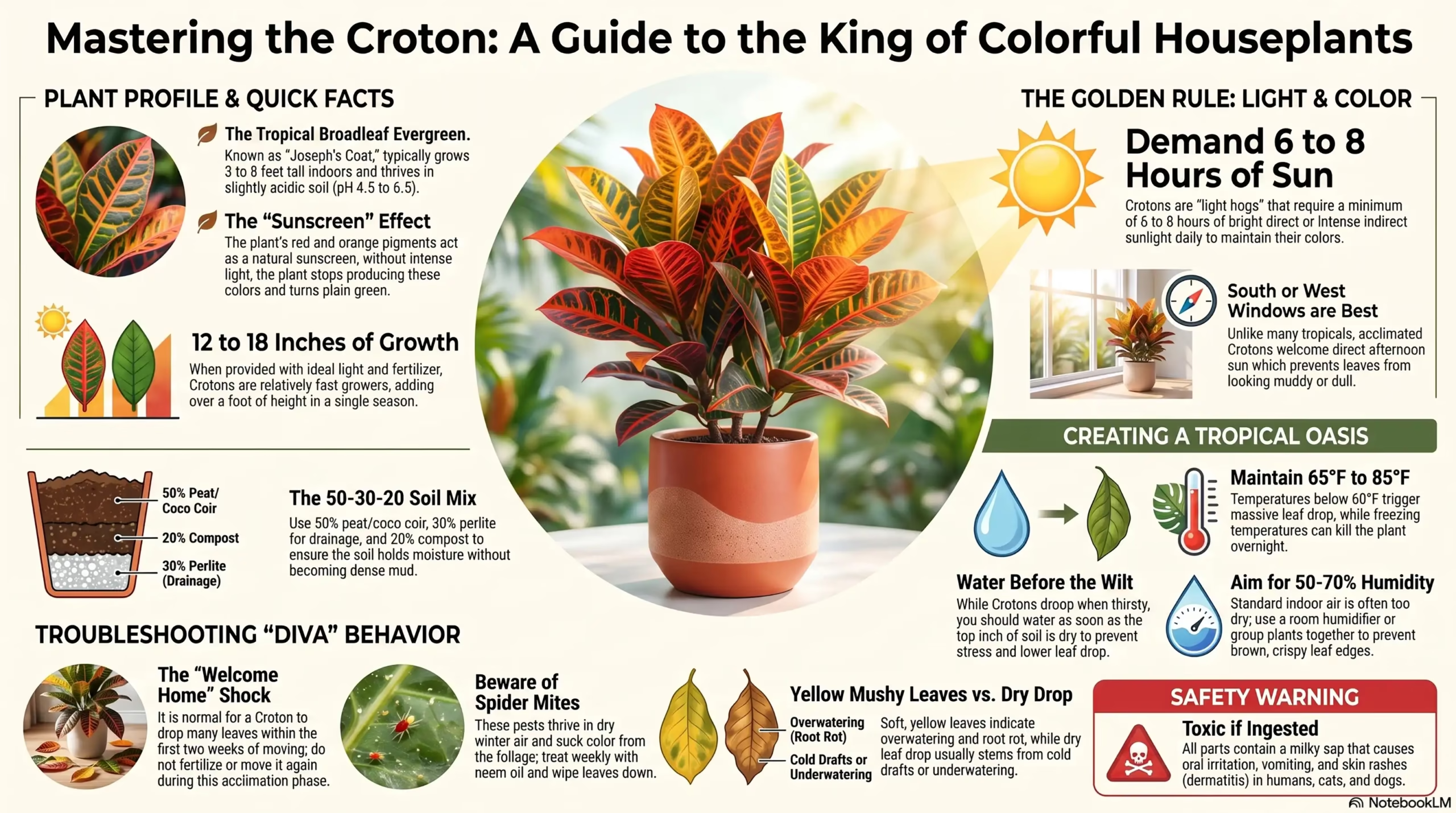
Fun Fact: Color by Sunlight
The brilliant colors of a Croton are actually a direct reflection of its environment! The red, orange, and yellow pigments (called anthocyanins and carotenoids) act as a natural sunscreen for the plant, protecting it from intense light. If you move a brightly colored Croton into a dark, shady corner, it no longer needs that “sunscreen.” As a result, the plant will stop producing those vibrant colors, and all new leaves will emerge as a plain, flat green to maximize whatever little light is available.
A Beginner’s Tips for Success
If you just bought a Croton, read this before you panic:
The “Welcome Home” Leaf Drop is completely normal. Crotons absolutely despise being moved. When you take them from a perfectly humid, bright greenhouse, shove them in a car, and place them in your living room, they experience immediate environmental shock. In response, they often drop a terrifying amount of leaves within the first two weeks.
Do not overwater it, do not fertilize it, and do not move it again. Just give it consistent light and moisture, and within a few weeks, it will acclimate and push out brand new foliage.
How to Plant
Setting your Croton up in the right environment from day one minimizes stress. Because they are highly sensitive to sudden changes, find its “forever home” in your house before you even bring it inside. Look for the brightest, warmest, and most draft-free corner you have.
Essential Croton Care
To keep your plant bushy and brightly colored, you need to replicate a balmy, tropical Asian climate.
Light: The Key to Color
If you want to know how to keep croton leaves colorful, light is the only answer. Crotons are massive light hogs. They need a minimum of 6 to 8 hours of bright, direct or intensely bright indirect sunlight every day.
An unobstructed south-facing or west-facing window is ideal. While many tropical houseplants scorch in direct afternoon sun, Crotons actually welcome it, provided they have been slowly acclimated to it. If the leaves are turning solid green or looking muddy and dull, the plant is begging for more sun.
Soil Needs
Because Crotons drink a lot of water but are susceptible to root rot, the best potting soil mix for indoor croton growth needs to hold moisture without turning into dense mud.
Create a rich, airy blend:
- 50% high-quality peat or coco coir-based indoor potting soil
- 30% perlite or pumice for vital drainage
- 20% compost or worm castings for a nutrient boost
Water: The Delicate Balance
Crotons are incredibly vocal when they are thirsty; their heavy leaves will droop significantly. However, you should try to water them just before they wilt to prevent stress.
Keep the soil consistently, evenly moist. Check the pot every few days, and water deeply as soon as the top one inch of soil feels dry. When you water, soak the root ball thoroughly until water pours out of the drainage holes, and immediately empty the saucer. If you let the soil dry out completely to the bottom of the pot, the plant will rapidly drop its lower leaves.
Temperature and Humidity
These plants love the heat! Keep your room temperatures between 65°F and 85°F. Anything below 60°F will trigger massive leaf drop, and freezing temperatures will kill the plant overnight. Keep them far away from AC vents and drafty winter doors.
Humidity is their best friend. Standard indoor air (around 30-40% humidity) is often too dry and will cause the leaf edges to turn brown and crispy. Aim for 50% to 70% humidity by running a continuous room humidifier or grouping the Croton with other leafy tropicals to create a microclimate.
Fertilizer
Crotons are heavy feeders during the growing season. Feed them with a balanced liquid houseplant fertilizer (like a 20-20-20 blend) diluted to half strength every two to three weeks from early spring through late summer. Stop fertilizing in the winter when the plant goes dormant.
Dazzling Types of Crotons
With hundreds of cultivars available, you can easily build a diverse collection:
- Croton Petra: The most common variety. Features large, oval-shaped leaves with distinct, brightly colored veins in yellow, red, and orange.
- Croton Mammy: A highly textured variety featuring long, narrow, twisted leaves that corkscrew and curl wildly, boasting intense shades of magenta and purple.
- Croton Gold Dust: Perfect for a more subtle look. Features smaller, dark green leaves heavily speckled with bright, sunny yellow spots.
- Eleanor Roosevelt: A stunning, slender-leafed variety that grows incredibly tall and bushy, with dark green to purple leaves dotted with yellow speckles.
Pruning for a Bushier Plant
Left to their own devices, indoor Crotons can sometimes grow tall and “leggy” (looking like a bare stick with a few leaves at the top). To encourage a full, bushy shape, you must prune them.
In early spring, use sterilized shears to snip the top of the main stem off, cutting just above a leaf node. Warning: Wear gloves! Crotons bleed a milky, toxic sap when cut that can irritate the skin. Removing the top growth tip forces the plant to push out two or three new lateral branches just below the cut, making the plant significantly wider and bushier.
Propagating Your Croton
Don’t throw away the pieces you just pruned! Learning how to propagate croton from stem cuttings is easy and rewarding.
- Take a stem cutting that is 4 to 6 inches long, ensuring it has at least three leaves on top.
- Wipe the milky sap away from the cut end and dip it in rooting hormone powder.
- Plant the stem directly into a small pot of moist, chunky soil.
- Cover the cutting and the pot with a clear plastic bag to create a 100% humidity greenhouse environment (this is crucial, as they lose moisture rapidly without roots).
- Place the pot in a warm, bright spot. In about four to six weeks, the cutting will develop a strong root system!
Growing in Pots
- Drainage is Mandatory: Crotons will absolutely not survive in a decorative pot without drainage holes. Always use a pot with large holes, preferably made of glazed ceramic or plastic, to help retain slight soil moisture.
- Repotting: They grow moderately fast and usually need repotting every two years. If you notice water rushing straight through the pot instantly, or roots creeping out of the top of the soil, it is time to upsize. Only increase the pot size by 1 to 2 inches in diameter to avoid suffocating the roots in excess wet soil.
Overwintering
Winter is the hardest season for indoor Crotons. The combination of shorter days, freezing drafts, and bone-dry air from your heater is a recipe for disaster.
- Move the plant to your absolute brightest, sunniest window.
- Ensure it is nowhere near a heating vent.
- Run a humidifier near it daily.
- Cut your watering schedule back; only water when the top two inches of soil dry out, as the plant is not actively growing.
Common Pests and Diseases
The large, flat leaves of the Croton offer the perfect hiding spots for indoor pests.
- Spider Mites: The absolute arch-nemesis of the Croton. They thrive in dry winter air. Look for tiny, dusty webbing on the undersides of the leaves. They will suck the color right out of the foliage, leaving it pale and mottled. Wipe the leaves down with a damp cloth and apply a neem oil spray weekly until they are gone.
- Mealybugs: Look for sticky, white cotton-like tufts hiding in the crevices where the leaves meet the main stem. Dab them with a cotton swab soaked in rubbing alcohol.
- Root Rot: Caused entirely by overwatering and lack of drainage. The lower leaves will turn a mushy yellow and drop, and the plant will wilt despite being wet.
The Rare Indoor Bloom
Do Crotons flower? Yes! While it is incredibly rare to see indoors, a perfectly happy, mature Croton will occasionally send up a long, thin stalk. This stalk will bloom with dozens of tiny, star-shaped, fuzzy white or yellow flowers. They are not particularly showy and have no scent, but they are a fantastic badge of honor proving you have mastered your plant’s environment!
Common Issues (Troubleshooting)
Why is My Croton Plant Dropping Leaves?
If you haven’t recently moved the plant (which causes shock drop), severe leaf drop is almost always tied to temperature or watering.
- Cold Drafts: If the temperature dropped below 60°F or the plant was exposed to a blast of AC, the leaves will drop instantly.
- Underwatering: If the soil goes bone dry, the plant will drop lower leaves to conserve water for the top growth.
- Overwatering: If the dropped leaves are soft, yellow, and mushy at the base, the roots are rotting.
Why is My Croton Losing Its Color?
If your fiery red and orange plant is suddenly pushing out nothing but green leaves, it is starving for sunlight. Move it immediately to a much brighter, sunnier window.