Table of Contents
The Indestructible Glossy Gem: How to Grow and Care for a ZZ Plant
Welcome back to Plant It! If you love the look of lush, vibrant greenery but possess a track record of forgetting to water your plants for weeks at a time, you are in the right place. Meet the Zamioculcas zamiifolia, much more affectionately known across the gardening world as the ZZ Plant or the Zanzibar Gem.
With its upright, structural stems clad in perfectly spaced, mirror-shiny, deep green leaves, the ZZ plant looks almost too perfect to be real. In fact, people frequently mistake it for a plastic replica. But this remarkable East African native is very much alive, and it is widely considered the absolute champion of low-maintenance houseplants.
Whether you are looking to brighten up a dim office cubicle, add a modern architectural element to your living room, or find a plant that can easily survive your next three-week vacation, the ZZ plant is the ultimate choice. In this exhaustive, pillar-style guide, we will uncover the secrets behind its resilience, detail its straightforward care requirements, and give you the exact steps to keep this glossy gem thriving for years.
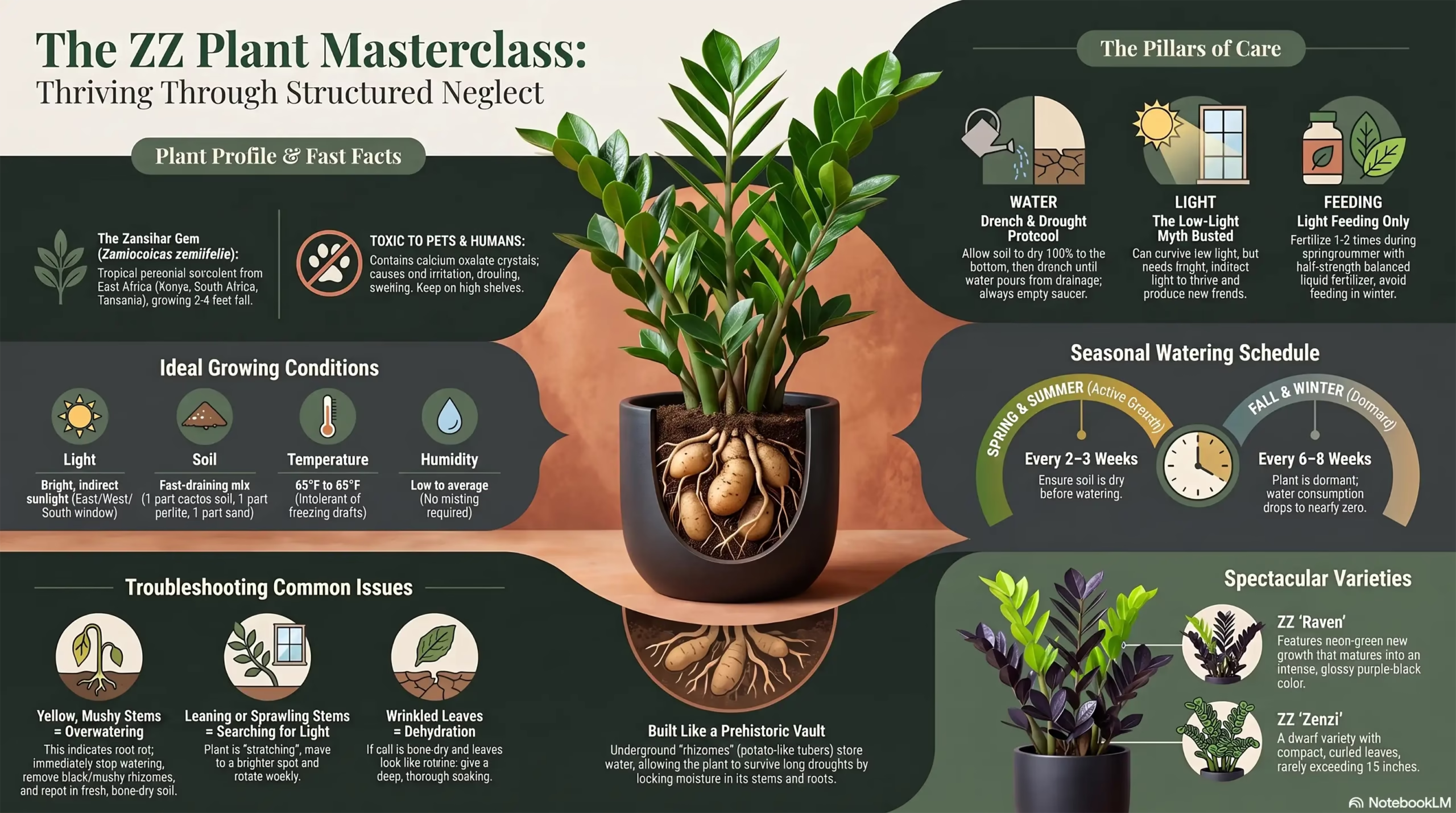
ZZ Plant Profile Quick Look
| Feature | Details |
| Common Name | ZZ Plant, Zanzibar Gem, Emerald Palm, Eternity Plant |
| Botanical Name | Zamioculcas zamiifolia |
| Plant Type | Tropical perennial succulent |
| Mature Size | 2 to 4 feet tall and wide indoors |
| Sun Exposure | Low light to bright, indirect sunlight |
| Soil Type | Extremely loose, fast-draining cactus/succulent mix |
| Soil pH | Neutral to slightly acidic (6.0 to 7.0) |
| Toxicity | Toxic to cats, dogs, and humans if ingested |
| Native Area | Eastern Africa (Kenya, South Africa, Tanzania) |
Fun Fact: Built Like a Prehistoric Vault
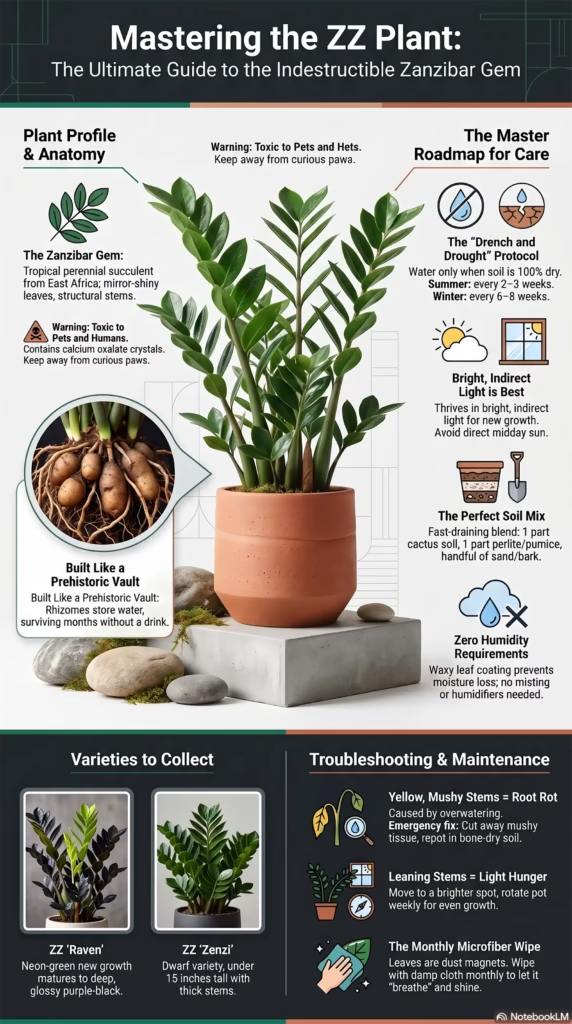
The ZZ plant is a true evolutionary marvel. Native to the drought-prone regions of East Africa, it has spent thousands of years adapting to alternating cycles of severe, blazing droughts and sudden, torrential downpours. To survive these harsh conditions, the plant developed a subterranean storage system.
If you were to gently dig beneath the soil of a ZZ plant, you wouldn’t just find standard, thin roots. Instead, you would find large, thick, potato-like tubers called rhizomes. These rhizomes act like underground water vaults. When it rains, the plant sucks up every drop of water it can find and locks it away inside these fleshy tubers and its thick, juicy stems. This unique anatomy is the exact reason the ZZ plant can go months without a single drop of water and still look pristine.
A Beginner’s Tips: The Art of Structured Neglect
If you are new to the world of indoor gardening, the ZZ plant is the perfect confidence builder. However, success relies heavily on one counterintuitive concept: benign neglect.
Unlike finicky tropicals that require daily misting, precise humidity levels, and highly scheduled watering routines, the ZZ plant prefers to be left entirely alone. The absolute fastest way to kill a Zanzibar Gem is by loving it too much. Frequent waterings, heavy soil, and constant fussing will quickly cause the plant to rot from the roots up. Treat it more like a cactus or a succulent rather than a traditional leafy houseplant, and you will get along beautifully.
How to Grow: The Master Roadmap
Growing a gorgeous ZZ plant comes down to setting up its environment correctly from day one. Once it is settled into the right pot with the proper soil mix, your ongoing maintenance checklist is incredibly brief. Let’s break down the core pillars of its growth environment.
Light: The Low-Light Myth Busted
You will frequently see the ZZ plant categorized as a “low-light houseplant.” While it is absolutely true that it can survive in low-light environments—such as windowless offices under fluorescent bulbs, dark hallways, or north-facing rooms—it is important to understand that survival does not equal thriving. In deep shade, a ZZ plant’s growth will slow down to a virtual standstill, and it will rarely push out new fronds.
To see your Zanzibar Gem grow aggressively and produce massive, vibrant green stems, place it in bright, indirect sunlight. A spot a few feet away from an east-, west-, or south-facing window where it can see the sky but isn’t hit directly by the sun’s rays is the absolute sweet spot.
Warning: Never place a ZZ plant in harsh, direct midday sunlight. The intense rays will rapidly scorch the glossy leaves, leaving behind ugly, bleached white or crispy brown burn marks that can never be healed.
Soil: The Importance of Drainage
Because those underground rhizomes are constantly holding onto moisture, the roots cannot tolerate sitting in heavy, wet dirt. The best potting soil mix for zz plant longevity is one that prioritizes structural aeration and instant drainage over water retention.
Never use standard, dense outdoor garden soil or straight, peat-heavy indoor potting mixes. Instead, create a premium, free-draining environment by blending:
- 1 part high-quality commercial cactus and succulent soil
- 1 part coarse perlite or pumice (to create massive air pockets)
- A handful of coarse builder’s sand or orchid bark fines
This incredibly loose mix ensures that when you water the plant, the moisture runs straight through the pot in a matter of seconds, leaving the roots perfectly damp but never trapped in a swampy environment.
Water: The Drench and Drought Protocol
Improper watering is virtually the only way to destroy a ZZ plant. Master the “drench and drought” method to ensure your plant lives for decades.
- The Golden Rule: Always allow the potting mix to dry out 100% completely all the way to the bottom of the pot before you even think about picking up your watering can. Stick a wooden chopstick or a moisture meter deep into the center of the pot—if you detect even a hint of cool moisture, wait another week.
- The Technique: When it is finally time to water, drench the soil thoroughly until water pours freely out of the bottom drainage holes. Let it sit for ten minutes to absorb what it needs, and then immediately empty the drainage saucer. Never leave a ZZ plant sitting in a puddle of standing water.
- Seasonal Adjustments: During the spring and summer, you may end up watering your plant once every 2 to 3 weeks. However, figuring out how often to water zz plant in winter is crucial. When the days shorten and the plant enters a deep dormancy, its water consumption drops to almost zero. You will likely only need to water your plant once every 6 to 8 weeks during the winter season. When in doubt, always err on the side of underwatering.
Temperature and Humidity
Zanzibar Gems are perfectly adapted to the typical climate of modern homes. They thrive in temperatures ranging from 65°F to 85°F. They are deeply intolerant of extreme cold, so ensure they are kept far away from freezing, drafty windows or exterior doors during the winter months.
When it comes to humidity, the ZZ plant simply does not care. While tropical ferns and calatheas weep in dry indoor air, the thick, waxy coating on a ZZ leaf prevents moisture loss. They are perfectly content with low, dry household humidity and require absolutely no misting, pebble trays, or humidifiers.
Fertilizer
Because they grow slowly and are naturally adapted to nutrient-poor soils, ZZ plants are incredibly light feeders. You only need to fertilize them once or twice during the entire spring and summer growing season. Use a balanced, all-purpose liquid houseplant fertilizer diluted to half strength. Avoid feeding entirely in the fall and winter, as forcing a dormant plant to grow with chemical nutrients will burn the roots and lead to weak, leggy stems.
Gorgeous Varieties to Collect
While the classic emerald-green ZZ plant is a stunning staple, breeders and plant hunters have introduced a few spectacular varieties that look incredible on a plant shelf:
- ZZ ‘Raven’ (Zamioculcas zamiifolia ‘Dowon’): The dark royalty of the houseplant world. This highly coveted variety pushes out new leaves that emerge in a bright, neon-green shade before slowly darkening over a few months into an intensely deep, glossy purple-black color. It provides a stunning contrast against light-colored walls.
- ZZ ‘Zenzi’: A fantastic dwarf variety designed for small spaces. The ‘Zenzi’ features highly compact, dark green leaves that grow tightly clustered together on much shorter, thicker, and slightly curved stems. It rarely grows taller than 12 to 15 inches, making it a brilliant tabletop choice.
- ZZ ‘Variegata’: A collector’s dream. This rare variety features gorgeous, unstable splashes of creamy white or bright yellow marbled across the standard green leaves. It requires significantly brighter light to maintain its striking variegation.
Pruning and Aesthetic Maintenance
Because ZZ plants grow via individual fronds shooting straight up from the underground rhizomes, they do not require traditional structural pruning to encourage branching. A stem will never branch out if you cut the top off.
Pruning is strictly for aesthetic maintenance. If a stem becomes permanently bent, physically damaged, or turns yellow due to old age, use a pair of sharp, sterilized pruning shears to snip the stem off cleanly as close to the soil line as possible.
Keep Them Shiny: Because the leaves are naturally so flat, smooth, and glossy, they act like absolute dust magnets in the home. A thick layer of household dust doesn’t just look messy; it physically blocks light and stifles the plant’s ability to breathe. Once a month, take a soft, damp microfiber cloth and gently wipe down the leaves to maintain that signature, high-gloss shine. Skip commercial “leaf shine” sprays, which can clog the plant’s pores; pure water is all you need.
Propagating Your ZZ Plant: Multiplying the Gloss
Multiplying your Zanzibar Gem collection is highly rewarding, though it does require a healthy dose of patience. Because they are slow-growing plants, their propagation pieces take time to build new underground rhizomes.
Method 1: Stem Cuttings in Water (The Visual Way)
If you have a stem that is too tall or slightly leaning, it is the perfect candidate for a water propagation project.
- Using a sterile blade, cut a clean stem away from the base of the plant.
- Let the cut stem sit on a dry paper towel for two days to allow the open wound to form a hard, dry callus.
- Place the callused bottom of the stem into a heavy glass jar filled with two inches of room-temperature water.
- Place the jar in bright, indirect light and change the water weekly to prevent bacterial growth.
- Over the course of 2 to 3 months, you will see the bottom of the stem swell up into a distinct, round bulb (a new rhizome), followed by thick, white roots. Once the roots are a few inches long, pot it up in your succulent soil mix!
Method 2: Leaf Cuttings (The Patient Way)
Did a leaf accidentally snap off during cleaning? Don’t throw it away! You can actually propagate an entire ZZ plant from just one single leaf. Simply stick the callused stem-end of the leaf directly into damp succulent soil or a tiny shallow dish of water. Over several months, the leaf will slowly grow a tiny, pea-sized underground rhizome. It can take up to a year for a new stem to emerge from this leaf, but it is an incredibly fascinating botanical experiment.
Method 3: Division (The Fast Way)
If you have a massive, mature ZZ plant that is bursting out of its container, dividing it is the fastest way to get two fully established plants instantly. Unpot the plant and gently shake away the excess soil to expose the cluster of underground rhizomes. Using your hands or a sterile knife, carefully separate the rhizomes, ensuring each new division has a healthy system of roots and at least two or three upright stems. Pot them into individual containers with fresh, dry soil.
Potting and Repotting a ZZ Plant
Keep these key factors in mind when housesitting your Zanzibar Gem’s roots:
- The Right Container: Because excess moisture is the ultimate enemy, unglazed terra-cotta or clay pots are the gold standard for ZZ plants. The porous clay allows moisture to naturally evaporate outward through the walls of the pot, helping the soil dry out quickly and evenly. Massive drainage holes are completely non-negotiable.
- They Love a Tight Fit: ZZ plants prefer to be slightly root-bound. They naturally push their thick rhizomes against the interior walls of their containers.
- When to Repot: You only need to upsize the pot every 3 to 4 years. You will know it is time when the thick roots begin violently creeping out of the drainage holes, or when the aggressive underground rhizomes literally warp or crack a plastic nursery pot! Always choose a new container that is only 1 to 2 inches wider than the current one.
Common Pests and Plant Diseases
While the thick, waxy coating on the leaves makes the ZZ plant highly resistant to many common pests, a stressed or overwatered plant can occasionally fall victim to invaders:
- Fungus Gnats: Tiny, annoying black flies that buzz around the surface of the dirt. They do not eat the leaves; instead, they breed in constantly damp soil. If you see fungus gnats, it is a glaring warning sign that you are watering your ZZ plant far too frequently.
- Mealybugs: These look like small, fuzzy, white cotton tufts hiding deep down in the crevices where the leaf stems meet the main stalk. Treat by dipping a cotton swab in rubbing alcohol and dabbing them directly to dissolve their protective coating.
- Root Rot (Phytophthora): The number one disease killer of the ZZ plant, entirely caused by soggy soil. The fungal pathogen attacks the underground rhizomes, turning them from firm, healthy bulbs into black, slimy, foul-smelling mush.
Troubleshooting Common Problems
Why Are My ZZ Plant Stems Turning Yellow and Mushy?
If you notice individual stems losing their rigid structure, wrinkling, turning a sickly yellow, and feeling soft or mushy at the base, you are dealing with advanced root rot from overwatering.
- The Emergency Fix: Immediately stop watering. Remove the plant from its pot and shake away the wet soil. Use a sterile knife to cut away any black, mushy, or hollow roots and rhizomes until only firm, healthy, cream-colored tissue remains. Let the healthy portions air-dry on a counter for two days, then repot them into fresh, bone-dry succulent soil.
Stems Leaning Heavily
If your ZZ plant’s normally vertical, upright stems are sprawling outward or leaning drastically in one direction, it is crying out for light. The plant is spending all its energy stretching its stems toward the nearest window (a process called etiolation). Move it to a location with much brighter, indirect sunlight, and give the pot a quarter-turn every week to ensure even, upright growth.
Wrinkled Leaves and Drooping Stems
If the leaves look dull, slightly puckered, or wrinkled like a raisin, and the entire plant looks slightly limp, check the soil. If the potting mix is bone dry all the way through and you haven’t watered the plant in two months, it is simply dehydrated. Give it a deep, thorough soaking, and the rhizomes will rapidly plump the leaves back up within 48 hours.