The Dramatic Beauty: How to Grow and Care for Peace Lily Plants
Welcome back to Plant It! If you are looking for a houseplant that combines lush, tropical foliage with elegant, long-lasting flowers—and doesn’t require a master’s degree in horticulture to keep alive—the Peace Lily (Spathiphyllum) is your perfect match.
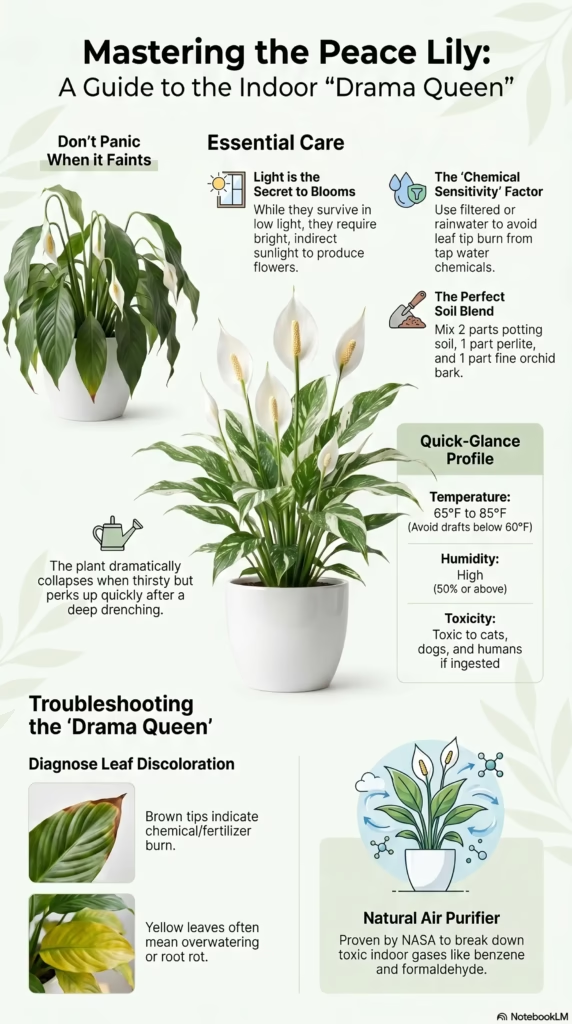
With its deep green, ribbed leaves and striking white, flag-like blooms, the Peace Lily has been a beloved staple in homes and offices for decades. It brings an instant sense of tranquility to any space. However, this plant is famously known as the “drama queen” of the indoor plant world. Forget to water it for a day too long, and it will dramatically collapse against the sides of its pot, looking entirely deceased—only to miraculously pop back to life an hour after you give it a drink.
Whether you were just gifted one or you are trying to figure out why yours refuses to produce those iconic white flowers, this comprehensive, pillar-style guide has you covered. We are going to dive into everything from daily care to troubleshooting, so you can keep your Peace Lily thriving year-round.
Peace Lily Profile Quick Look
| Feature | Details |
| Common Name | Peace Lily, Spathe Flower |
| Botanical Name | Spathiphyllum spp. |
| Plant Type | Tropical evergreen perennial |
| Mature Size | 1 to 4 feet tall and wide |
| Sun Exposure | Bright, indirect light to partial shade |
| Soil Type | Rich, moisture-retentive, well-draining mix |
| Soil pH | Slightly acidic (5.8 to 6.5) |
| Toxicity | Toxic to cats, dogs, and humans if ingested |
| Native Area | Tropical regions of the Americas and Southeastern Asia |
Fun Fact: Not a True Lily!
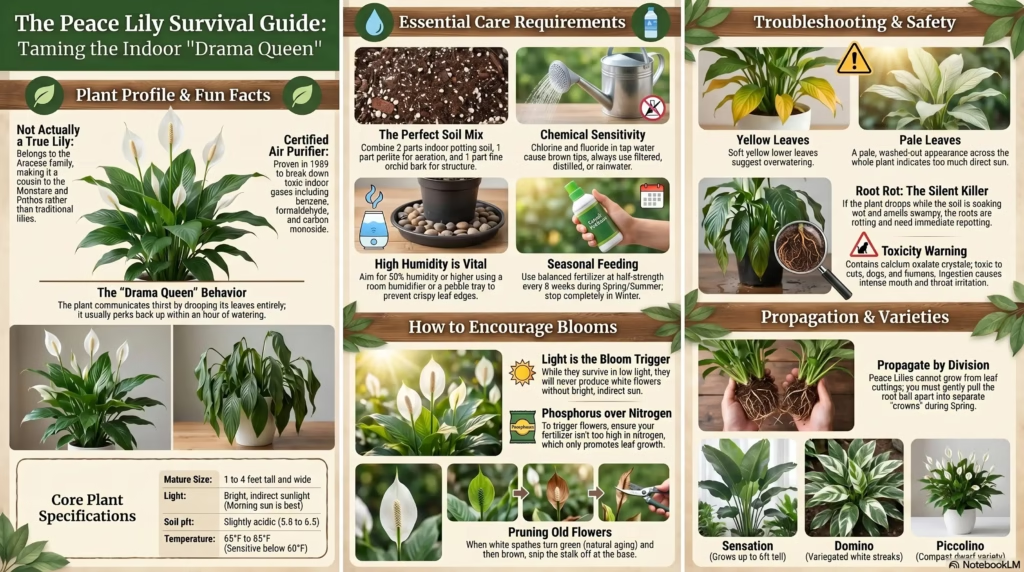
Despite the name, the Peace Lily is not actually a lily at all! It belongs to the Araceae family, making it a close cousin to Monsteras, Philodendrons, and Pothos. The beautiful white “flower” isn’t a petal; it is a specialized leaf called a spathe that grows like a hood to protect the spadix—the bumpy, yellow spike in the center where the true, microscopic flowers actually bloom. Furthermore, the Peace Lily was one of the superstar plants featured in NASA’s 1989 Clean Air Study, proven to break down toxic indoor gases like benzene, formaldehyde, and carbon monoxide!
A Beginner’s Tips for Success
If this is your first Peace Lily, keep these two golden rules in mind:
- Don’t panic when it faints. The Peace Lily will communicate exactly when it needs water by dramatically dropping all its leaves. While it is incredibly satisfying to watch it perk back up, try not to let it faint every single time you water it, as this causes long-term stress. Catch it just as the leaves begin to lose their stiffness.
- Beware the “Low Light” label. Nurseries frequently label Peace Lilies as “low light” plants. While they will certainly survive in a dark corner or a windowless office, they will absolutely never bloom there. To see flowers, they need bright, indirect sunlight.
Essential Peace Lily Care
Creating the perfect environment for your Spathiphyllum means mimicking the dappled light and humid conditions of the tropical rainforest floor.
Light Requirements
To keep the foliage vibrant and encourage the plant to push out new white spathes, place your Peace Lily in bright, indirect sunlight. An east-facing window where it catches the gentle morning sun is ideal, or pulled a few feet back from a south-facing window. Never place a Peace Lily in direct, harsh afternoon sun. The intense rays will rapidly scorch the leaves, leaving behind large, bleached, or crispy brown patches.
Soil Needs
Because they love moisture but are highly susceptible to root rot, the best potting soil for peace lily indoors is one that holds water like a sponge but still drains rapidly. A heavy, compacted soil will suffocate the roots.
Create a rich, airy blend by mixing:
- 2 parts high-quality indoor potting soil (peat or coco coir based)
- 1 part perlite or pumice for aeration
- 1 part fine orchid bark to provide structure
Water: The Chemical Sensitivity
These plants are incredibly thirsty. Check the soil every few days; when the top inch of the soil feels dry, give it a deep, thorough drenching until water pours out the bottom of the pot. Ensure you empty the saucer afterward so the pot isn’t sitting in standing water.
When figuring out how often to water peace lily in winter, simply pay attention to the soil. As the plant’s growth slows and the days get cooler, it will drink much slower. You may shift from watering every 5 days in the summer to every 10 to 14 days in the winter.
Crucial Tip: Peace Lilies are highly sensitive to chlorine and fluoride found in municipal tap water. Using harsh tap water is the number one cause of brown, crispy leaf tips. Always use filtered water, distilled water, or rainwater.
Temperature and Humidity
Keep your home comfortably warm, between 65°F and 85°F. Peace Lilies are very sensitive to cold drafts and will suffer if temperatures drop below 60°F. Because they are tropical understory plants, they adore high humidity (50% or above). If the edges of the leaves are getting crispy despite proper watering, run a room humidifier or place the pot on a pebble tray filled with water.
Fertilizer
They are not heavy feeders. Feed your Peace Lily with a balanced, water-soluble houseplant fertilizer diluted to half strength once every 6 weeks during the spring and summer. Stop fertilizing completely in the fall and winter. Over-fertilizing will quickly burn the root system and turn the leaf tips black.
Popular Types of Peace Lilies
There are dozens of beautiful cultivars to choose from, depending on your space:
- Spathiphyllum wallisii: The standard, classic variety you will find in most garden centers, usually growing about 1 to 2 feet tall.
- ‘Sensation’: The giant of the family. This massive, architectural variety features deeply ribbed, paddle-like leaves that can grow over two feet long, with the whole plant easily reaching 4 to 6 feet tall!
- ‘Domino’: A highly sought-after variegated variety featuring stunning green leaves heavily marbled and splashed with stark white streaks.
- ‘Piccolino’: A charming, dwarf variety that stays incredibly compact, making it the perfect desktop companion.
Propagating Your Peace Lily
You cannot propagate a Peace Lily from a stem or leaf cutting in water. Because they grow outward via underground rhizomes, learning how to propagate peace lily by division is the only way to multiply your plant.
- Timing: The best time to divide your plant is in the early spring when you are already planning to repot it.
- Unpot and Inspect: Gently slide the plant out of its pot and massage the root ball to loosen the soil. You will naturally see several distinct “crowns” or clumps of leaves growing together.
- Divide: Using your hands (or a sterilized, sharp knife if the roots are deeply tangled), carefully pull the root ball apart into two or three smaller sections. Ensure each new section has a healthy clump of roots and several leaves.
- Repot: Plant each new division into its own pot using fresh, moist potting mix. Keep them in a shaded, highly humid spot for a couple of weeks while they recover from transplant shock.
Pests and Diseases
While generally robust, stressed Peace Lilies can attract a few unwanted guests.
- Mealybugs: Look for sticky, white, cotton-like masses hiding deep down where the stems meet the soil. Wipe them away with a cotton swab dipped in rubbing alcohol.
- Spider Mites: Microscopic pests that thrive in dry indoor air. They leave fine webbing on the leaves and turn the foliage pale and dusty. Wipe the leaves down with a damp cloth and apply a neem oil spray.
- Root Rot: The silent killer. If your plant is constantly drooping, the leaves are turning a mushy yellow, and the soil smells swampy, the roots are rotting from overwatering. You must repot into fresh, dry soil immediately.
Bloom: How to Encourage Flowers
The most common question plant parents ask is how to get a peace lily to bloom again indoors. It is entirely normal for a newly purchased plant to drop its flowers and then refuse to bloom for a year. Nurseries use artificial hormones to force early blooms; once those wear off, the plant has to rely on its environment.
To trigger blooming:
- Move to Brighter Light: This is the most crucial step. A Peace Lily in a dark corner will never flower. Move it closer to a bright, indirect light source.
- Be Patient: Peace Lilies naturally bloom in the spring and early summer.
- Check Your Fertilizer: Ensure you are using a balanced fertilizer. A fertilizer too high in nitrogen will produce massive green leaves but zero flowers. You need a slightly higher phosphorus number to encourage blooming.
Common Issues (Troubleshooting)
Why Are My Peace Lily Leaves Turning Brown on the Edges?
If the very tips and edges of the leaves are turning brown and crispy, you are dealing with one of three things:
- Chemical Burn: Tap water heavily treated with fluoride and chlorine. Switch to distilled water.
- Low Humidity: The air in your house is too dry, sucking moisture out of the delicate leaf tips.
- Fertilizer Burn: A buildup of unused fertilizer salts in the soil. Flush the pot with pure water.
Yellowing Leaves
If the oldest, lowest leaves are turning a soft yellow, the plant is likely being overwatered. Let the soil dry out a bit more between drinks. If the whole plant is turning a pale, washed-out yellow/green, it is receiving far too much direct sunlight.
Green Flowers
If your beautiful white spathes are suddenly turning green, don’t panic! This is completely natural. As the flower ages and finishes its blooming cycle, it begins to produce chlorophyll and turns green before eventually dying off. Simply snip the old flower stalk off at the base once it turns brown.