In This Article
The Queen of Orchids: How to Grow and Care for Cattleya Orchids
Welcome back to Plant it! If you are looking to elevate your indoor garden with a touch of classic, breathtaking elegance, it is time to introduce you to the reigning monarch of the orchid world: the Cattleya.
Often referred to as the “Queen of Orchids” or the classic “corsage orchid,” Cattleyas are famous for their massive, heavily ruffled blooms and intensely intoxicating fragrances. Unlike the ubiquitous Phalaenopsis (moth orchids) you see in every grocery store, Cattleyas bring a vintage, high-society charm to your plant shelf.
While their spectacular flowers might make them look intimidating, these epiphytic (tree-dwelling) wonders from Central and South America are surprisingly robust. They have specialized water-storing stems called pseudobulbs, making them more forgiving of occasional neglect than many other delicate houseplants. In this complete guide, we will walk you through exactly how to care for Cattleya orchids so they thrive and bloom year after year in your home.
Cattleya Orchid Profile Quick Look
| Feature | Details |
| Common Name | Cattleya Orchid, Corsage Orchid |
| Botanical Name | Cattleya spp. |
| Plant Type | Epiphytic perennial orchid |
| Mature Size | 6 to 24 inches tall (depending on the variety) |
| Sun Exposure | Bright, indirect light to dappled morning sun |
| Soil Type | Coarse, extremely well-draining orchid bark mix |
| Bloom Time | Varies by species (can bloom once or twice a year) |
| Flower Color | Purple, pink, white, yellow, orange, red, green, and multi-colored |
| Native Area | Central and South America |
Essential Cattleya Orchid Care
Cattleyas are epiphytes, meaning in the wild, they grow clinging to the bark of trees high up in the jungle canopy. Their roots are exposed to sweeping breezes and frequent but brief rainstorms. Your entire care routine should be dedicated to replicating this breezy, dappled environment.
Light Requirements: The Key to Blooming
Light is the single most critical factor in Cattleya care. Without enough light, your plant will grow beautiful green leaves but will fiercely refuse to bloom. Cattleyas need significantly more light than moth orchids.
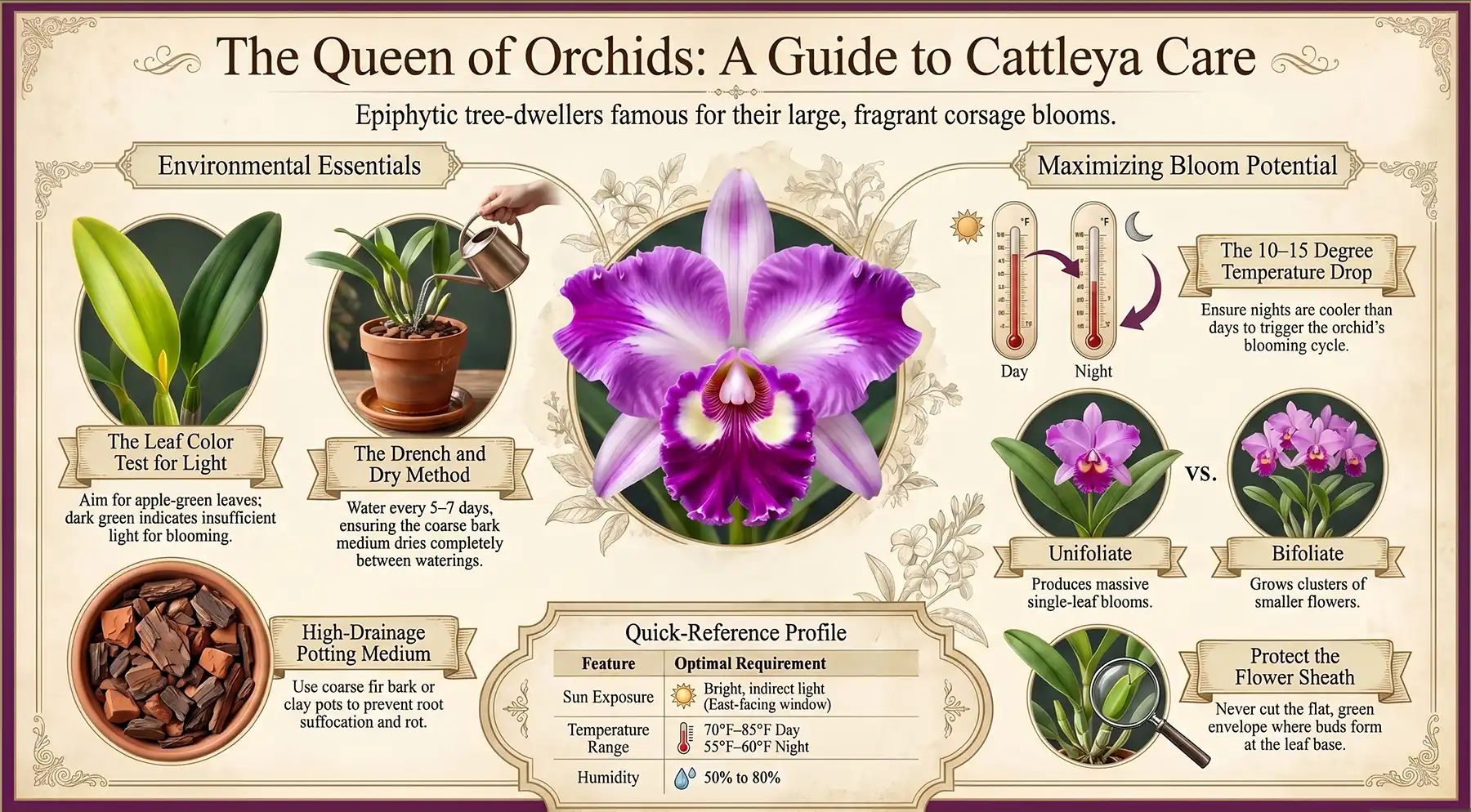
Aim for bright, indirect sunlight, such as an east-facing window where the plant can enjoy gentle morning sun, or a shaded south-facing window.
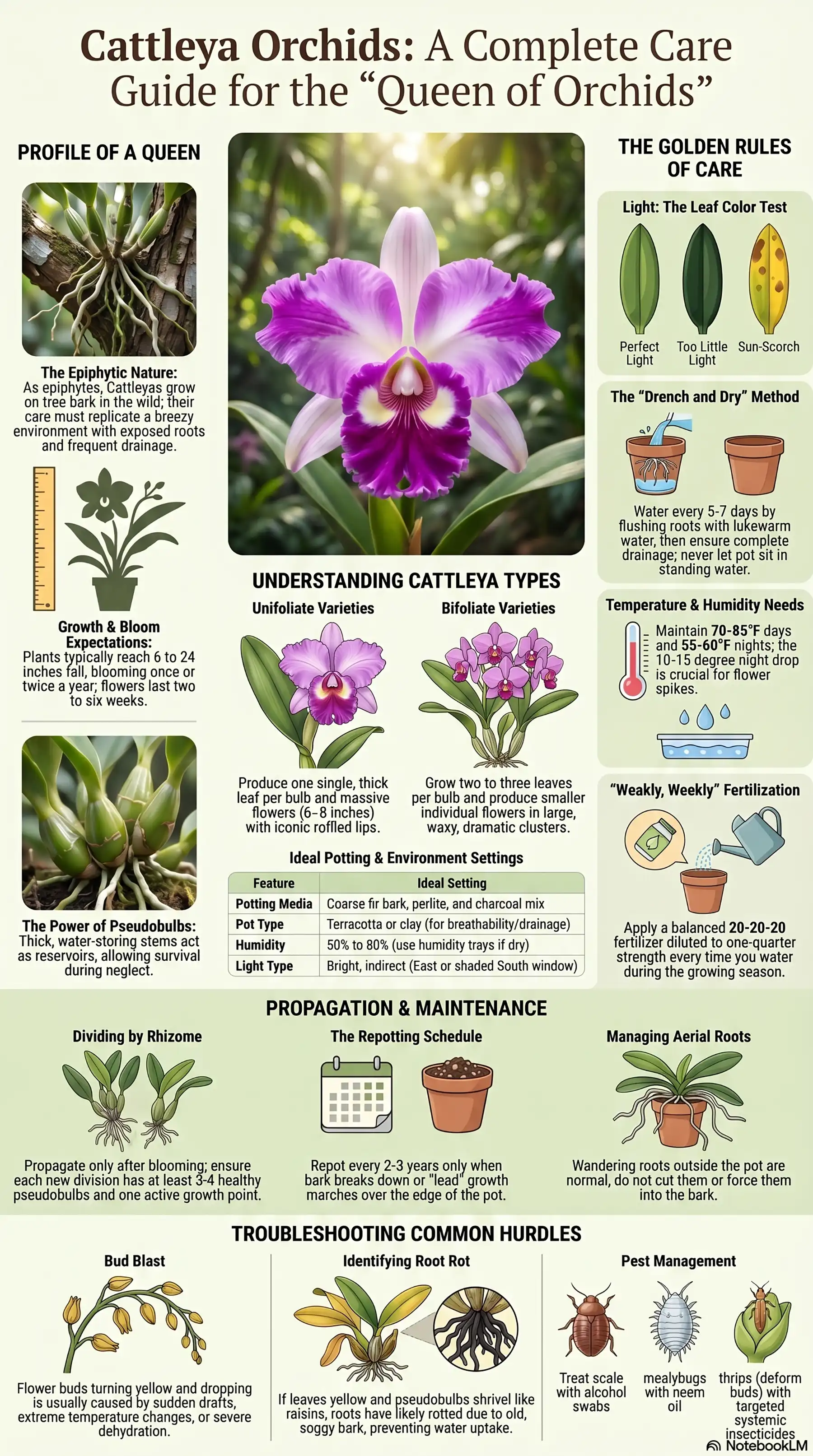
The Leaf Color Test: You can tell if your Cattleya is getting the right amount of light by looking at its leaves.
- Medium to light apple-green: Perfect lighting! Your plant is primed to bloom.
- Dark, forest green: The plant is not getting nearly enough light to produce flowers.
- Yellow or scorched with red/purple freckles: The light is too intense, and the plant is sunburned.
Soil and Potting Medium
Never plant a Cattleya in standard potting soil; it will suffocate the roots and kill the plant in weeks. The best potting mix for cattleya orchids is a coarse, airy, free-draining medium. A chunky fir bark mix, often blended with large chunks of perlite, charcoal, and a tiny bit of sphagnum moss, is ideal. This allows water to flush completely over the roots while pulling plenty of oxygen into the root zone.
Water: The Drench and Dry Method
Because of their thick pseudobulbs (which act like tiny water reservoirs), Cattleyas prefer to dry out entirely between waterings. Figuring out how often to water cattleya orchids in bark depends on your home’s environment, but it typically ranges from every 5 to 7 days.
Take the pot to the sink and run lukewarm water generously over the root system for a minute or two. Let the bark soak it up, and then ensure every single drop of water drains out of the pot before returning it to its display area. Never let a Cattleya sit in a saucer of standing water.
Temperature and Humidity
Cattleyas love warm days and cool nights. Aim for daytime temperatures between 70°F and 85°F and nighttime temperatures between 55°F and 60°F. This 10-to-15-degree temperature drop at night is often crucial for initiating flower spikes.
Aim for humidity levels between 50% and 80%. If your home is dry, place the orchid on a humidity tray filled with pebbles and water, ensuring the bottom of the pot rests on the dry pebbles, not in the water.
Fertilizer
Orchids are light feeders. Adopt the popular mantra: “Weakly, weekly.” Use a balanced, water-soluble orchid fertilizer (like a 20-20-20 blend) diluted to one-quarter strength and apply it every time you water during the active growing season. Once a month, flush the pot with plain water to wash away any built-up fertilizer salts.
Types of Cattleya Orchids
The Cattleya genus is vast, and decades of extensive hybridizing have created thousands of stunning variations. However, they generally fall into two main structural categories:
- Unifoliate Cattleyas: These plants produce one single, large, thick leaf at the top of each pseudobulb. They are famous for producing fewer, but massive, show-stopping flowers (often 6 to 8 inches across) with incredible ruffled lips. Cattleya labiata is a famous example.
- Bifoliate Cattleyas: These varieties produce two (and sometimes three) leaves at the top of taller, more slender pseudobulbs. The individual flowers are smaller than unifoliates, but they produce them in large, dramatic clusters. They also tend to have very thick, waxy petals. Cattleya amethystoglossa is a popular bifoliate.
Propagating Cattleya Orchids
Learning how to propagate cattleya orchids by division is the best way to multiply your collection or share with friends. Unlike plants you can propagate from a leaf or stem cutting, Cattleyas grow via a creeping rhizome (a horizontal stem that rests on the top of the potting mix) and must be divided.
- Wait for the Right Time: Only divide your Cattleya immediately after it finishes blooming and right as new roots begin to emerge from the newest growth.
- Unpot and Clean: Remove the plant from its pot and gently shake off the old bark mix. Trim away any dead, mushy, or hollow roots with sterilized shears.
- Count the Bulbs: To ensure both halves survive and bloom, each division must have at least three to four healthy pseudobulbs (including at least one active, new “lead” or growth point).
- Make the Cut: Using a sterilized blade, slice cleanly through the rhizome between the pseudobulbs to separate the plant.
- Pot Up: Pot each new division into a fresh bark mix, securing the plant so it doesn’t wobble. Keep them slightly drier and heavily shaded for a few weeks until new roots take hold.
Growing in Pots
Cattleyas like their roots to feel snug and secure, and they hate being repotted unnecessarily.
- Choosing a Pot: Terracotta or clay pots are the gold standard for Cattleyas. Clay is porous, allowing the roots to breathe and the potting medium to dry out quickly and evenly, drastically reducing the risk of root rot. Slotted plastic orchid pots are also acceptable, provided the drainage is exceptional.
- When to Repot: You only need to repot every two to three years when the bark medium begins to break down and smell like compost, or when the creeping rhizome has literally grown over the edge of the pot.
- Placement: When potting, place the oldest pseudobulbs flat against the back rim of the new pot, giving the new growth (the “lead”) plenty of room to march forward across the fresh bark.
Bloom: How to Get Your Cattleya to Flower
If you are wondering how to get cattleya orchids to bloom indoors, you are not alone. It is the most common hurdle for indoor growers.
- Light, Light, Light: As mentioned, if the leaves are dark green, push the plant closer to the window.
- Temperature Drops: Cattleyas rely on a distinct difference between day and night temperatures to trigger their blooming cycle. Try cracking a window at night in the fall to give them that refreshing 10-to-15-degree drop.
- Watch the Sheath: Most Cattleyas bloom from a “sheath”—a flat, green, envelope-like structure that forms at the juncture of the leaf and the pseudobulb. Eventually, you will see a dark shadow forming inside the sheath, which will tear open to reveal the flower buds. Never cut a green sheath off!
Common Pests
Cattleyas are tough, but they can occasionally attract unwanted visitors.
- Scale Insects: These look like small, hard, brown or white bumps attached firmly to the leaves or the protective papery sheaths around the pseudobulbs. Wipe them away with a cotton swab dipped in isopropyl alcohol.
- Mealybugs: Look for fluffy white cotton hiding in the crevices between leaves and stems. Treat with insecticidal soap or neem oil.
- Thrips: Microscopic insects that destroy flower buds, causing them to blast (deform or drop before opening). If you suspect thrips, treat the plant with a targeted systemic insecticide.
Common Issues
Cattleya Orchid Leaves Turning Yellow and Wrinkled
If you notice the leaves are yellowing and the pseudobulbs are deeply shriveled like raisins, your plant is severely dehydrated. However, this is usually not because you aren’t watering enough; it is almost always due to root rot. If the roots have rotted away from sitting in old, soggy bark, the plant has no way to uptake water, leading to dehydration. Unpot the plant, inspect the roots, remove the dead tissue, and repot in fresh, airy bark.
Bud Blast
Nothing is more heartbreaking than watching fat flower buds suddenly turn yellow, dry up, and fall off before opening. This is called bud blast. It is usually caused by a sudden, drastic change in environment—such as a cold draft, bringing the plant home from a warm greenhouse in freezing weather, or letting the potting medium dry out too severely while the buds are developing.
Black Spots on Leaves
While a few tiny black freckles are harmless signs of high light, large, spreading black splotches are a sign of bacterial or fungal infection, usually caused by poor airflow and leaving water sitting on the foliage overnight. Increase ventilation around the plant immediately.