In This Article
Bring the Spa Home: How to Grow and Care for Eucalyptus
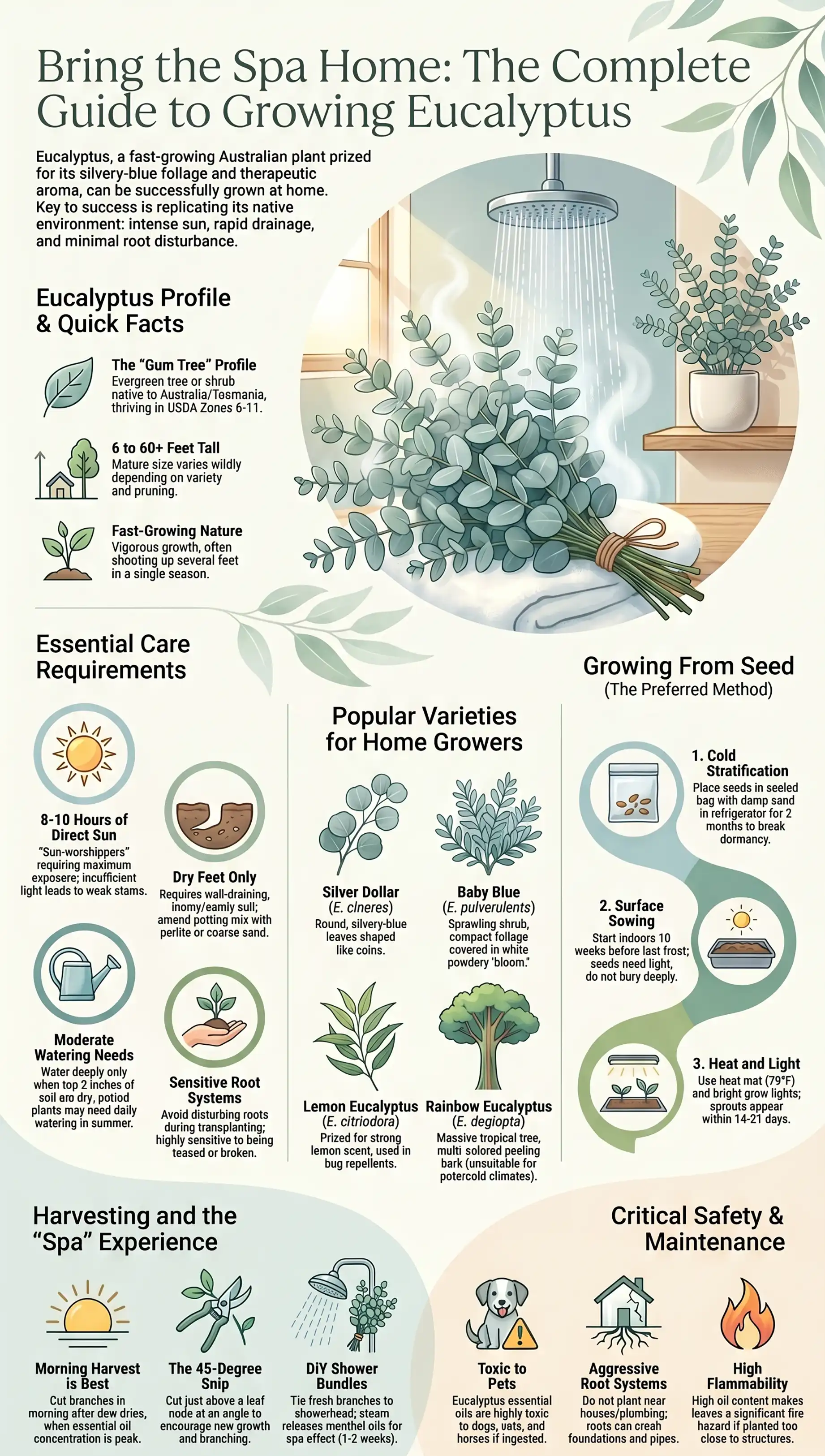
Welcome back to Plant it! If you have ever wanted to transform your home or garden into a fragrant, spa-like sanctuary, growing your own eucalyptus is the perfect weekend project. Known for their striking, silvery-blue foliage and that unmistakable, sinus-clearing menthol aroma, eucalyptus plants are a favorite among florists and indoor gardeners alike.
While native to the sun-drenched landscapes of Australia, these fast-growing evergreen trees and shrubs can be successfully cultivated in many climates—and even in containers! Whether you want a towering landscape tree or a potted patio specimen to harvest for your shower, this comprehensive guide will teach you exactly how to keep your eucalyptus thriving.
Eucalyptus Profile Quick Look
| Feature | Details |
| Common Name | Eucalyptus, Gum Tree, Silver Dollar Tree |
| Botanical Name | Eucalyptus spp. |
| Plant Type | Evergreen tree or shrub |
| Mature Size | 6 to 60+ feet tall (depending on variety and pruning) |
| Sun Exposure | Full sun |
| Soil Type | Well-draining, loamy, sandy |
| Soil pH | Slightly acidic to neutral (5.5 to 7.0) |
| Hardiness Zones | 8-11 (USDA) |
| Native Area | Australia, Tasmania |
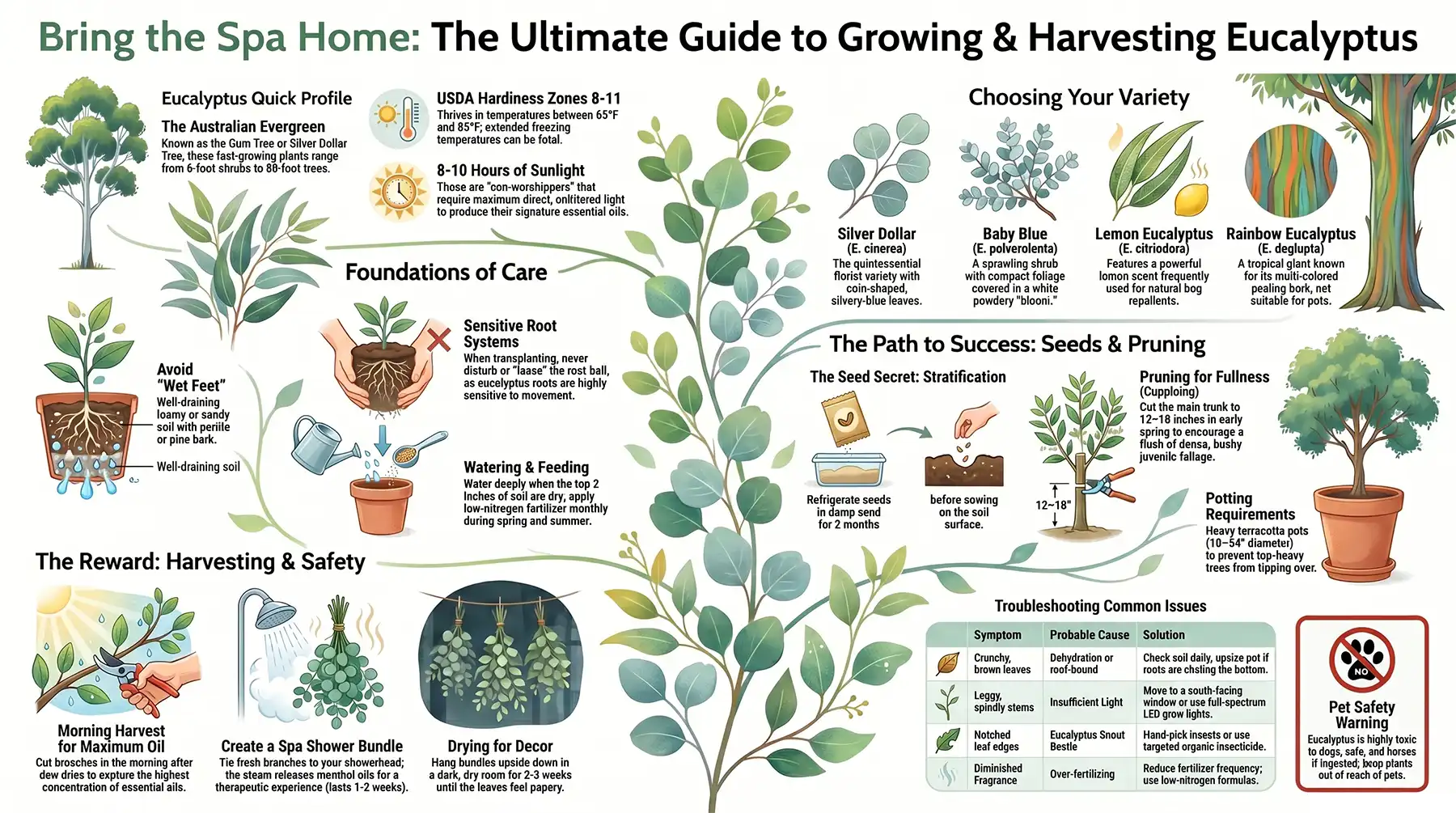
Essential Eucalyptus Care
Eucalyptus is incredibly fast-growing, sometimes shooting up several feet in a single season. Because of this vigorous growth, setting them up with the right foundational care is absolutely critical.
Light Requirements
Eucalyptus plants are massive sun-worshippers. They demand at least eight to ten hours of direct, unfiltered sunlight every day. If you are attempting to grow eucalyptus indoors or on a patio, it must be placed in your absolute brightest south-facing location. Insufficient light will lead to leggy, weak stems and a significant drop in the essential oils that give the leaves their signature scent.
Soil and Planting
In their native habitat, eucalyptus trees grow in poor, rocky soils. For your home garden, the best potting soil for eucalyptus in containers or garden beds is one that drains exceptionally well. They despise having “wet feet.” A standard potting mix heavily amended with perlite, coarse sand, or pine bark will ensure water flows through rapidly.
Crucial planting note: Eucalyptus plants have highly sensitive root systems that resent being disturbed. When transplanting, avoid teasing or breaking the root ball, and plant them at the exact depth they were growing in their nursery pot.
Water
While mature, in-ground eucalyptus trees are famously drought-tolerant, young plants and those grown in pots require consistent moisture. Water your plant deeply when the top two inches of soil feel dry to the touch. Ensure the water drains completely. In the heat of summer, potted eucalyptus may need watering every day or two.
Temperature and Humidity
Most popular eucalyptus varieties thrive in temperatures between 65°F and 85°F. They are accustomed to dry heat and adapt perfectly to standard household humidity levels. While some varieties can tolerate mild frosts, extended freezing temperatures will kill the foliage and roots.
Fertilizer
Eucalyptus are light feeders. In the ground, they rarely need supplemental fertilizer. For potted plants, apply a balanced, water-soluble, low-nitrogen liquid fertilizer once a month during the active growing season (spring and mid-summer). Over-fertilizing can actually diminish the fragrance of the leaves.
Popular Types of Eucalyptus
With over 700 species available, choosing the right eucalyptus comes down to your space and aesthetic goals.
- Silver Dollar Eucalyptus (Eucalyptus cinerea): The quintessential florist variety. It features round, silvery-blue leaves strung along the stems like coins. It is highly aromatic and excellent for cutting.
- Baby Blue Eucalyptus (Eucalyptus pulverulenta): Often grown as a sprawling shrub, this variety has very tight, compact foliage covered in a powdery white “bloom.”
- Lemon Eucalyptus (Eucalyptus citriodora): Famous for its strong, lemon-scented foliage. This variety is often used to extract oils for natural bug repellents.
- Rainbow Eucalyptus (Eucalyptus deglupta): A massive tropical tree famous for its stunning, multi-colored peeling bark. It is not suitable for pots or cold climates.
Pruning
Because they grow so rapidly, pruning is an essential part of eucalyptus care, especially if you are keeping them in containers.
- Coppicing: To keep a eucalyptus small and bushy (shrub-like), you can perform a hard prune called “coppicing.” In late winter or early spring, cut the main trunk down to about 12 to 18 inches above the soil line. The plant will rapidly flush out with dense, juvenile foliage.
- Maintenance Pruning: Snip off dead or crossing branches throughout the year to maintain airflow and a pleasing shape. Always use sharp, sterilized shears.
Propagating
Attempting to propagate eucalyptus from stem cuttings is notoriously difficult and has a very high failure rate. The cuttings are highly susceptible to rot before they ever form roots. While you can try dipping semi-hardwood cuttings in a strong rooting hormone and placing them in a heated propagation mat, growing from seed is a far more reliable method.
Growing From Seeds
Growing eucalyptus from seed is rewarding, inexpensive, and the preferred method for home gardeners.
- Stratification: Many eucalyptus seeds require cold stratification to break dormancy. Place the seeds in a sealed bag with slightly damp sand in your refrigerator for two months.
- Sowing: Start seeds indoors about 10 weeks before your last spring frost. Surface-sow the seeds onto a well-draining seed starting mix. Do not bury them deeply; they need light to germinate.
- Environment: Keep the soil consistently moist but not soggy. Place the trays on a heat mat set to 70°F and under bright grow lights.
- Germination: Sprouts should appear in 14 to 21 days. Transplant them into individual pots once they have two sets of true leaves, taking extreme care not to disturb the fragile taproot.
Growing in Pots
Figuring out how to grow eucalyptus in pots indoors or on a balcony is a great solution for those in colder climates.
- Choose a Large Container: Eucalyptus grow large root systems quickly. Start with a pot that is at least 18 to 24 inches in diameter with massive drainage holes. Heavy terracotta or ceramic is ideal, as tall eucalyptus can become top-heavy and tip over in plastic pots.
- Repotting: You will likely need to upsize the pot every year. Do this in the spring, gently sliding the root ball into the new container without breaking it apart.
- Indoor Placement: If keeping it indoors year-round, place it directly in front of an unobstructed south-facing window or use a high-quality, full-spectrum LED grow light.
Overwintering
If you live below USDA Zone 8, leaving your eucalyptus outside in winter is a death sentence. Overwintering potted eucalyptus tree varieties indoors requires a bit of strategy.
Before the first freeze, thoroughly inspect the plant for pests and bring it indoors. Place it in the brightest, coolest room in your house (a sunroom or a bright garage that stays around 50°F is perfect). Growth will slow down significantly, so cut your watering routine in half and stop fertilizing entirely until spring.
Harvesting Leaves
One of the greatest joys of growing this plant is learning how to harvest eucalyptus leaves for shower bundles, floral arrangements, or crafting.
- When to Harvest: The best time to cut branches is in the morning after the dew has dried, as this is when the essential oils are most concentrated in the leaves.
- How to Cut: Snip branches at a 45-degree angle just above a leaf node to encourage new branching.
- Shower Bundles: To make a shower bundle, gather a few fresh branches, tie the stems tightly with twine, and hang them from your showerhead (not directly in the water stream). The hot steam will release the menthol oils, turning your bathroom into a luxury spa.
- Drying: To dry leaves for arrangements, hang the tied bundles upside down in a dark, dry, well-ventilated room for two to three weeks until the leaves are papery and stiff.
Common Pests
Eucalyptus oils naturally repel many pests, but they aren’t entirely immune to invaders.
- Eucalyptus Snout Beetle: These weevils chew notches into the edges of the leaves. Hand-pick them off or use a targeted organic insecticide if the infestation is severe.
- Aphids and Whiteflies: These sap-sucking pests can occasionally cluster on tender, new growth. Blast them off with a strong jet of water from the hose or apply a neem oil solution in the evening.
Common Issues
Why are my eucalyptus leaves turning crunchy?
If your once-supple leaves are turning crispy, brown, and crumbling, you are almost certainly dealing with a water issue. Eucalyptus in pots dry out incredibly fast. If you miss a watering during a heatwave, the plant will quickly drop its leaves to conserve moisture. Conversely, if the plant is severely root-bound in its pot, water may simply be running down the sides of the container without ever soaking the roots. Check the soil moisture daily and consider repotting if the roots are circling the bottom.
Leggy, Spindly Growth
If your eucalyptus looks like a bare stick with only a few leaves at the very top, it is desperately reaching for light. Prune it back to encourage lower branching and immediately move it to a location with full, direct sun.