In This Article
Turn Your Home into a Lush, Zen-Inspired Sanctuary with Phyllostachys aurea
Introduction
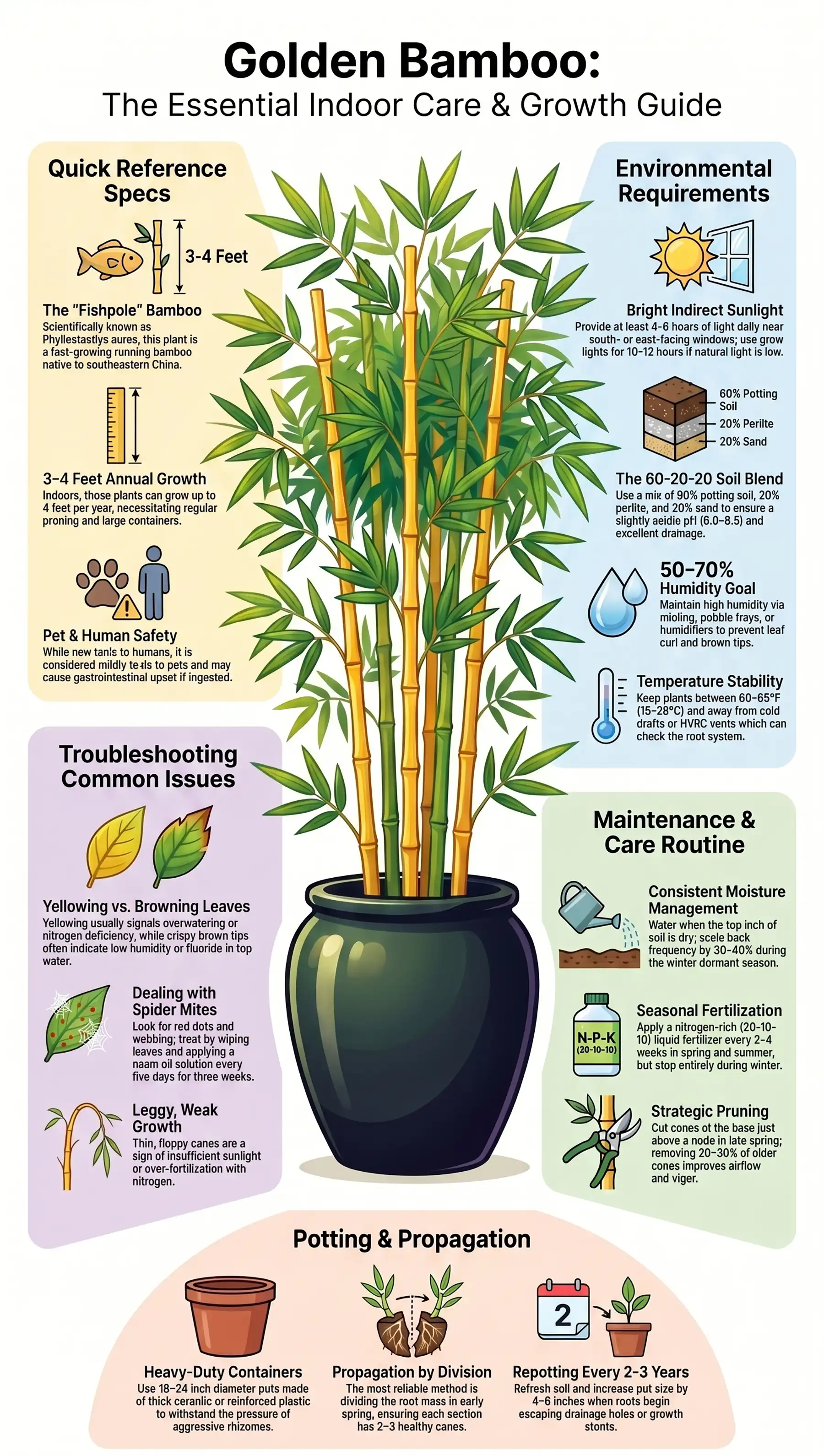
Golden bamboo (Phyllostachys aurea) is one of the most visually striking plants you can bring into your home. Its tall, elegant canes, bright chartreuse-to-golden coloring, and dense foliage create an instant focal point in any room. Originally native to southeastern China, it has been cultivated worldwide not just for its beauty but for its surprisingly practical qualities — from natural air purification to soundproofing effects in larger indoor spaces.
Growing golden bamboo indoors does come with a learning curve. It is a running bamboo, which means it naturally wants to spread — making container management essential. But with the right approach, it is entirely possible to maintain a lush, healthy, and well-behaved indoor plant that rewards you with year-round greenery and a sense of calm. This guide covers everything you need to know, from soil selection and watering schedules to pest control and harvesting leaves for culinary or decorative use.
Quick Care Reference
| Common Name | Golden Bamboo, Fishpole Bamboo |
| Scientific Name | Phyllostachys aurea |
| Light | Bright indirect to full sun (6+ hours ideal) |
| Water | Regular; keep soil evenly moist, never waterlogged |
| Humidity | Medium to high (50–70%) |
| Temperature | 60–85°F (15–29°C) |
| Soil | Rich, well-draining, slightly acidic (pH 6.0–6.5) |
| Fertilizer | Balanced liquid fertilizer every 2–4 weeks (spring–summer) |
| Toxicity | Non-toxic to humans; mildly toxic to pets |
| Growth Rate | Fast — up to 3–4 feet per year indoors |
Care
Light Requirements
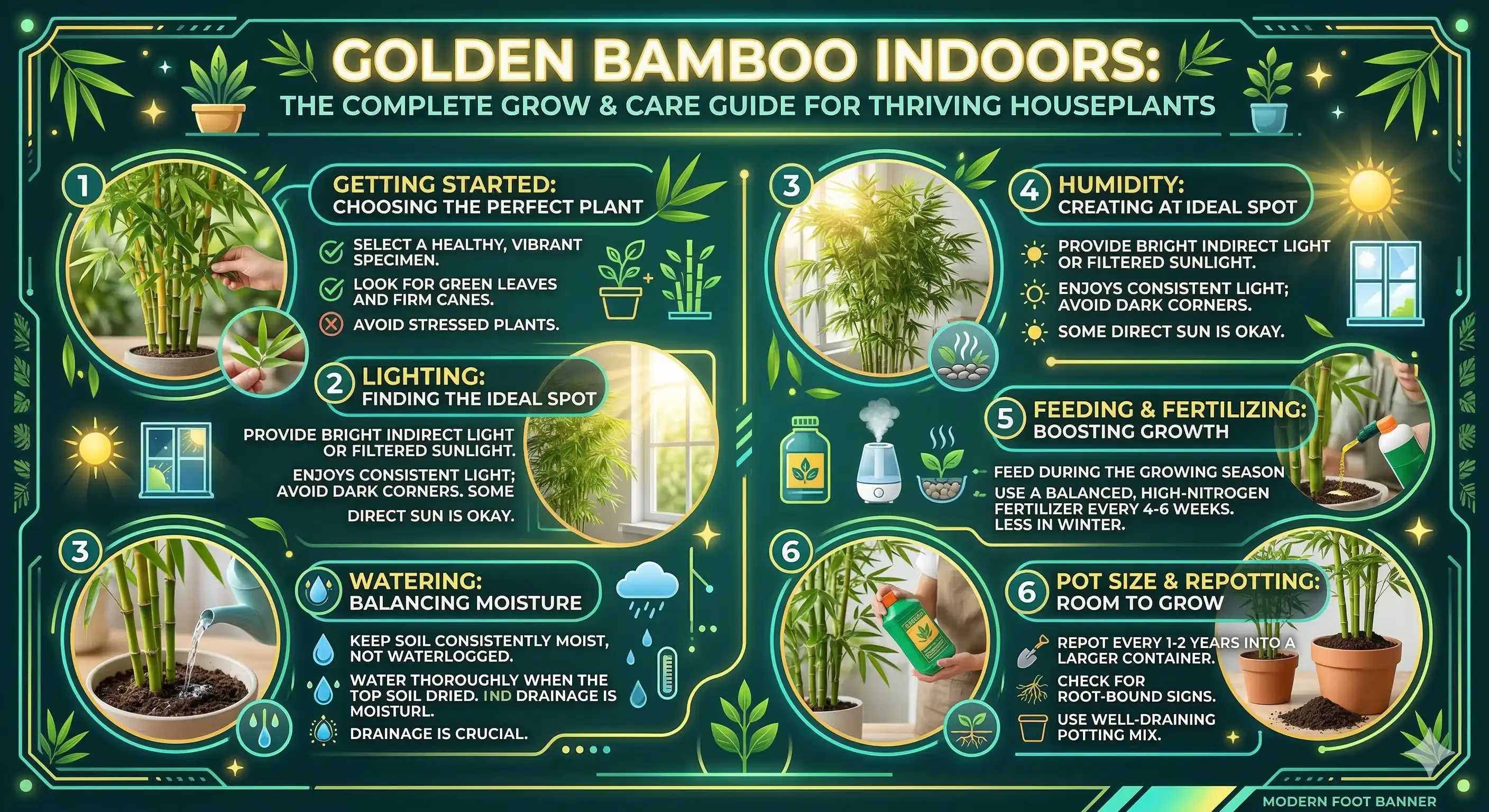
Golden bamboo thrives in bright light. Indoors, place it near a south- or east-facing window where it can receive at least four to six hours of bright, indirect sunlight per day. It can tolerate some direct morning sun, but harsh afternoon rays can scorch the leaves, causing them to yellow or develop brown tips. If natural light is limited, supplement with a full-spectrum grow light positioned 12–18 inches above the foliage for 10–12 hours daily.
Rotating the pot every two weeks ensures even growth on all sides and prevents the plant from leaning dramatically toward the light source.
Watering
Consistent moisture is key to happy golden bamboo. Water thoroughly until it drains from the bottom, then allow the top inch of soil to dry out before watering again. In warm months, this may mean watering every 2–3 days; in cooler, darker winter months, scale back to once a week. Always use room-temperature water, as cold tap water can shock the roots.
Watch for these warning signs: yellowing leaves often signal overwatering, while dry, curling leaves and drooping canes indicate underwatering. Using a moisture meter is an excellent way to remove the guesswork.
Soil & Potting Mix
Golden bamboo needs a rich yet well-draining growing medium. A blend of 60% quality potting soil, 20% perlite, and 20% horticultural sand works very well. This combination provides nutrients, retains adequate moisture, and ensures excess water escapes quickly — preventing the dreaded root rot.
The ideal soil pH is between 6.0 and 6.5 (slightly acidic). You can test pH with an inexpensive meter and amend with sulfur to lower it or garden lime to raise it.
Temperature & Humidity
Golden bamboo is comfortable in temperatures between 60°F and 85°F (15–29°C). It dislikes cold drafts, air conditioning vents, and sudden temperature swings — keep it away from exterior doors and HVAC outlets. It will tolerate occasional drops to 50°F but should not be exposed to frost, which will kill the canes.
For humidity, aim for 50–70%. In dry indoor environments, mist the leaves lightly every couple of days, run a pebble tray with water beneath the pot, or use a room humidifier nearby. Adequate humidity prevents leaf curl and tip browning.
Fertilizing
Feed golden bamboo with a balanced, nitrogen-rich liquid fertilizer (such as a 20-10-10 NPK formula) every two to four weeks during spring and summer, when the plant is actively growing. Nitrogen is particularly important for the development of lush, green foliage and strong cane growth.
Reduce feeding to once a month in autumn and stop entirely through winter when growth naturally slows. Over-fertilizing in the dormant season causes salt build-up in the soil, which burns roots and leads to yellowing leaves.
Types of Golden Bamboo for Indoors
While Phyllostachys aurea is the standard golden bamboo, several cultivars and close relatives are well-suited to indoor growing. Here are the most popular:
- Phyllostachys aurea ‘Holochrysa’: A fully golden form with striking yellow canes that deepen in sunlight. Very ornamental and slightly more compact than the species, making it ideal for pots.
- Phyllostachys aurea ‘Flavescens Inversa’: Features green canes with yellow grooves — a beautiful inverse coloration. Grows slightly slower, which is an advantage indoors.
- Phyllostachys nigra (Black Bamboo): Not technically golden bamboo but widely grown indoors for its dramatic jet-black canes. Similar care requirements.
- Bambusa vulgaris ‘Vittata’: A clumping bamboo with yellow and green striped canes. Clumping types are generally easier to manage indoors as they do not spread as aggressively.
- Fargesia robusta (Clumping): A cold-hardy clumper with slender green canes and feathery foliage. Excellent for indoor use as it never becomes invasive.
Pruning
Regular pruning is essential for keeping indoor golden bamboo tidy, healthy, and correctly sized for your space. Unlike many houseplants, bamboo responds exceptionally well to cutting and will not be harmed by aggressive trimming.
When to Prune
The best time to prune is in late spring or early summer, after new shoots have fully emerged and hardened. You can also do light maintenance pruning at any time of year to remove dead, yellowed, or damaged canes.
How to Prune Canes
Use clean, sharp pruning shears or loppers. Always cut canes at the base, just above a node (the ring-like joint on the cane). Never leave a stub protruding above a node as it will die back, turn brown, and become an entry point for pests and disease.
To control height, cut individual canes to your desired length at a node. The cane will not regrow from the cut point — it will simply remain at that height. New, fresh canes will emerge from the base each spring to replace older ones.
Thinning
If your bamboo becomes too dense, thin it by removing some of the older, less attractive canes at soil level. Prioritize removing canes that are brown, grey, or thinner than a pencil. Removing 20–30% of canes at a time promotes airflow, reduces pest risk, and encourages the plant to push new, vigorous growth.
Removing Dead Leaves
Golden bamboo naturally drops its lower leaves over time — this is completely normal. Simply peel or snap off dead leaves by hand. Avoid pulling at live leaves as this can strip the outer sheath of the cane.
Propagating Golden Bamboo
Golden bamboo is most reliably propagated through division and culm (cane) cuttings. It is worth noting that bamboo rarely flowers, and when it does, the plant typically dies afterward — so seed propagation is uncommon and unreliable.
Propagation by Division (Most Reliable)
Division is the easiest and most successful method for home gardeners. The best time is in early spring, just as new growth begins.
- Step 1: Remove the parent plant from its pot and lay it on its side.
- Step 2: Use a sharp spade, pruning saw, or large knife to divide the root mass into sections, each containing at least 2–3 healthy canes and a strong section of rhizome (the horizontal underground stem).
- Step 3: Pot each division in fresh, well-draining potting mix and water thoroughly.
- Step 4: Keep in a warm, humid location with indirect light. New growth should emerge within 4–6 weeks.
Propagation by Culm Cuttings
While less reliable than division, culm cuttings can work if you do not want to disturb the main plant.
- Step 1: Select a healthy, 1–2 year old cane (green, firm, and free of damage).
- Step 2: Cut a section 12–18 inches long that includes at least two nodes.
- Step 3: Lay the cutting horizontally in a tray of moist, sandy soil mix and cover lightly. Alternatively, plant it vertically with one node below soil.
- Step 4: Cover with plastic wrap to maintain humidity and place in a warm spot (70–80°F). Roots and shoots typically appear in 6–10 weeks.
Growing Golden Bamboo from Seeds
Growing bamboo from seed is genuinely rare and challenging. Phyllostachys aurea only flowers once every several decades, and the seeds that result have an extremely short viability window — they must be planted within days of harvest. If you do manage to source fresh golden bamboo seeds, here is how to proceed:
- Seed Freshness: Only use seeds that are very recently harvested (within 1–2 weeks). Dried or stored seeds rarely germinate.
- Pre-soaking: Soak seeds in warm water for 24 hours before planting to soften the outer hull and improve germination rates.
- Planting Medium: Fill a seed tray with a mix of equal parts perlite and coconut coir. Sow seeds 1/2 inch deep.
- Germination Conditions: Maintain temperatures between 75–85°F (24–29°C) and keep the medium consistently moist. Cover with a humidity dome.
- Germination Timeline: Expect germination in 10–21 days under ideal conditions. Growth is very slow in the first year — seedlings may reach only 6–10 inches.
- Transplanting: Once seedlings have 3–4 nodes and a developed root system, transplant into individual pots with standard bamboo potting mix.
Due to the rarity and difficulty of seed propagation, most indoor gardeners rely on division or purchasing nursery-grown plants.
Growing Golden Bamboo in Pots
Container growing is actually the preferred method for golden bamboo indoors, as it naturally contains its aggressive spreading rhizomes. With the right pot and regular care, potted golden bamboo can thrive for many years.
Choosing the Right Container
Select a pot that is large, heavy, and sturdy. Golden bamboo grows fast and its rhizome system is powerful — it can crack thin plastic pots over time. The ideal pot is 18–24 inches in diameter and 16–20 inches deep. Material matters too: thick terracotta, glazed ceramic, or heavy-duty HDPE plastic all work well. Ensure the pot has multiple large drainage holes.
Potting and Repotting
Repot golden bamboo every 2–3 years, or sooner if you notice roots escaping from drainage holes, the plant drying out within hours of watering, or the canes becoming visibly stunted. Spring is the ideal time to repot, just before the growing season.
When repotting, size up by 4–6 inches in diameter. This is also an excellent opportunity to divide the plant if it has outgrown its space, or to prune back circling roots.
Preventing Pot Escape
Even in a container, golden bamboo rhizomes may attempt to grow through drainage holes. Combat this by placing a thick layer of gravel or a rhizome barrier fabric in the bottom of the pot before adding soil. Inspect drainage holes annually and trim any escaping roots with sharp scissors.
Overwintering Golden Bamboo Indoors
One of the great advantages of growing golden bamboo indoors is that overwintering is far simpler than for outdoor specimens. However, indoor bamboo still goes through a natural period of slowed growth in winter, and adjusting your care routine accordingly prevents common problems.
Reducing Water and Fertilizer
As daylight hours shorten and temperatures drop, golden bamboo’s growth slows significantly. Reduce watering frequency by 30–40% and stop fertilizing entirely from November through February. Continuing to fertilize in winter causes excessive nutrient salt build-up, which damages roots.
Light in Winter
In regions with short winter days, your bamboo may not receive enough natural light. Move it closer to your brightest window, clean the glass to maximize light transmission, and consider adding a grow light on a timer for 10 hours per day.
Temperature Protection
Keep indoor temperatures above 55°F (13°C) at all times. Move pots away from cold window sills on freezing nights, and avoid placing bamboo near drafty gaps around windows or doors. If you have a conservatory or sunroom, that is an ideal winter location.
Leaf Drop in Winter
Some leaf drop in winter is perfectly normal — do not panic. Golden bamboo is semi-evergreen and may shed up to 30% of its foliage in response to lower light and cooler temperatures. New leaves will emerge vigorously in spring.
Harvesting Bamboo Leaves
Harvesting golden bamboo leaves is a surprisingly satisfying and practical activity. The leaves have a range of uses — from culinary wrapping (particularly in Asian cuisines for rice dumplings such as zongzi) to herbal tea, natural dyeing, and decorative arrangements.
When and How to Harvest
Harvest leaves in the morning when their moisture content is highest. For culinary uses, select large, healthy, unblemished leaves from second-year canes — these tend to be more pliable and flavorful than leaves from new growth. Use clean scissors or your fingers to snap the leaf cleanly from the node. Never strip all leaves from a single cane, as this will weaken or kill it.
For herbal tea, dry the harvested leaves flat on a mesh rack in a warm, well-ventilated space for 1–2 weeks, or use a food dehydrator at 100°F (38°C) for 4–6 hours. Dried bamboo leaves store well in an airtight container for up to one year.
Culinary Uses
Bamboo leaves are traditionally used in Chinese, Japanese, and Korean cooking to wrap foods before steaming or grilling. They impart a mild, grassy flavor and keep foods moist during cooking. Before use, soak dried leaves in hot water for 30–60 minutes until pliable, then use as you would parchment paper for wrapping.
Decorative Uses
Fresh golden bamboo branches with leaves make stunning additions to floral arrangements and ikebana compositions. Cut whole side branches just above a node and place immediately in water. They will stay fresh for 1–2 weeks and add architectural drama to any bouquet or vase arrangement.
Common Pests
Golden bamboo is a robust plant but is not immune to indoor pests. Regular inspection is the best prevention — catching infestations early makes them much easier to treat.
Spider Mites
Spider mites are the most common bamboo pest, especially in dry indoor environments. They appear as tiny red or brown dots on the undersides of leaves, often leaving fine webbing. Affected leaves develop yellow speckling and eventually drop. Treat by wiping leaves with a damp cloth, then applying neem oil spray (1 tsp neem oil + 1/2 tsp dish soap per liter of water) every five days for three weeks. Increasing humidity dramatically reduces spider mite populations.
Mealybugs
Mealybugs cluster in leaf axils and along cane sheaths, appearing as white, cottony masses. They suck sap from the plant, causing stunted growth and yellowing. Dab individual bugs with a cotton swab dipped in 70% isopropyl alcohol, then follow up with neem oil spray. For severe infestations, a systemic insecticide such as imidacloprid applied to the soil is effective.
Scale Insects
Scale insects attach themselves firmly to canes and appear as brown or tan bumps that do not move. They are easy to mistake for part of the plant. Scrape them off with a soft toothbrush dipped in soapy water, then apply horticultural oil spray to smother any remaining eggs. Repeat treatment every two weeks for six weeks.
Aphids
Aphids are soft-bodied insects that cluster on new growth, draining sap and excreting sticky honeydew that promotes sooty mold. A strong blast of water from a spray bottle dislodges most colonies. Follow up with insecticidal soap spray as needed. Introduce predatory insects like ladybugs in a conservatory setting for natural control.
Root Mealybugs
These difficult pests live in the soil around the roots and are only discovered during repotting. Signs include sudden wilting and yellowing despite correct watering. Treatment involves removing the plant from its pot, rinsing all old soil from the roots, discarding the old soil, and repotting in fresh medium after dipping roots in a neem oil solution for 30 minutes.
Common Issues & Troubleshooting
Yellowing Leaves
Yellow leaves are the most common complaint with golden bamboo and have multiple causes. Overwatering is the most frequent culprit — the soil stays soggy and roots begin to rot, which prevents nutrient uptake. Other causes include underwatering, low humidity, too much direct sun, or a nitrogen deficiency. Diagnose by checking soil moisture first, then assess light conditions, and finally consider fertilizing if the plant has not been fed in several months.
Brown Leaf Tips
Crispy brown tips indicate low humidity or fluoride toxicity from tap water. Switch to filtered water or rainwater and increase ambient humidity around the plant. If tips are brown but not crispy, check for root rot or salt build-up in the soil from excessive fertilizing. Flush the soil thoroughly with plain water every few months to remove accumulated salts.
Leggy, Weak Canes
Thin, floppy canes that lean toward the light indicate insufficient sunlight. Move the plant to a brighter location or add a grow light. Overly tall and weak canes can also result from over-fertilizing with nitrogen — the plant grows fast but produces thin, hollow stems. Reduce fertilizer and improve light conditions simultaneously.
No New Growth
If your bamboo has stopped producing new canes entirely, it may be root-bound (needing repotting), dormant due to winter conditions, or suffering from root rot. Check the roots by gently removing the plant from its pot. Healthy roots are white to tan; rotted roots are brown, mushy, and smell unpleasant. Repot in fresh soil and trim away any rotted root sections with sterile scissors.
Canes Turning Grey or Brown
Older canes naturally turn grey or brown as they age — this is normal. Simply prune them out at the base. However, if younger canes are browning, this indicates environmental stress (cold damage, drought, or root problems). Assess all care conditions and address accordingly.
Soil Drying Out Too Quickly
If your bamboo is drinking water faster than you can keep up, the plant is likely root-bound and needs a larger pot. Repot into a container 4–6 inches larger in diameter. You can also add water-retaining amendments like coconut coir or peat moss to the potting mix to slow drainage slightly.
F A Q
Final Thoughts
Golden bamboo is a genuinely rewarding indoor plant for those willing to learn its needs. Its combination of fast growth, architectural beauty, and versatility — as a privacy screen, room divider, air purifier, or simply a stunning specimen plant — makes it one of the most interesting choices you can bring into your home. With the right pot, adequate light, consistent moisture, and an annual pruning session, your golden bamboo will reward you with years of lush, vibrant, living greenery.
Whether you are a first-time bamboo grower or an experienced indoor gardener looking to expand your collection, Phyllostachys aurea deserves a prominent place in your plant family.
— Happy Growing 🌱 —