In This Article
The Ultimate Guide: How to Grow Philodendron Varieties Indoors
Welcome back to Plant It! If you are looking to build an indoor jungle but want a plant that won’t punish you for being a few days late with the watering can, you need a Philodendron. With hundreds of species native to the tropical Americas, the Philodendron family is one of the most diverse, forgiving, and beloved groups of houseplants in the world.
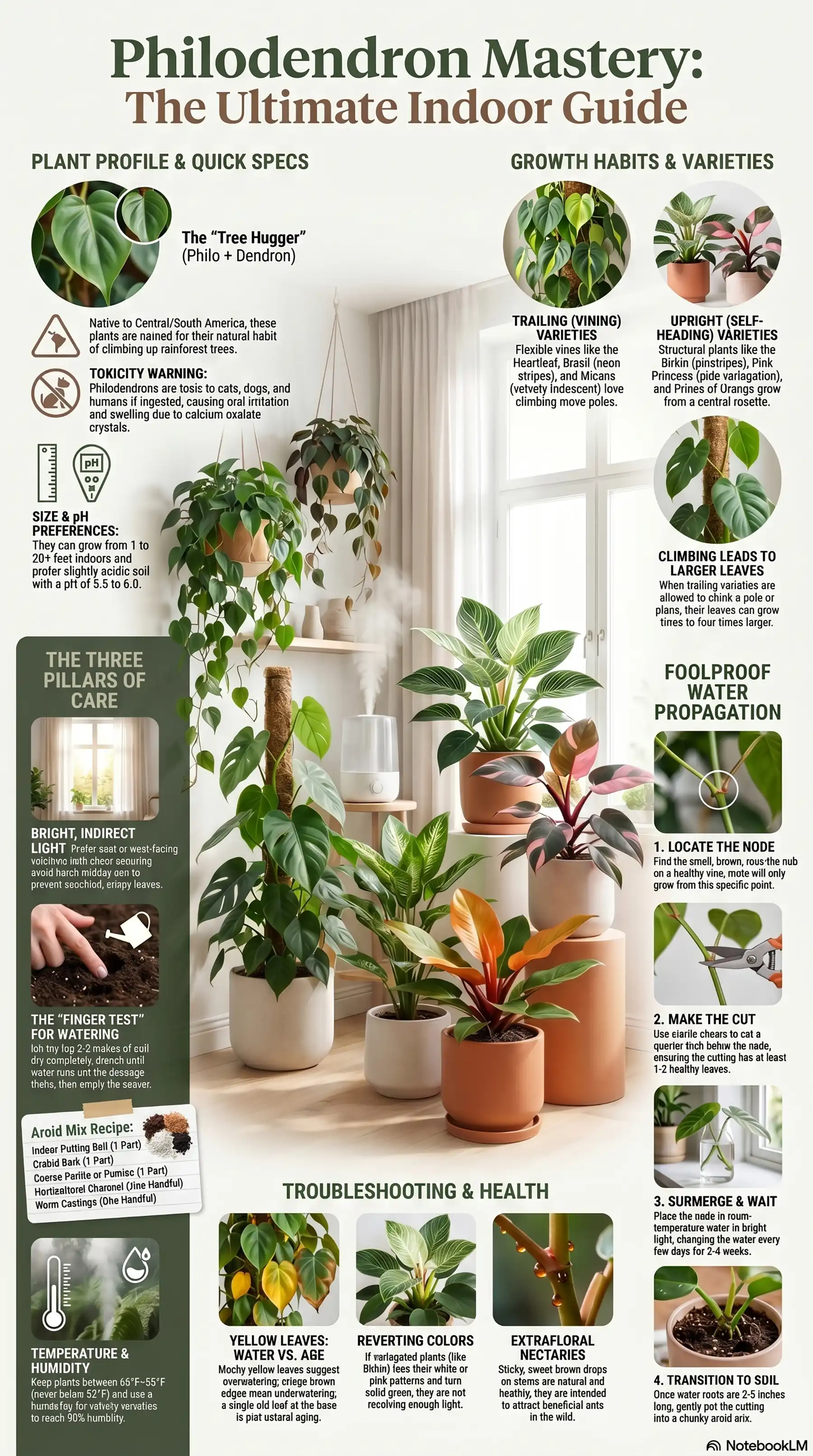
The name “Philodendron” literally translates from Greek to “tree hugger” (philo meaning love, and dendron meaning tree), a nod to how many of these plants naturally grow climbing up the trunks of massive rainforest trees. Whether you want a lush, trailing vine to cascade off your bookshelf or a striking, colorful centerpiece for your dining table, there is a Philodendron for you.
In this comprehensive guide, we will break down exactly how to care for philodendron indoors, explore the different varieties, and troubleshoot common issues so your tropical foliage can thrive year-round.
Philodendron Profile Quick Look
| Feature | Details |
| Common Name | Philodendron |
| Botanical Name | Philodendron spp. |
| Plant Type | Tropical perennial |
| Mature Size | 1 to 20+ feet indoors (depending on variety and support) |
| Sun Exposure | Bright, indirect light to low light |
| Soil Type | Chunky, well-draining aroid mix |
| Soil pH | Slightly acidic (5.5 to 6.0) |
| Toxicity | Toxic to cats, dogs, and humans if ingested |
| Native Area | Central and South America, Caribbean |
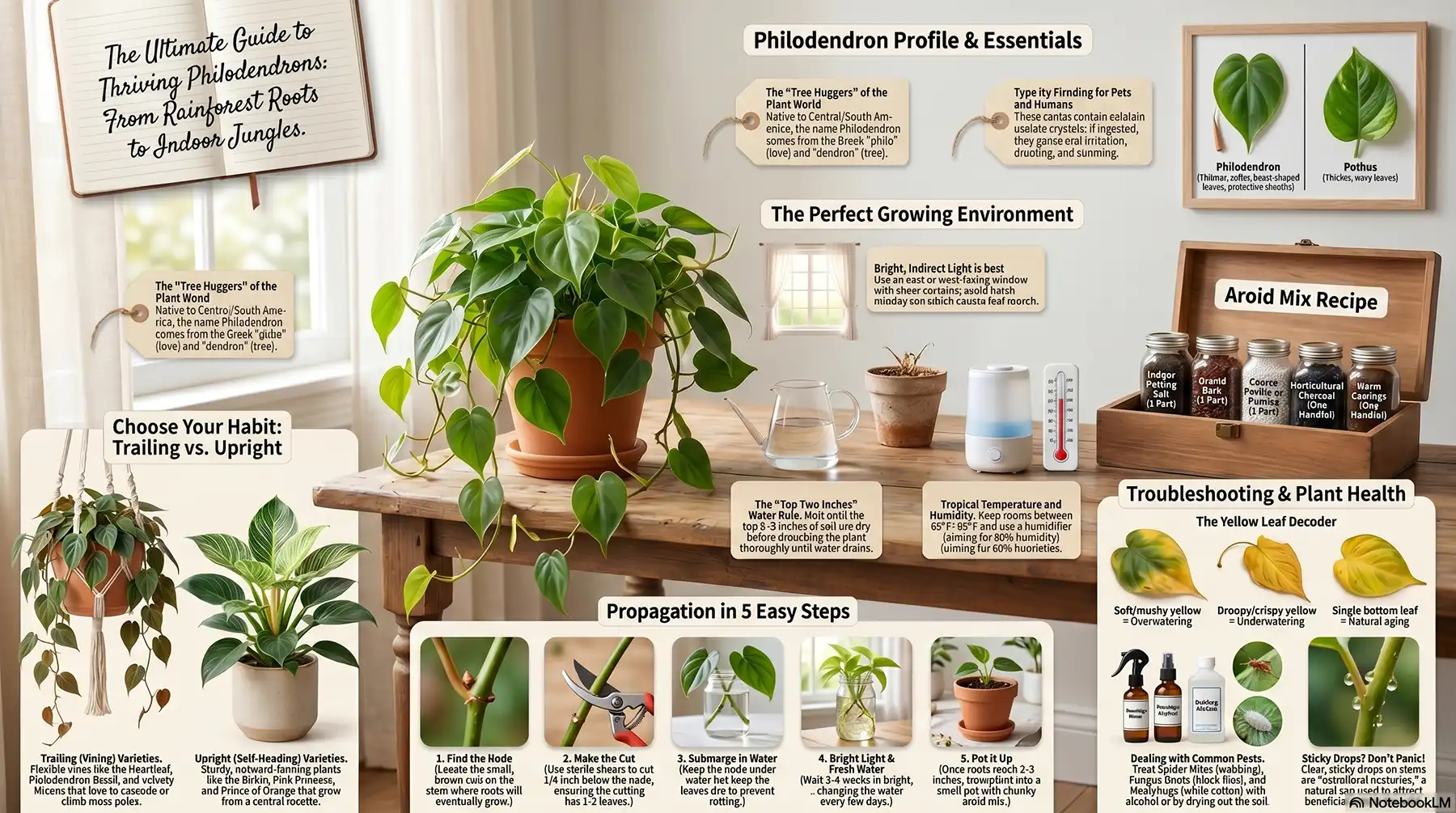
Essential Philodendron Care
One of the reasons Philodendrons are so ubiquitous in homes and offices is their incredibly adaptable nature. While they have preferences, they are highly resilient.
Light Requirements
In their natural rainforest habitat, Philodendrons grow under the thick canopy of trees, receiving dappled sunlight. Indoors, they prefer bright, indirect light. An east-facing or west-facing window with a sheer curtain is ideal.
While they are famous for tolerating low-light environments (like a dark bathroom or a north-facing office), they will not grow as quickly, their leaves will be smaller, and highly variegated types will lose their striking colors. Never put them in harsh, direct midday sun, or their leaves will scorch and turn white or crispy.
Soil
Because these plants are largely epiphytic or hemi-epiphytic (meaning their roots love to attach to trees and breathe air), standard, dense potting soil is a recipe for disaster. The best soil mix for indoor philodendron is a chunky, highly aerated “aroid mix.”
You can easily mix your own by combining:
- 1 part high-quality indoor potting soil
- 1 part orchid bark
- 1 part coarse perlite or pumice
- A handful of horticultural charcoal and worm castings
This mix allows water to flow through the pot rapidly, ensuring the roots have plenty of oxygen and never sit in a soggy, suffocating environment.
Water
Philodendrons like their soil to be consistently slightly moist but never waterlogged. Always let the top two to three inches of your soil mix dry out completely before watering again. Stick your finger into the soil—if it feels damp, wait a few more days. When you do water, drench the plant thoroughly until water runs out the drainage holes, and then empty the saucer.
Temperature and Humidity
These tropical beauties love warmth. Keep your indoor temperatures between 65°F and 85°F. Do not let temperatures drop below 55°F, and keep them away from drafty windows or blasting AC vents.
While average household humidity (around 30-40%) is perfectly fine for common varieties like the Heartleaf Philodendron, more exotic, velvety varieties (like Philodendron micans or Philodendron melanochrysum) will thrive beautifully if you bump the humidity closer to 60% with a room humidifier.
Fertilizer
Feed your Philodendron with a balanced liquid houseplant fertilizer diluted to half strength once a month during the spring and summer. Stop fertilizing in the fall and winter when the plant enters its natural dormant phase.
Types: Trailing vs Upright Philodendron Varieties
The Philodendron family is generally divided into two distinct growth habits. Understanding trailing vs upright philodendron varieties is crucial for knowing how to display and support them in your home.
1. Trailing (Vining/Climbing) Philodendrons
These varieties have long, flexible vines that will gracefully trail down from hanging baskets or vigorously climb up a moss pole, trellis, or wall if given the chance. When allowed to climb, their leaves often grow significantly larger!
- Heartleaf Philodendron (P. hederaceum): The classic, indestructible trailing houseplant with glossy, heart-shaped green leaves.
- Philodendron Brasil: A stunning cultivar of the Heartleaf featuring bold neon green and yellow stripes down the center of each leaf.
- Philodendron Micans: Features the same vining habit but boasts incredible, velvety, iridescent leaves that shimmer in shades of bronze, deep green, and maroon.
2. Upright (Self-Heading) Philodendrons
These varieties do not vine. Instead, they grow from a central basal rosette, producing a thick, sturdy trunk and large, outward-fanning leaves. They are excellent structural floor or tabletop plants.
- Philodendron Birkin: A striking, compact plant famous for its dark green leaves painted with stark white pinstripes.
- Philodendron Pink Princess: The trendy royalty of the plant world, boasting deep burgundy leaves splashed with bright bubblegum pink variegation.
- Philodendron Prince of Orange: A colorful, self-heading variety where new leaves unfurl in vibrant shades of starburst orange before eventually hardening off to light green.
Pruning
Pruning your Philodendron serves two purposes: managing its size and encouraging fuller growth. If your trailing Philodendron is getting too long or looks “leggy” (long stretches of bare stem between leaves), grab a pair of sterilized scissors.
Cut the vine just above a leaf node (the little bump where a leaf meets the stem). Pruning a trailing vine often encourages the plant to push out two new growth points from that node, creating a much bushier, fuller plant. Always prune away dead, yellowing, or damaged leaves to redirect the plant’s energy to healthy growth.
Propagating
Multiplying your collection is incredibly rewarding. If you want to know how to propagate philodendron in water, the process is almost foolproof, especially for trailing varieties.
- Find a Node: Locate a healthy vine and find a node (the small, brown, root-like nub on the stem). Roots will only grow from these nodes.
- Make the Cut: Using sterile shears, make a clean cut about a quarter-inch below the node. Ensure your cutting has at least one or two healthy leaves on top.
- Submerge in Water: Place the cutting in a glass jar filled with room-temperature water. Submerge the node completely, but ensure the leaves remain above the water line to prevent rotting.
- Wait for Roots: Place the jar in bright, indirect light and change the water every few days to keep it fresh. In 2 to 4 weeks, you will see white water roots sprouting.
- Pot It Up: Once the roots are 2 to 3 inches long, gently transition the cutting into a small pot filled with chunky aroid mix.
Growing in Pots
- Drainage is Non-Negotiable: A Philodendron will not survive in a pot without drainage holes. If you have a beautiful decorative pot without a hole, use it as a “cachepot”—keep the plant in a cheap plastic nursery pot with holes, and simply drop it inside the decorative one.
- Repotting: Philodendrons are relatively fast growers. Plan to repot them every 1 to 2 years, ideally in the early spring. You will know it is time when you see roots heavily circling the bottom of the pot or poking out of the drainage holes. Only increase the pot size by 1 to 2 inches in diameter to prevent the soil from holding excess water.
Common Pests and Diseases
Philodendrons are generally hardy, but they can fall victim to common indoor pests.
- Spider Mites: Tiny arachnids that suck sap from the leaves, leaving behind fine webbing and a dusty, stippled appearance on the foliage.
- Fungus Gnats: Annoying black flies that buzz around the soil. They are a sign that your soil is staying too wet. Let the top layers dry out thoroughly to kill the larvae.
- Mealybugs: Look like tiny pieces of white cotton stuck in the crevices of the stems. Treat by wiping them away with a Q-tip dipped in rubbing alcohol.
- Root Rot: The most common disease, entirely caused by overwatering or dense soil. If the roots are black and mushy, cut them away, treat the remaining healthy roots with diluted hydrogen peroxide, and repot in fresh, dry soil.
Common Issues
Why Are My Philodendron Leaves Turning Yellow?
This is the most common question we receive. If you are wondering why are my philodendron leaves turning yellow, it almost always comes down to watering.
- Overwatering: If multiple lower leaves are turning a soft, mushy yellow all at once, the soil is too wet, and the roots are suffocating.
- Underwatering: If the entire plant looks slightly droopy and the yellow leaves have dry, crispy brown edges, the plant is desperately thirsty.
- Old Age: If it is just one single, very old leaf near the base of the plant turning yellow and falling off while the rest of the plant is thriving, do not panic. This is the natural life cycle of the leaf.
Leggy Growth and Small Leaves
If the space between leaves on a vine is very wide, or if new leaves are shrinking in size, the plant is starving for sunlight. Move it closer to a window.
Loss of Variegation
If your Pink Princess or Birkin is suddenly growing solid green leaves, it is not getting enough light to support its colors. Variegated areas lack chlorophyll, so the plant will revert to solid green to survive in low-light conditions.